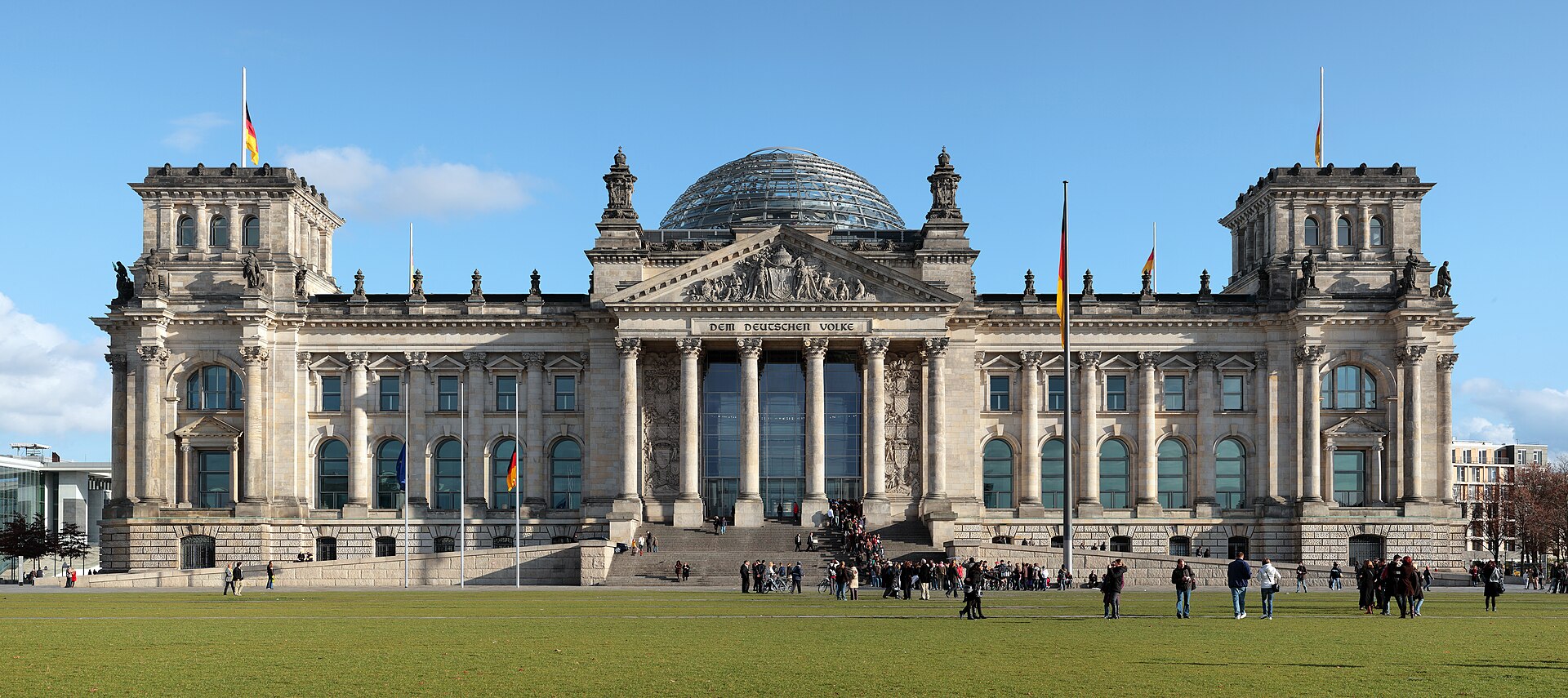
The Reichstag Building is the historic seat of the German parliament (Bundestag) in Berlin. Originally constructed between 1884 and 1894 to house the Imperial Diet of the German Empire, the structure combines Neo-Renaissance architecture with later modern interventions. The building is internationally known for the Reichstag fire of 1933 and for its prominent glass dome designed by architect Norman Foster, completed in 1999. Today, it functions as the legislative center of reunified Germany and a symbol of democratic transparency.
Key Facts
- Materials
- Sandstone, Steel, Glass
- Civilization
- German Empire
- Accessibility
- Public dome access by advance registration
- Current Function
- Seat of the Bundestag
- Date(s)
- 1884-1894 (renovation 1995-1999)
- Condition
- Fully restored and active government building
- Original Function
- Seat of the Imperial Diet
- Key Figures
- Paul Wallot, Norman Foster, Adolf Hitler
- Architectural Style
- Neo-Renaissance with modern additions
Imperial Construction
1884-1894Designed by architect Paul Wallot, the Reichstag was built to house the parliament of the newly unified German Empire. Its monumental Neo-Renaissance design symbolized national unity and political authority.
Reichstag Fire
1933On 27 February 1933, the building was severely damaged by fire. The event was used by the Nazi regime to justify emergency decrees that curtailed civil liberties and consolidated power.
World War II and Division
1939-1990The building suffered extensive damage during World War II, particularly during the Battle of Berlin in 1945. During the Cold War, it stood near the Berlin Wall and was largely unused for parliamentary purposes.
Reunification and Renovation
1990-1999Following German reunification, the Reichstag was selected as the seat of the Bundestag. Architect Norman Foster led a major renovation, adding a glass dome that symbolizes democratic transparency and allows public viewing of parliamentary sessions.
Cultural Significance
The Reichstag Building embodies Germany’s complex political history, from imperial ambition and democratic experimentation to dictatorship, division, and reunification. The 1933 fire remains a pivotal event in the collapse of the Weimar Republic. The modern glass dome has become a powerful architectural symbol of transparency in governance, allowing visitors to observe parliamentary proceedings from above.
Interpretive Notes
Scholarly debates and areas of uncertainty
Historians continue to debate the full circumstances of the 1933 Reichstag fire, including the extent of Nazi involvement. Architectural scholars also analyze the balance between preservation and modernization in Foster’s redesign, particularly the symbolic role of the glass dome.
Visiting Information
Entry Rules
Free entry to dome and terrace with mandatory advance online registration. Security screening required. Parliamentary sessions may restrict access to certain areas.
Best Times to Visit
Late afternoon or evening visits provide panoramic city views. Advance booking is essential due to high demand. Weekdays outside parliamentary sessions offer smoother access.
Photography
Personal photography permitted in public areas. Tripods and professional equipment require prior authorization. Photography may be restricted in secure parliamentary zones.
Preservation Notes
Follow security protocols. Remain within designated visitor paths. Respect restrictions during official sessions and events.
Nearby POIs
11 shownSources & Further Reading
- [1]
- [2]The Reichstag Fire — Benjamin Carter Hett. Oxford University Press (2014)
- [3]Norman Foster Works — Deyan Sudjic. Phaidon Press (2010)
Key Facts
- Materials
- Sandstone, Steel, Glass
- Civilization
- German Empire
- Accessibility
- Public dome access by advance registration
- Current Function
- Seat of the Bundestag
- Date(s)
- 1884-1894 (renovation 1995-1999)
- Condition
- Fully restored and active government building
- Original Function
- Seat of the Imperial Diet
- Key Figures
- Paul Wallot, Norman Foster, Adolf Hitler
- Architectural Style
- Neo-Renaissance with modern additions