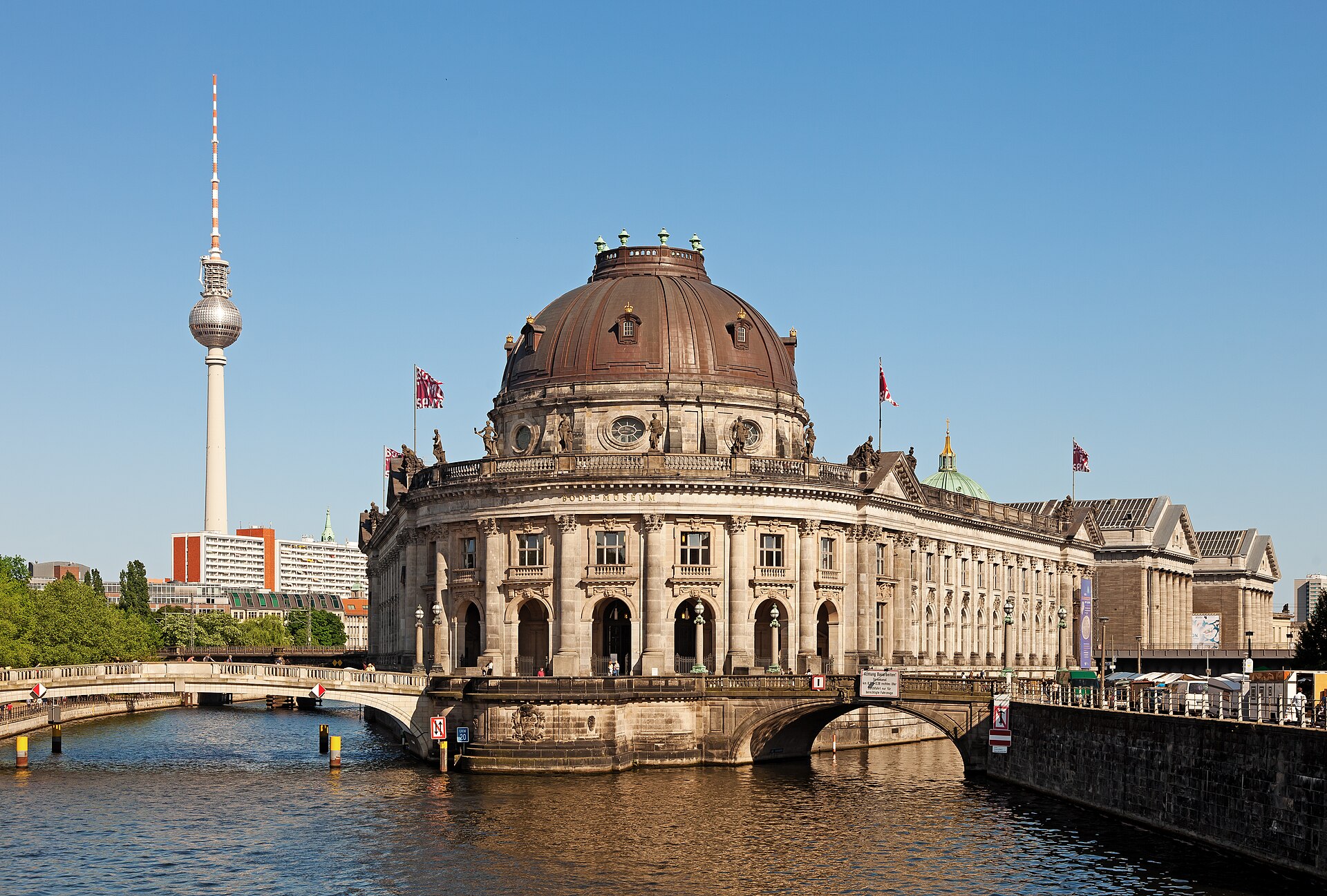
The Bode-Museum is an art museum located at the northern tip of Museum Island in Berlin. Opened in 1904 as the Kaiser-Friedrich-Museum, it was designed to house sculpture, Byzantine art, and numismatic collections. Designed by architect Ernst von Ihne in a Neo-Baroque style, the museum features a distinctive domed façade overlooking the River Spree. Today, it houses the Sculpture Collection, the Museum of Byzantine Art, and parts of the Numismatic Collection, forming an integral component of the UNESCO-listed Museum Island complex.
Key Facts
- Renamed
- 1956 (in honor of Wilhelm von Bode)
- Materials
- Sandstone, Steel, Copper
- Accessibility
- Wheelchair accessible with elevators
- Original Name
- Kaiser-Friedrich-Museum
- Current Function
- Art museum
- Date(s)
- 1898-1904
- Condition
- Restored and fully operational
- Original Function
- Imperial museum for sculpture and decorative arts
- Key Figures
- Ernst von Ihne, Wilhelm von Bode
- Architectural Style
- Neo-Baroque
Imperial Conception
Late 19th centuryThe museum was conceived under Emperor Wilhelm II as part of Berlin’s cultural expansion. Art historian Wilhelm von Bode played a central role in shaping its curatorial vision, emphasizing stylistic display across media.
Opening and Early Years
1904-1939Opened in 1904, the museum presented sculptures and decorative arts in integrated historical interiors. It became a leading institution for Renaissance and Baroque sculpture.
War Damage and Division
1939-1990The building suffered significant damage during World War II. Following Germany’s division, it was located in East Berlin and underwent partial restoration before reopening in stages.
Comprehensive Restoration
1997-2006A major renovation restored the museum’s historic architecture and modernized exhibition spaces. It reopened fully in 2006 as part of the Museum Island Master Plan.
Cultural Significance
The Bode-Museum reflects imperial-era ambitions to position Berlin among Europe’s leading cultural capitals. Its integrated display concept—combining sculpture, painting, and decorative arts—was innovative for its time. Today, it remains central to Berlin’s art historical collections and contributes significantly to the identity of Museum Island as a unified cultural ensemble.
Interpretive Notes
Scholarly debates and areas of uncertainty
Scholarly discussions address provenance research and the restitution of artworks acquired during colonial and wartime periods. Debates also examine Wilhelm von Bode’s curatorial methodology and its influence on modern museum practice.
Visiting Information
Entry Rules
Ticketed entry required. Museum Island day passes available. Security screening at entrance. Free entry on selected monthly evenings.
Best Times to Visit
Weekday mornings offer quieter gallery access. Late afternoon visits provide strong natural lighting in dome areas.
Photography
Photography permitted without flash. Tripods and commercial photography require prior authorization.
Preservation Notes
Do not touch sculptures or display cases. Maintain appropriate distance from artworks and follow staff guidance.
Nearby POIs
11 shownSources & Further Reading
- [1]
- [2]Wilhelm von Bode and the Art of the Museum — Penny Humfrey. Yale University Press (2011)
- [3]Museum Island Berlin — Andreas Schlüter (ed.). Prestel (2009)
Key Facts
- Renamed
- 1956 (in honor of Wilhelm von Bode)
- Materials
- Sandstone, Steel, Copper
- Accessibility
- Wheelchair accessible with elevators
- Original Name
- Kaiser-Friedrich-Museum
- Current Function
- Art museum
- Date(s)
- 1898-1904
- Condition
- Restored and fully operational
- Original Function
- Imperial museum for sculpture and decorative arts
- Key Figures
- Ernst von Ihne, Wilhelm von Bode
- Architectural Style
- Neo-Baroque