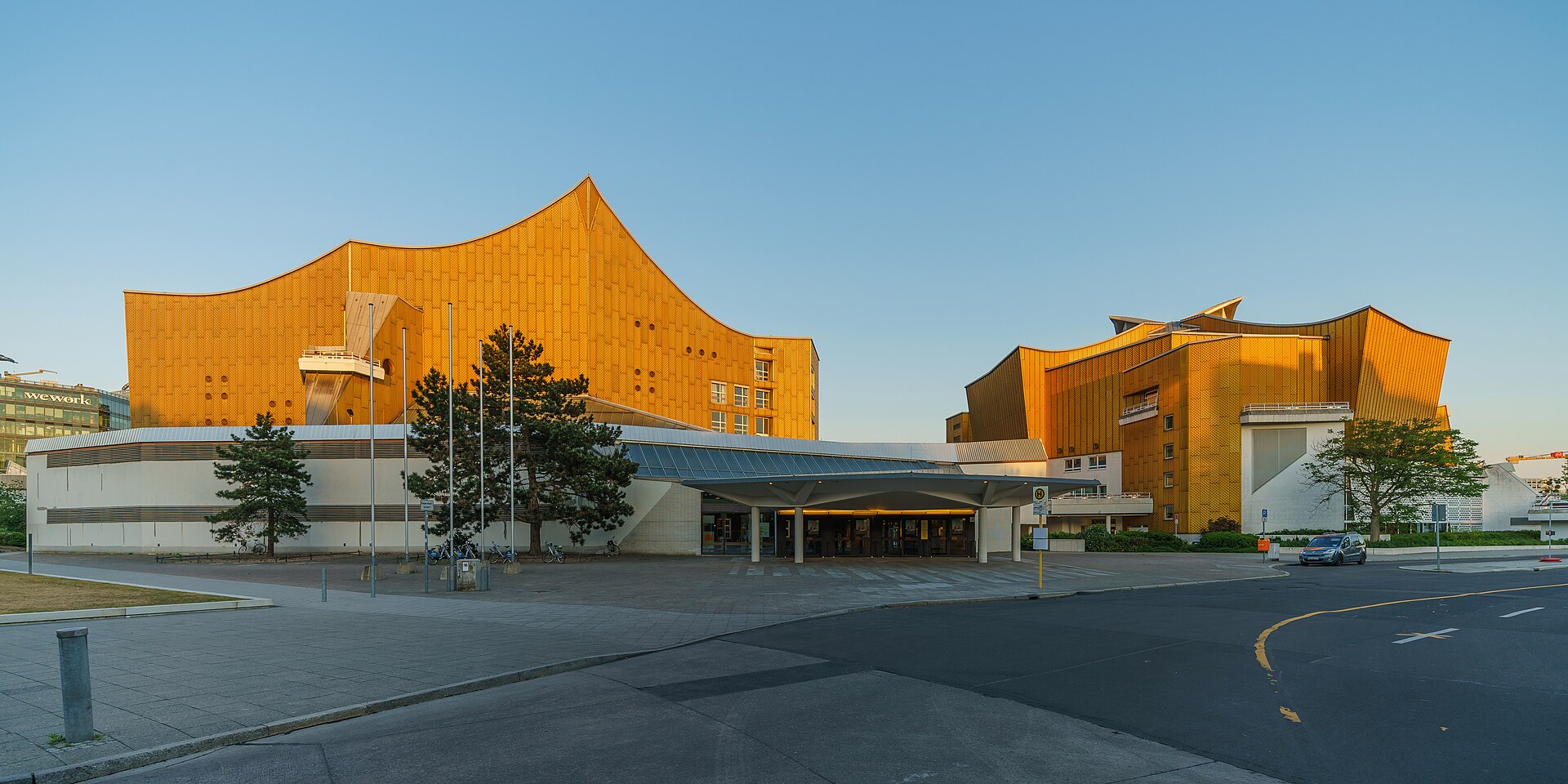
The Kulturforum is a cultural complex in Berlin developed in West Berlin during the Cold War as a counterpoint to Museum Island in East Berlin. Located near Potsdamer Platz and Tiergarten, it brings together major museums, libraries, concert halls, and cultural institutions. The complex features significant examples of postwar modernist architecture and remains one of Berlin’s most important cultural districts.
Key Facts
- Purpose
- Cultural and museum district
- Location
- Tiergarten district, Berlin
- Condition
- Fully operational cultural complex
- Development Period
- 1950s-present
- Architectural Style
- Postwar Modernism
- Notable Institutions
- Neue Nationalgalerie, Berliner Philharmonie, Staatsbibliothek zu Berlin, Gemäldegalerie
Cold War Conception
1950s-1960sThe Kulturforum was conceived by West Berlin authorities after World War II to create a new cultural center in the western part of the divided city, responding to the loss of Museum Island to East Berlin.
Modernist Development
1960s-1980sMajor institutions were constructed in bold modernist forms, including the Philharmonie (1963) and the Neue Nationalgalerie (1968), establishing the area as a landmark of postwar architecture.
Post-Reunification Expansion
1990-presentAfter German reunification, the Kulturforum continued to expand and integrate within Berlin’s unified museum landscape, with renovations and new additions enhancing its cultural role.
Cultural Significance
The Kulturforum symbolizes West Berlin’s cultural resilience during the Cold War. It represents a deliberate architectural and political statement, asserting the western sector’s commitment to modernity, artistic freedom, and international cultural exchange. Today, it functions as a central hub of Berlin’s museum and music scene.
Interpretive Notes
Scholarly debates and areas of uncertainty
Architectural historians debate the spatial planning of the Kulturforum, with some critiquing its fragmented layout and urban integration. Discussions also focus on its role as ideological architecture during the Cold War and its adaptation after reunification.
Visiting Information
Entry Rules
Access rules vary by institution within the complex. Individual museums and venues require separate tickets.
Best Times to Visit
Weekday mornings for museum visits; evenings for concert performances at the Philharmonie.
Photography
Outdoor photography permitted. Indoor policies vary by institution.
Preservation Notes
Respect institutional guidelines and architectural preservation measures across the complex.
Nearby POIs
11 shownSources & Further Reading
- [1]
- [2]Berlin Divided City 1945-1989 — David Clay Large. Cambridge University Press (2000)
Key Facts
- Purpose
- Cultural and museum district
- Location
- Tiergarten district, Berlin
- Condition
- Fully operational cultural complex
- Development Period
- 1950s-present
- Architectural Style
- Postwar Modernism
- Notable Institutions
- Neue Nationalgalerie, Berliner Philharmonie, Staatsbibliothek zu Berlin, Gemäldegalerie