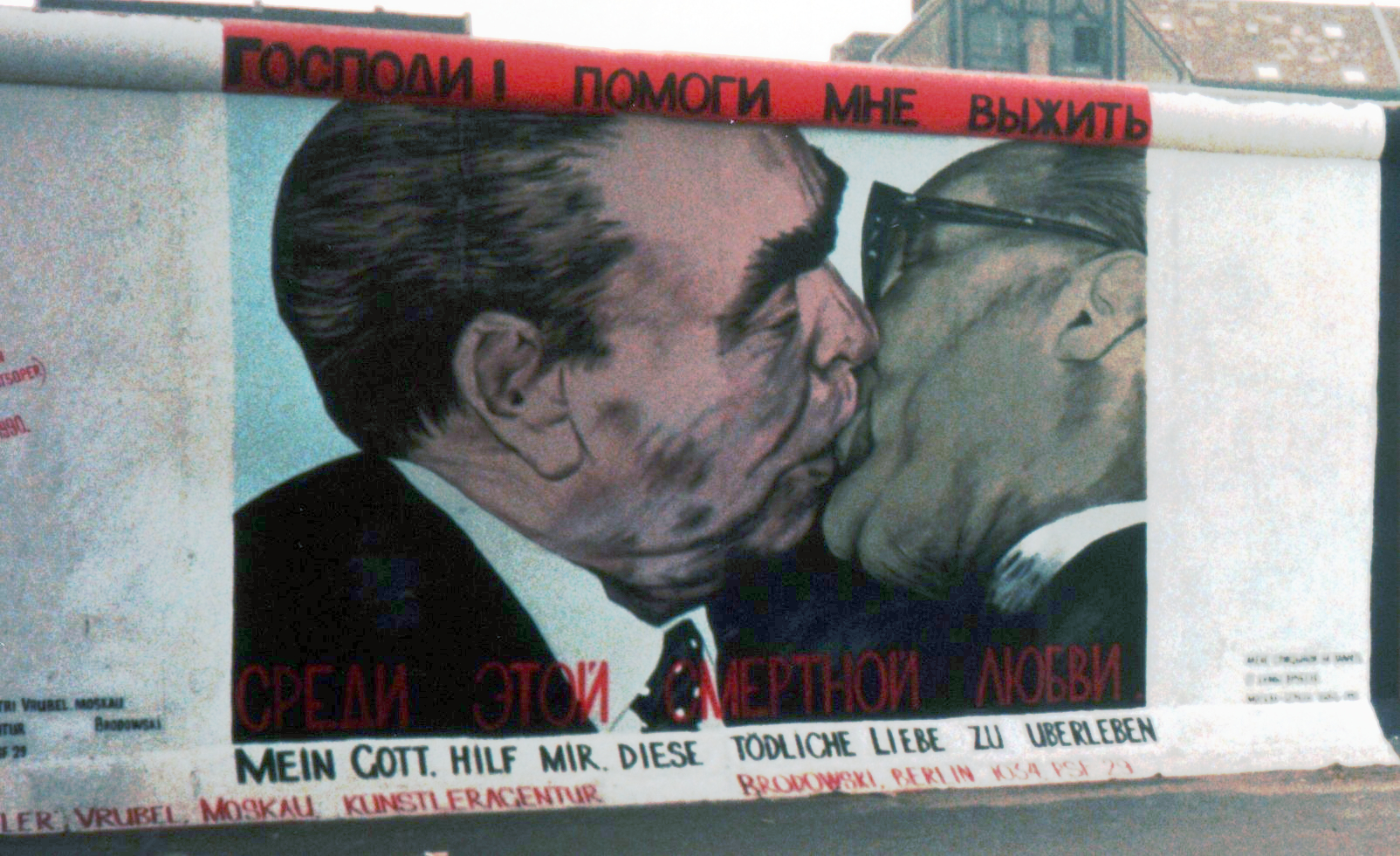
The East Side Gallery is an open-air gallery located along Mühlenstrasse in Berlin, consisting of a preserved 1.3-kilometer section of the former Berlin Wall. Following the fall of the Wall in 1989, artists from around the world were invited to paint murals on the eastern side of the structure. The gallery features over 100 paintings addressing themes of freedom, political change, and reunification. It is one of the longest surviving continuous sections of the Berlin Wall and serves as both a memorial and a public art installation.
Key Facts
- Materials
- Concrete, Acrylic paint
- Established
- 1990
- Accessibility
- Fully accessible public walkway
- Current Function
- Open-air art gallery and memorial
- Condition
- Preserved with periodic restorations
- Historical Period
- 1961-1989 (Wall); 1990-present (gallery)
- Original Function
- Border fortification of the German Democratic Republic
- Key Figures
- Dmitri Vrubel, Birgit Kinder
Berlin Wall Construction
1961The Berlin Wall was erected by the German Democratic Republic to prevent movement between East and West Berlin. The section now forming the East Side Gallery bordered the River Spree and was part of the heavily fortified eastern frontier.
Creation of the Gallery
1990After the Wall fell in November 1989, artists from over 20 countries painted murals on this surviving section. The project transformed a former symbol of division into an international expression of hope and unity.
Preservation Efforts
2000-presentDue to weathering and vandalism, the murals have undergone multiple restoration campaigns. In 2009, many artworks were repainted by the original artists to preserve their integrity.
Cultural Significance
The East Side Gallery represents the transformation of a Cold War barrier into a canvas of artistic and political expression. It stands as a symbol of freedom, reconciliation, and the power of art in reshaping historical memory. As one of Berlin’s most visited cultural landmarks, it bridges contemporary street art culture with preserved Cold War heritage.
Interpretive Notes
Scholarly debates and areas of uncertainty
Debates focus on conservation versus artistic freedom, particularly whether graffiti added after 1990 should be removed or considered part of the evolving artwork. Scholars also examine the tension between commercialization, tourism development, and historical preservation.
Visiting Information
Entry Rules
Open access at all times. No admission fee. Visitors encouraged to respect artworks and refrain from graffiti or damage.
Best Times to Visit
Early morning for fewer crowds and clearer photography. Sunset provides strong natural lighting along the River Spree.
Photography
Photography permitted. Commercial filming requires prior authorization from local authorities.
Preservation Notes
Do not paint, mark, or damage the murals. Respect restoration efforts and informational signage.
Nearby POIs
11 shownSources & Further Reading
- [1]
- [2]The Berlin Wall: A World Divided, 1961-1989 — Frederick Taylor. HarperCollins (2006)
Key Facts
- Materials
- Concrete, Acrylic paint
- Established
- 1990
- Accessibility
- Fully accessible public walkway
- Current Function
- Open-air art gallery and memorial
- Condition
- Preserved with periodic restorations
- Historical Period
- 1961-1989 (Wall); 1990-present (gallery)
- Original Function
- Border fortification of the German Democratic Republic
- Key Figures
- Dmitri Vrubel, Birgit Kinder