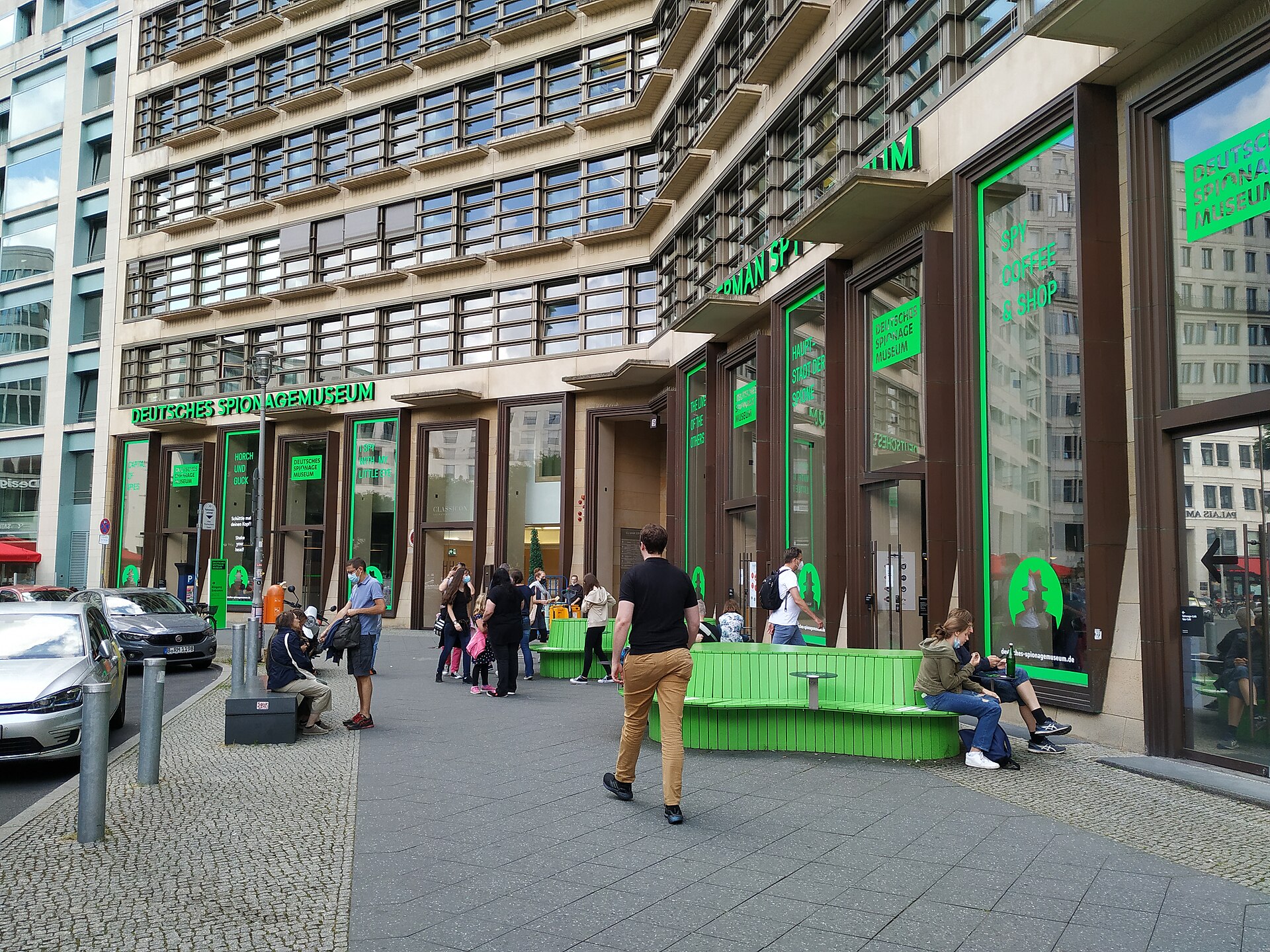
The German Spy Museum (Deutsches Spionagemuseum) is a private museum in Berlin dedicated to the history of espionage from antiquity to the digital age. Located near Potsdamer Platz, it opened in 2015 and presents interactive exhibitions on intelligence techniques, cryptography, surveillance, and Cold War spy culture. The museum explores global intelligence history while emphasizing Berlin’s central role during the Cold War, when the divided city functioned as a major hub of espionage activity.
Key Facts
- Focus
- Espionage history, Cold War intelligence, Cryptography, Cyber surveillance
- Founder
- Franz-Michael Günther
- Location
- Leipziger Platz, Berlin
- Established
- 2015
- Accessibility
- Wheelchair accessible
- Condition
- Fully operational
Concept and Foundation
2010-2015The museum was conceived to present the global history of espionage in an interactive format. It opened in 2015 near former Cold War intelligence hotspots in central Berlin.
Cold War Focus
20th century emphasisBerlin’s position as a divided city made it a focal point for intelligence operations between East and West. The museum highlights spy equipment, double agents, and covert operations connected to this period.
Digital Age Expansion
21st centuryExhibits increasingly address cybersecurity, digital surveillance, and modern intelligence practices, expanding the museum’s narrative beyond traditional Cold War themes.
Cultural Significance
The German Spy Museum reflects Berlin’s historical identity as a center of espionage, particularly during the Cold War. By combining historical artifacts with interactive displays, it engages visitors in the evolving techniques of intelligence and surveillance. Its location near former East–West intelligence frontlines underscores the city’s enduring association with covert operations.
Interpretive Notes
Scholarly debates and areas of uncertainty
Debates concern the balance between entertainment and historical rigor in privately operated museums. Scholars also examine how espionage history is framed for public consumption and how contemporary surveillance issues are contextualized.
Visiting Information
Entry Rules
Ticketed entry required. Timed entry slots available during peak seasons. Security screening at entrance.
Best Times to Visit
Weekday mornings offer lower visitor numbers. Late afternoon visits provide quieter exhibition spaces.
Photography
Photography permitted in designated areas. Flash and professional equipment may be restricted.
Preservation Notes
Do not touch non-interactive artifacts. Follow staff instructions and respect exhibit guidelines.
Nearby POIs
11 shownSources & Further Reading
- [1]
- [2]The Cold War — Odd Arne Westad. Basic Books (2017)
Key Facts
- Focus
- Espionage history, Cold War intelligence, Cryptography, Cyber surveillance
- Founder
- Franz-Michael Günther
- Location
- Leipziger Platz, Berlin
- Established
- 2015
- Accessibility
- Wheelchair accessible
- Condition
- Fully operational