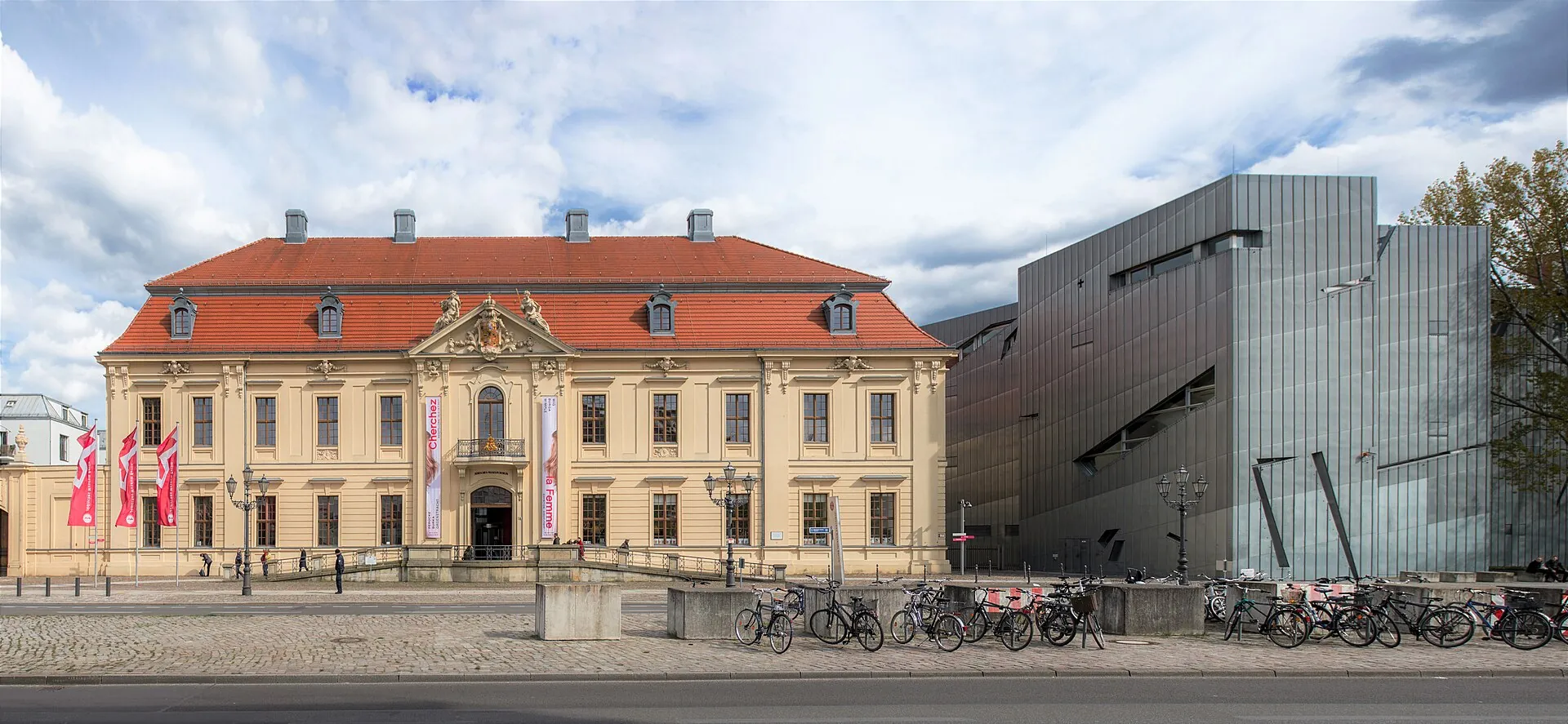
The Jewish Museum Berlin is one of Europe’s largest Jewish museums, dedicated to the history, culture, and contemporary life of Jews in Germany. Opened in 2001, it is internationally known for its striking architecture by Daniel Libeskind and its interdisciplinary exhibitions. The museum explores two millennia of Jewish life in German-speaking lands, addressing themes of integration, persecution, cultural contribution, and memory, including the Holocaust.
Key Facts
- Focus
- Jewish history in Germany, Holocaust memory, Contemporary Jewish culture
- Location
- Lindenstraße, Berlin
- Architect
- Daniel Libeskind
- Established
- 2001
- Notable Feature
- Zinc-clad zigzag building with symbolic voids
- Condition
- Fully operational
- Architectural Style
- Deconstructivism
Origins
1970s-1990sThe idea for a Jewish museum in Berlin emerged in the late 20th century, leading to an architectural competition won by Daniel Libeskind in 1989.
Opening and Architectural Impact
2001The museum officially opened in 2001. Libeskind’s design, characterized by voids, sharp angles, and symbolic spatial disorientation, became a landmark of contemporary memorial architecture.
Contemporary Programming
2001-presentThe museum continues to expand its exhibitions and educational initiatives, addressing both historical subjects and present-day Jewish life in Germany and beyond.
Cultural Significance
The Jewish Museum Berlin plays a central role in Germany’s culture of remembrance (Erinnerungskultur). Through architecture, exhibitions, and education, it confronts the legacy of antisemitism and the Holocaust while highlighting the vibrancy of Jewish cultural life. Its building is considered one of the most important examples of postmodern memorial architecture in Europe.
Interpretive Notes
Scholarly debates and areas of uncertainty
Academic discussions focus on the relationship between architecture and historical narrative, particularly how Libeskind’s design shapes visitor experience. Scholars also debate exhibition strategies in representing trauma, memory, and contemporary identity within national museums.
Visiting Information
Entry Rules
Free general admission to permanent exhibition; security screening required. Special exhibitions may require tickets.
Best Times to Visit
Weekday mornings offer quieter gallery spaces. Allow at least 2–3 hours for a full visit.
Photography
Photography permitted in most areas; flash and tripods may be restricted.
Preservation Notes
Respect quiet zones such as the Holocaust Tower and Memory Void. Follow museum guidelines for sensitive exhibits.
Nearby POIs
11 shownSources & Further Reading
- [1]
- [2]Breaking Ground: Daniel Libeskind — Daniel Libeskind. Riverhead Books (2004)
Key Facts
- Focus
- Jewish history in Germany, Holocaust memory, Contemporary Jewish culture
- Location
- Lindenstraße, Berlin
- Architect
- Daniel Libeskind
- Established
- 2001
- Notable Feature
- Zinc-clad zigzag building with symbolic voids
- Condition
- Fully operational
- Architectural Style
- Deconstructivism