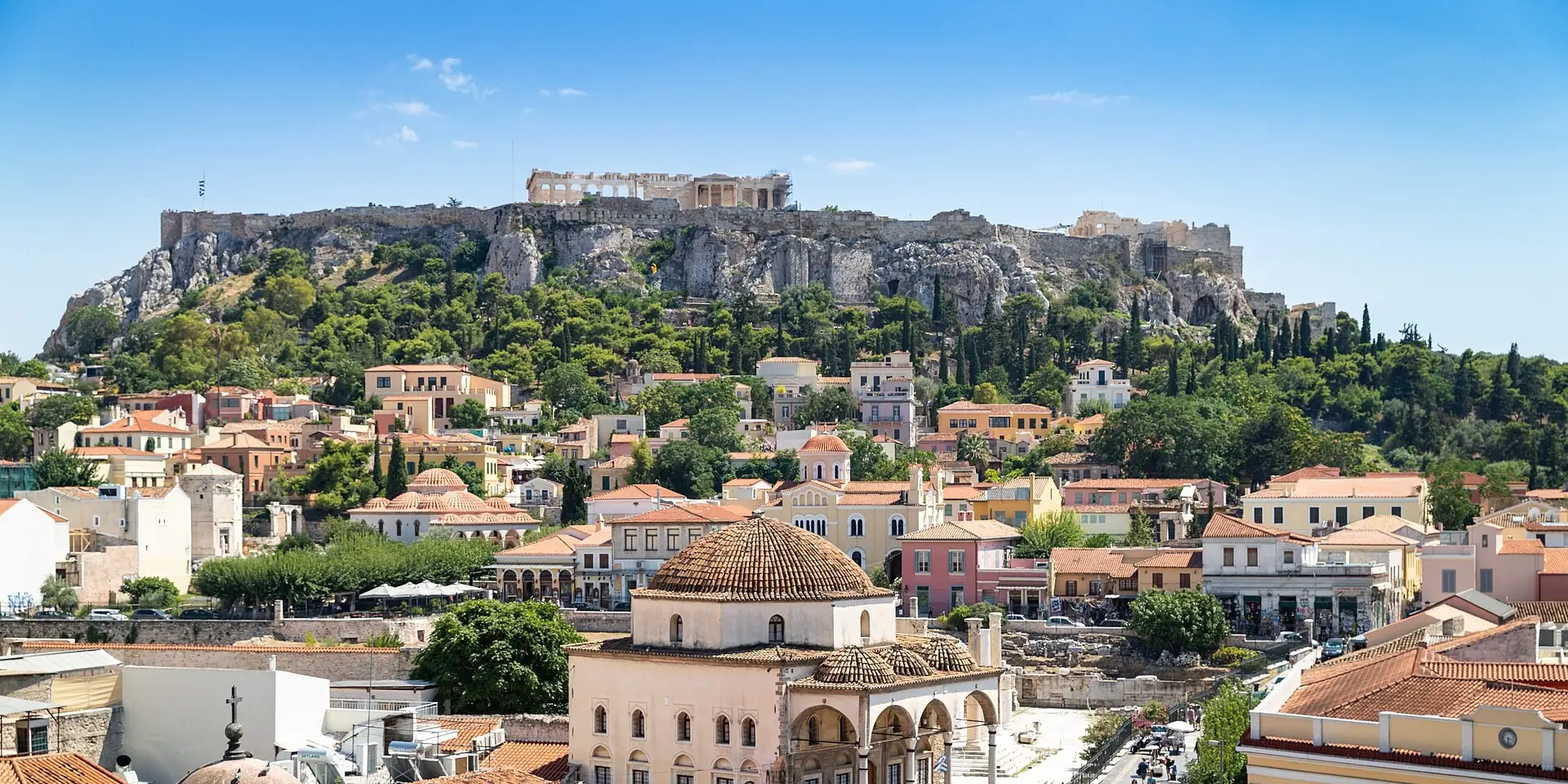
Athens: Cradle of Democracy and Gateway to Classical Antiquity
Journey through the birthplace of Western philosophy, democracy, and theater, where ancient temples crown sun-drenched hills amidst a thriving modern metropolis.
 Daniel Romanov
Athens: Cradle of Democracy and Gateway to Classical Antiquity
Athens, the iconic capital of Greece, is widely celebrated as the birthplace of Western civilization. For over three thousand years, Athens has shaped world history, laying the foundations for democracy, philosophy, drama, mathematics, and architectural design.
Surrounded by a ring of mountains and situated near the Aegean Sea, Athens is a vibrant metropolis where ancient marble monuments rise above modern neighborhoods, bustling markets, and orange-tree-lined squares.
The Golden Age of Pericles
Athens reached its cultural and political zenith during the fifth century BC under the leadership of Pericles. Following victory over the Persian Empire, the city directed immense wealth into art, philosophy, and monumental architecture.
Great thinkers such as Socrates, Plato, and Aristotle walked its streets, laying the groundwork for Western intellectual thought. Meanwhile, dramatists like Aeschylus, Sophocles, and Euripides developed classical theater in sanctuaries along the slopes of the citadel.
The Sacred Citadel: The Acropolis
High above the modern city stands the Acropolis of Athens, a rocky outcrop that has served as a sanctuary, citadel, and religious center since prehistoric times.
Crowning the Acropolis is the Parthenon, a masterpiece of Doric architecture dedicated to the goddess Athena Virgin. Built between 447 and 432 BC, its optical refinements, harmonious proportions, and marble sculptures represent the highest artistic expression of Classical Greece.
On the slopes of the Acropolis lies the Odeon of Herodes Atticus, a magnificent Roman stone theater constructed in AD 161. Restored in modern times, it continues to host concerts and theatrical performances under the starlit Aegean sky.
At the foot of the hill, the modern Acropolis Museum showcases priceless artifacts and original friezes recovered from the citadel in a luminous glass-floored building designed to align visually with the Parthenon.
Civic Life and the Classical Agora
Below the Acropolis lies the Ancient Agora of Athens, the political, commercial, and social heart of ancient Athenian democracy. Here, citizens gathered to debate laws, vote on state matters, and listen to philosophical lectures.
Overlooking the Agora from the Agoraios Kolonos hill is the Temple of Hephaestus. Constructed in the fifth century BC, it remains one of the best-preserved ancient Greek Doric temples in the world.
Adjacent to the Greek Agora is the Roman Agora, constructed under Roman imperial patronage, and Hadrian's Library, an expansive cultural complex built by Roman Emperor Hadrian in AD 132.
Imperial Monuments and Athletic Traditions
Athens continued to flourish under Roman rule, gaining grand civic buildings and public monuments.
Southeast of the Acropolis stand the colossal columns of the Olympieion (Temple of Olympian Zeus). Conceived in the sixth century BC and completed by Emperor Hadrian seven centuries later, it was once one of the largest religious temples in Greece.
Nearby lies the Panathenaic Stadium (Kallimarmaro). Originally built in the fourth century BC for the Panathenaic Games, the stadium was entirely rebuilt in white Pentelic marble during the Roman era. In 1896, it hosted the opening and closing ceremonies of the first modern Olympic Games.
Neighborhoods and Byzantine Heritage
Beyond its classical ruins, Athens features charming historic neighborhoods and historic Byzantine churches.
Plaka, the oldest residential district, lies directly beneath the Acropolis. Its narrow cobblestone lanes, neoclassic houses, and bougainvillea-draped tavernas offer an enchanting atmosphere. Tucked within the city center is the Church of Panagia Kapnikarea, an eleventh-century Byzantine church featuring intricate brickwork and historic frescoes.
Tastes of Greece
Athenian dining is rooted in Mediterranean flavors, fresh local ingredients, and olive-oil-rich cuisine.
Essential dishes include moussaka (layered eggplant, minced meat, and creamy béchamel sauce), souvlaki (grilled skewered meats served with pita and tzatziki), spanakopita (crispy spinach and feta phyllo pastry), and fresh horiatiki (Greek salad with vine tomatoes, olives, cucumbers, and feta cheese).
Visitors can sample local Greek wines, ouzo, and freshly baked loukoumades (honey-soaked dough puffs) in outdoor squares filled with lively conversation.
A Eternal Beacon of Culture
Athens is far more than an open-air museum; it is a dynamic European capital where classical heritage enriches everyday life. Walking through its ancient sanctuaries, bustling markets, and scenic hills reveals a city that has inspired humanity for millennia and continues to captivate all who visit.