Washington D.C.,United States of America
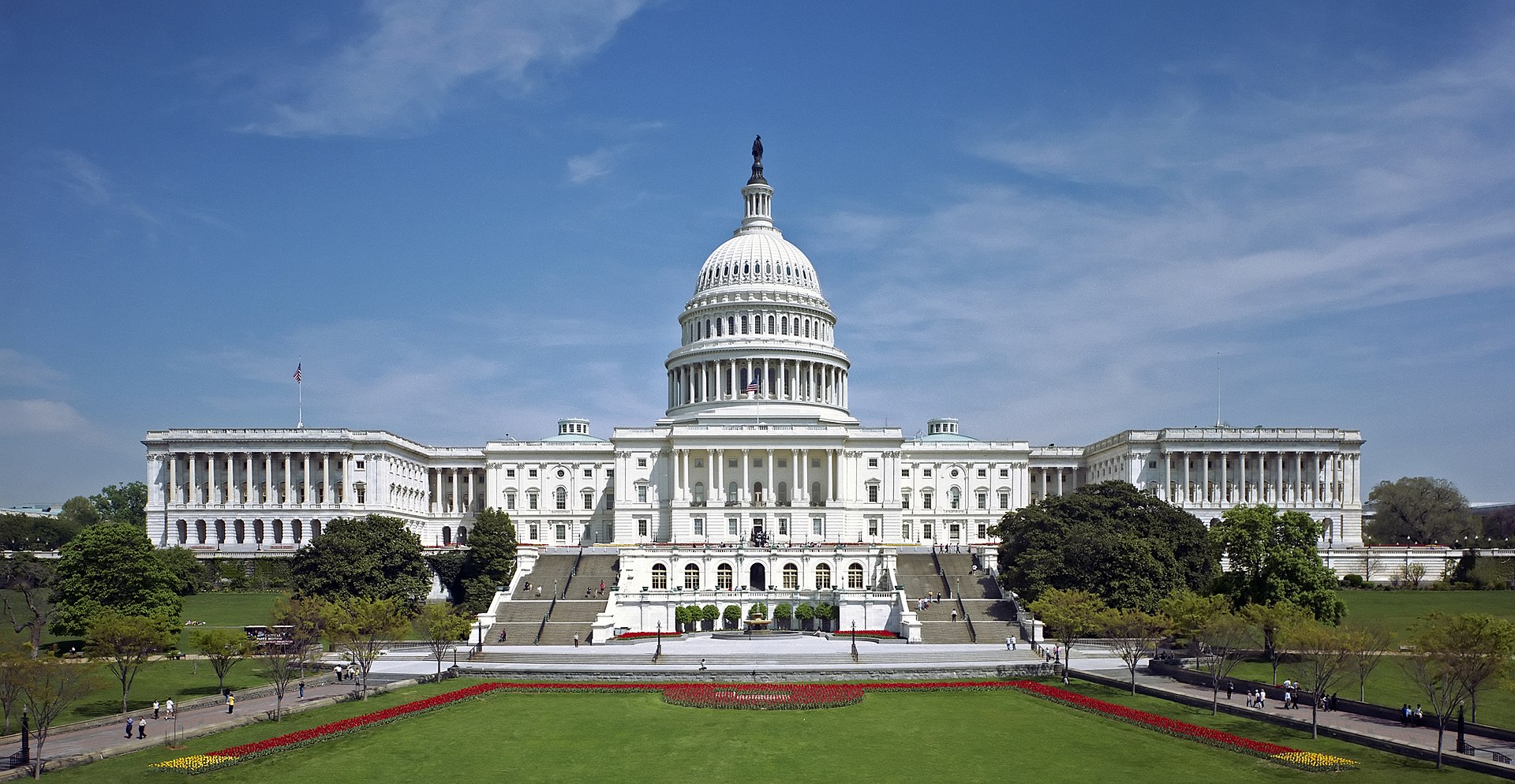
United States Capitol
The United States Capitol serves as the seat of the legislative branch of the U.S. federal government. Located atop Capitol Hill in Washington, D.C., the building is renowned for its massive cast-iron dome and its role as the meeting place for the United States Congress, comprising the Senate and the House of Representatives.
Designed in a Neoclassical style, the structure has undergone numerous expansions and renovations since its inception. It serves not only as a functional legislative center but also as a repository of American history, housing an extensive collection of art and architecture that reflects the nation's political evolution and democratic ideals.
Key Facts
- Materials
- Sandstone, Marble, Cast iron
- Civilization
- United States
- Accessibility
- Fully accessible with designated entrances for visitors
- Date(s)
- 1793-1868
- Condition
- Active government building
- Original Function
- Legislative meeting place
- Key Figures
- George Washington, William Thornton, Benjamin Henry Latrobe, Thomas U. Walter
Foundations and Early Construction
1793-1800The cornerstone was laid by George Washington in 1793. The initial design by William Thornton was selected through a competition, and the building was partially completed by 1800 to house the first session of Congress.
War of 1812 and Reconstruction
1814-1826During the War of 1812, the building was partially burned by British forces in 1814. Reconstruction began shortly thereafter, with architects Benjamin Henry Latrobe and Charles Bulfinch overseeing the restoration and the addition of the first low dome.
Expansion and the New Dome
1850-1868As the nation grew, the Capitol was significantly expanded with new wings for the Senate and House. Thomas U. Walter designed the current iconic cast-iron dome, which was completed during the American Civil War as a symbol of national unity.
Modern Era
20th Century-PresentThe 20th century saw the addition of the Capitol Visitor Center, opened in 2008, which consolidated security and educational facilities. The building remains the site of presidential inaugurations and major legislative proceedings.
Cultural Significance
The Capitol is a primary symbol of American democracy and the separation of powers. It serves as the backdrop for the peaceful transfer of power and is a focal point for national protests, celebrations, and civic engagement. Its architecture, influenced by Roman and Greek models, was intended to evoke the virtues of the ancient republics.
Interpretive Notes
Scholarly debates and areas of uncertainty
Debates often center on the balance between maintaining the building as a functional, secure government office and preserving its status as a public museum. Additionally, the historical presence of enslaved labor in the construction of the Capitol has become a significant subject of recent academic and public discourse.
Visiting Information
Entry Rules
Public access is primarily through the Capitol Visitor Center. Tours are available by reservation. Visitors must pass through security screening. Prohibited items include large bags, liquids, and aerosol sprays.
Best Times to Visit
Early morning or late afternoon on weekdays to avoid peak school group traffic. Spring and autumn offer the most comfortable weather for walking the surrounding grounds.
Photography
Photography is permitted in the Visitor Center and the Rotunda, but is strictly prohibited in the galleries of the House and Senate chambers while Congress is in session.
Preservation Notes
The Architect of the Capitol oversees ongoing maintenance. Visitors are required to stay within designated areas and refrain from touching historical surfaces or artifacts.
Nearby POIs
11 shown- Library of Congress0.4 km
- National Museum of the American Indian0.7 km
- Smithsonian National Air and Space Museum1 km
- National Gallery of Art1 km
- National Archives Building1.2 km
- Smithsonian National Museum of Natural History1.5 km
- International Spy Museum1.6 km
- Smithsonian National Museum of American History1.8 km
- National Museum of African American History and Culture2.1 km
- Washington Monument2.3 km
- White House2.5 km
Key Facts
- Materials
- Sandstone, Marble, Cast iron
- Civilization
- United States
- Accessibility
- Fully accessible with designated entrances for visitors
- Date(s)
- 1793-1868
- Condition
- Active government building
- Original Function
- Legislative meeting place
- Key Figures
- George Washington, William Thornton, Benjamin Henry Latrobe, Thomas U. Walter
Nearby POIs
11 shown- Library of Congress0.4 km
- National Museum of the American Indian0.7 km
- Smithsonian National Air and Space Museum1 km
- National Gallery of Art1 km
- National Archives Building1.2 km
- Smithsonian National Museum of Natural History1.5 km
- International Spy Museum1.6 km
- Smithsonian National Museum of American History1.8 km
- National Museum of African American History and Culture2.1 km
- Washington Monument2.3 km
- White House2.5 km