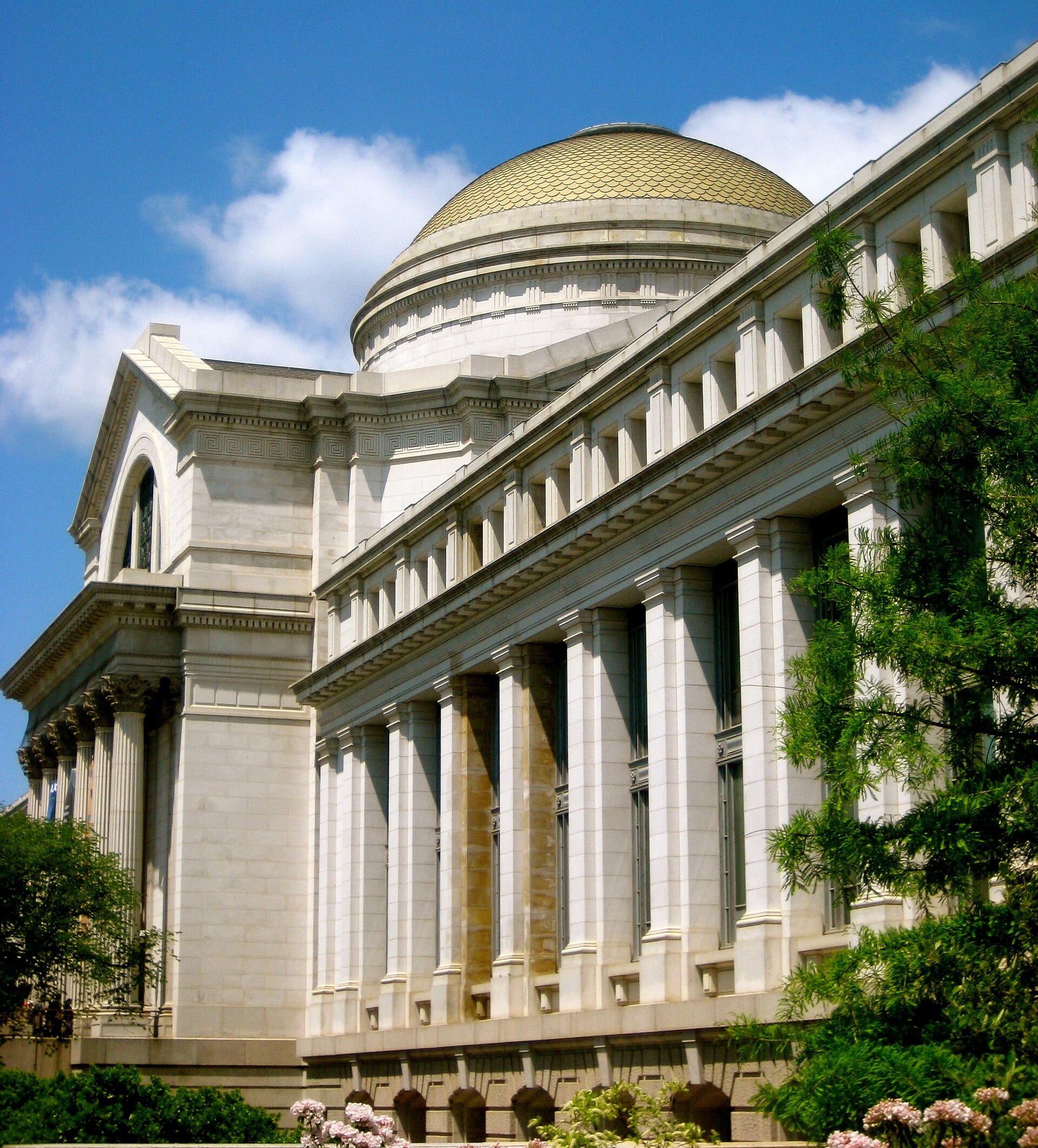
Washington D.C.,United States of America
Smithsonian National Museum of Natural History
The Smithsonian National Museum of Natural History is a premier research and educational institution located on the National Mall in Washington, D.C. Established in 1910, it houses the largest natural history collection in the world, comprising over 146 million specimens of plants, animals, fossils, minerals, rocks, meteorites, human remains, and cultural artifacts.
The museum serves as a global center for scientific study, with hundreds of researchers dedicated to understanding the natural world and human history. Its extensive public exhibitions provide visitors with insights into evolutionary biology, geology, anthropology, and paleontology, making it one of the most visited natural history museums globally.
Key Facts
- Materials
- Granite, Marble, Steel, Glass
- Civilization
- United States
- Accessibility
- Fully wheelchair accessible with elevators and ramps
- Date(s)
- 1910
- Condition
- Active, well-maintained
- Original Function
- Museum and research facility
- Key Figures
- James Smithson, Richard Rathbun
Founding and Early Development
19th CenturyThe museum's collections originated from the Smithsonian Institution's early efforts to document the natural world. As the collection grew, the need for a dedicated facility became apparent, leading to the construction of the current building on the National Mall.
Construction of the Current Building
1903-1910Designed by the architectural firm Hornblower & Marshall, the building was constructed in the Neoclassical style to accommodate the rapidly expanding collections. It opened to the public in 1910, providing a permanent home for the national natural history archives.
Expansion and Modernization
20th Century - PresentThroughout the 20th century, the museum underwent several major expansions, including the addition of new wings to house growing research departments and public exhibits. Recent decades have focused on digitizing collections and updating permanent galleries, such as the David H. Koch Hall of Fossils.
Cultural Significance
The museum is a cornerstone of American scientific and cultural heritage, acting as a repository for the nation's natural history. It plays a critical role in public education and scientific literacy, influencing how millions of visitors understand the history of life on Earth and the development of human societies.
Interpretive Notes
Scholarly debates and areas of uncertainty
Ongoing discussions within the museum community concern the ethical management and potential repatriation of human remains and cultural artifacts within the collection. Scholars and curators continue to debate the best practices for balancing scientific research access with the rights and sensitivities of descendant communities.
Visiting Information
Entry Rules
Open daily. Admission is free to the public. Security screening is required for all visitors upon entry. Large bags and food are restricted in exhibition areas.
Best Times to Visit
Weekday mornings are generally less crowded than weekends or summer peak tourist months. Visiting during the off-season (late autumn or winter) provides a more quiet experience.
Photography
Personal photography is permitted in most galleries without flash or tripods. Commercial photography requires prior authorization from the Smithsonian Institution.
Preservation Notes
Maintain a respectful distance from all specimens and displays. Do not touch glass cases or artifacts. Follow all posted signage regarding exhibit-specific restrictions.
Nearby POIs
11 shown- National Archives Building0.3 km
- Smithsonian National Museum of American History0.4 km
- National Gallery of Art0.5 km
- National Museum of African American History and Culture0.6 km
- Smithsonian National Air and Space Museum0.6 km
- International Spy Museum0.8 km
- Washington Monument0.8 km
- National Museum of the American Indian0.9 km
- White House1.2 km
- Jefferson Memorial1.4 km
- United States Capitol1.5 km
Key Facts
- Materials
- Granite, Marble, Steel, Glass
- Civilization
- United States
- Accessibility
- Fully wheelchair accessible with elevators and ramps
- Date(s)
- 1910
- Condition
- Active, well-maintained
- Original Function
- Museum and research facility
- Key Figures
- James Smithson, Richard Rathbun
Nearby POIs
11 shown- National Archives Building0.3 km
- Smithsonian National Museum of American History0.4 km
- National Gallery of Art0.5 km
- National Museum of African American History and Culture0.6 km
- Smithsonian National Air and Space Museum0.6 km
- International Spy Museum0.8 km
- Washington Monument0.8 km
- National Museum of the American Indian0.9 km
- White House1.2 km
- Jefferson Memorial1.4 km
- United States Capitol1.5 km