Washington D.C.,United States of America
National Archives Building
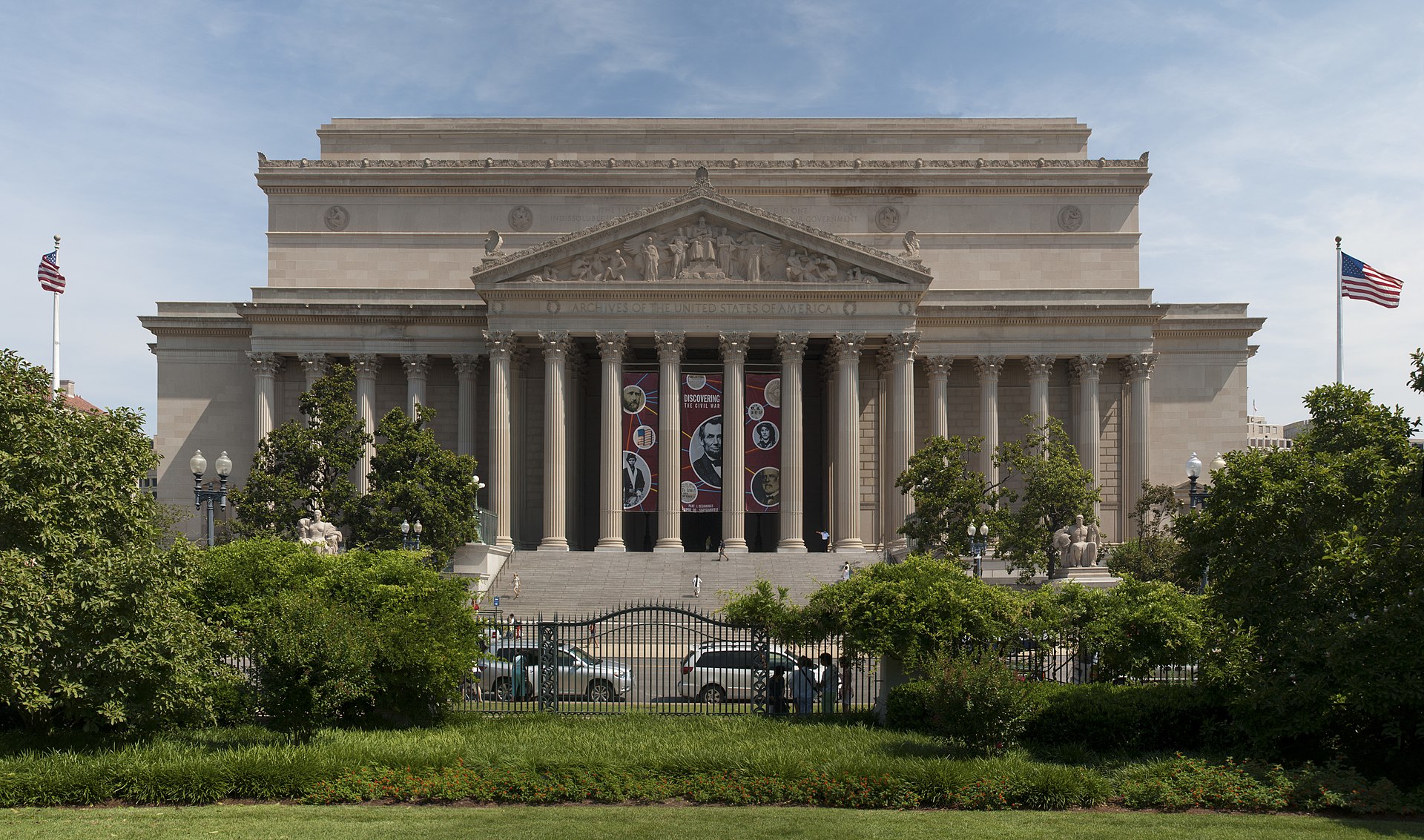
The National Archives Building, located in Washington, D.C., serves as the primary repository for the most significant records of the United States government. Designed by architect John Russell Pope, the building is a prominent example of Neoclassical architecture, featuring a massive colonnade and a rotunda designed to house the nation's founding documents.
Completed in 1935, the facility functions as the home of the National Archives and Records Administration. It is best known for the Rotunda for the Charters of Freedom, which permanently displays the original copies of the Declaration of Independence, the Constitution, and the Bill of Rights, drawing millions of visitors annually.
Key Facts
- Materials
- Limestone, Granite, Steel, Bronze
- Civilization
- United States
- Accessibility
- Fully wheelchair accessible
- Date(s)
- 1933-1935
- Condition
- Active, well-preserved
- Original Function
- National archives and records repository
- Key Figures
- John Russell Pope, Franklin D. Roosevelt
Planning and Construction
1926-1935Following the passage of the Public Buildings Act of 1926, Congress authorized the construction of a dedicated facility to centralize federal records. Architect John Russell Pope was selected to design the building, which was constructed on the site of the former Center Market.
Establishment of the Archives
1934The National Archives and Records Administration was established by the National Archives Act of 1934, creating an independent agency to oversee the preservation and administration of federal records.
Transfer of Founding Documents
1952In a highly publicized event, the Declaration of Independence, the Constitution, and the Bill of Rights were transferred from the Library of Congress to the National Archives Building, where they were placed on permanent display in the Rotunda.
Modern Renovation
2001-2003The building underwent a major multi-year renovation to modernize climate control systems and improve the display environment for the Charters of Freedom, ensuring the long-term preservation of the documents.
Cultural Significance
The National Archives Building is a cornerstone of American civic identity, functioning as the physical "home" of the nation's founding principles. By housing the Charters of Freedom, the building serves as a site of pilgrimage for citizens and scholars interested in the origins of American democracy and the rule of law.
Beyond its role as a museum, the building is a vital research institution. It holds billions of pages of federal records, providing the primary evidence for historical research, genealogical studies, and government transparency, thereby reinforcing the democratic principle of an informed citizenry.
Interpretive Notes
Scholarly debates and areas of uncertainty
Debates regarding the building often center on the tension between public access and preservation. Scholars frequently discuss the impact of light exposure and environmental conditions on the long-term integrity of the parchment documents, leading to ongoing research into advanced preservation technologies.
Visiting Information
Entry Rules
Open daily. Admission is free, though timed-entry reservations are highly recommended during peak tourist seasons. Visitors must pass through security screening. No food or drink is permitted in the galleries.
Best Times to Visit
Early morning or late afternoon on weekdays to avoid peak school group hours. The building is generally busiest during the spring and summer months.
Photography
Non-flash photography is permitted in most areas, but photography of the original Charters of Freedom in the Rotunda is strictly prohibited to protect the documents.
Preservation Notes
Maintain a quiet demeanor in the Rotunda. Do not touch display cases. The building maintains strict climate controls; visitors should be prepared for cooler temperatures inside the galleries.
Nearby POIs
11 shown- National Gallery of Art0.3 km
- Smithsonian National Museum of Natural History0.3 km
- Smithsonian National Air and Space Museum0.6 km
- Smithsonian National Museum of American History0.6 km
- National Museum of the American Indian0.7 km
- National Museum of African American History and Culture0.9 km
- International Spy Museum1 km
- Washington Monument1.1 km
- United States Capitol1.2 km
- White House1.3 km
- Library of Congress1.6 km
Sources & Further Reading
- [1]The National Archives: America's Ministry of Documents — Donald R. McCoy. University of North Carolina Press (1978)
- [2]John Russell Pope: Architect of the American Century — Steven McLeod Bedford. Rizzoli (1998)
Key Facts
- Materials
- Limestone, Granite, Steel, Bronze
- Civilization
- United States
- Accessibility
- Fully wheelchair accessible
- Date(s)
- 1933-1935
- Condition
- Active, well-preserved
- Original Function
- National archives and records repository
- Key Figures
- John Russell Pope, Franklin D. Roosevelt
Nearby POIs
11 shown- National Gallery of Art0.3 km
- Smithsonian National Museum of Natural History0.3 km
- Smithsonian National Air and Space Museum0.6 km
- Smithsonian National Museum of American History0.6 km
- National Museum of the American Indian0.7 km
- National Museum of African American History and Culture0.9 km
- International Spy Museum1 km
- Washington Monument1.1 km
- United States Capitol1.2 km
- White House1.3 km
- Library of Congress1.6 km