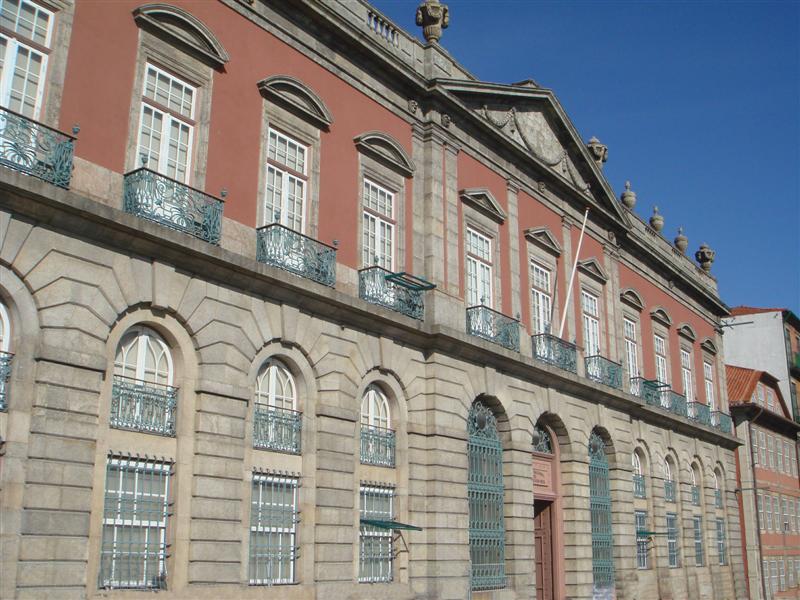
The Soares dos Reis National Museum is the oldest national museum in Portugal, originally founded in 1833 as the Museu Portuense by King Pedro IV. It is housed in the Palácio dos Carrancas, an 18th-century neoclassical building that served as a residence for the Moraes e Castro family before being repurposed for the state's growing collection of fine arts.
The museum is named after the renowned Portuguese sculptor António Soares dos Reis, whose works form a significant portion of the collection. The institution focuses primarily on Portuguese art, featuring an extensive array of sculpture, painting, ceramics, furniture, and jewelry spanning from the 16th to the 20th centuries.
Key Facts
- Materials
- Granite, Stucco, Wood
- Civilization
- Portuguese
- Accessibility
- Fully accessible with elevators
- Date(s)
- 1795
- Condition
- Well-preserved and active
- Original Function
- Private residence (Palácio dos Carrancas)
- Key Figures
- António Soares dos Reis, King Pedro IV
Foundation and Origins
1833The museum was established by King Pedro IV as the Museu Portuense, intended to house art confiscated from religious orders and private collections following the Liberal Wars.
Relocation to Palácio dos Carrancas
1940The museum moved to its current location, the Palácio dos Carrancas, a building notable for its historical significance as the site where the Duke of Wellington stayed during the Peninsular War.
Modernization
2001The museum underwent a major renovation led by architect Fernando Távora, which modernized the exhibition spaces while preserving the neoclassical integrity of the palace.
Cultural Significance
The museum serves as the primary repository for the artistic heritage of Northern Portugal. It plays a critical role in the preservation of the national identity, particularly through its focus on the transition from Neoclassicism to Romanticism in Portuguese sculpture.
Interpretive Notes
Scholarly debates and areas of uncertainty
There is ongoing academic discussion regarding the provenance of certain pieces acquired during the 19th-century dissolution of religious orders, specifically concerning the ethical implications of state-led art sequestration during the Liberal period.
Visiting Information
Entry Rules
Open Tuesday to Sunday. Tickets can be purchased at the entrance. Standard museum conduct applies; no food or drink in galleries.
Best Times to Visit
Weekday mornings are generally quieter, allowing for a more focused viewing of the sculpture galleries.
Photography
Non-commercial photography is permitted without flash or tripods.
Preservation Notes
Maintain distance from all artifacts. Climate control is strictly regulated; please avoid touching display cases.
Nearby POIs
11 shownSources & Further Reading
- [1]Museu Nacional de Soares dos Reis: Guia da Coleção — Maria João Lello Ortigão de Oliveira. Instituto Português de Museus (2001)View
- [2]The Palácio dos Carrancas: Architecture and History — Fernando Távora. Porto University Press (2002)
Key Facts
- Materials
- Granite, Stucco, Wood
- Civilization
- Portuguese
- Accessibility
- Fully accessible with elevators
- Date(s)
- 1795
- Condition
- Well-preserved and active
- Original Function
- Private residence (Palácio dos Carrancas)
- Key Figures
- António Soares dos Reis, King Pedro IV