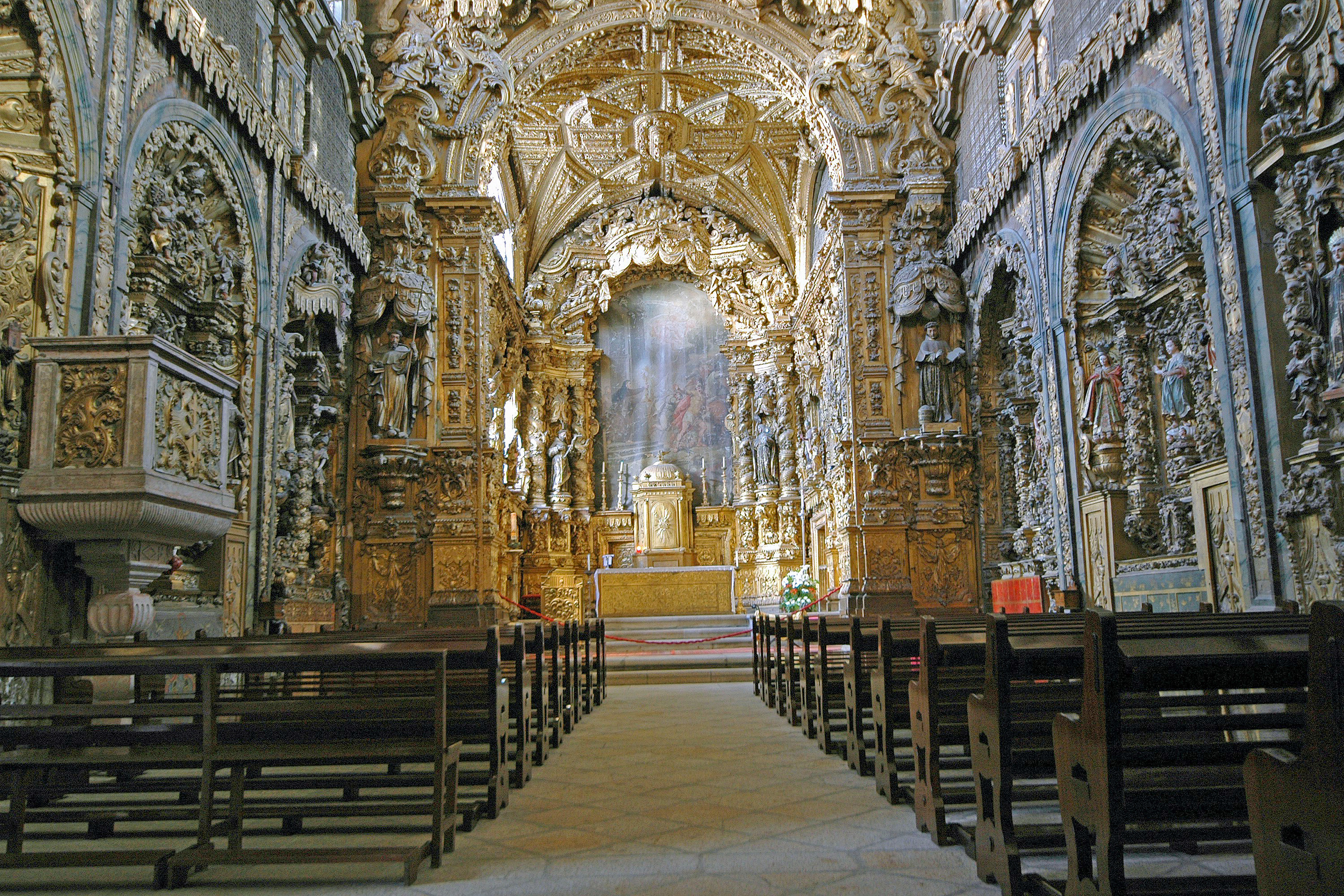
The Igreja de Santa Clara is a notable religious monument located in the historic center of Porto, Portugal. Originally constructed as part of a convent for the Order of Poor Clares, the church is renowned for its elaborate interior, which features extensive gilded woodcarving (talha dourada) characteristic of the Portuguese Baroque style. The structure stands as a testament to the wealth and artistic patronage of the religious orders in Porto during the 17th and 18th centuries.
While the exterior maintains a more austere Gothic appearance, the interior is a dense display of intricate carvings, polychrome statues, and decorative elements that cover nearly every surface. The church remains a significant example of the transition between architectural styles and serves as a primary site for studying the decorative arts of the period in Northern Portugal.
Key Facts
- Materials
- Granite, Gilded wood, Polychrome wood
- Civilization
- Portuguese
- Accessibility
- Ground level access; limited space in narrow aisles
- Date(s)
- 1416-1457
- Condition
- Well-preserved and active
- Original Function
- Conventual church for the Order of Poor Clares
- Key Figures
- King John I
Foundation
15th CenturyThe church was founded in 1416 as part of a convent for the Order of Poor Clares, supported by the patronage of King John I. The original structure was built in the Gothic style, reflecting the architectural norms of the era.
Baroque Transformation
17th-18th CenturyDuring the 17th and 18th centuries, the interior underwent a massive transformation. The walls and ceilings were covered in intricate gilded woodcarvings, a project that defined the church's current aesthetic and established it as a masterpiece of the Portuguese Baroque.
Modern Preservation
20th Century-PresentThe site has undergone several restoration campaigns to stabilize the woodcarvings and preserve the structural integrity of the granite exterior. It is currently managed as a cultural and religious site within the UNESCO World Heritage area of Porto.
Cultural Significance
The Igreja de Santa Clara is a central element of Porto's religious heritage. It represents the historical influence of the Poor Clares in the city and the peak of Portuguese woodcarving craftsmanship. The church is frequently cited in studies of Baroque art for its 'horror vacui' aesthetic, where the density of gold leaf creates a transformative spiritual environment for the observer.
Interpretive Notes
Scholarly debates and areas of uncertainty
There is ongoing academic discussion regarding the specific attribution of the various woodcarving workshops that contributed to the interior, as multiple masters were involved over several decades, making it difficult to isolate individual styles.
Visiting Information
Entry Rules
Open to the public. Visitors are expected to maintain silence and respect ongoing religious services. Modest dress is recommended.
Best Times to Visit
Weekday mornings are generally quieter for viewing the interior details without large tourist crowds.
Photography
Photography is permitted for personal use; flash and tripods are prohibited to protect the delicate gilded surfaces.
Preservation Notes
The gilded wood is extremely fragile. Visitors must not touch the walls or carvings. The environment is climate-controlled to prevent degradation of the wood and gold leaf.
Nearby POIs
11 shownSources & Further Reading
- [1]The Baroque in Portugal — Robert C. Smith. University of Pennsylvania Press (1969)
- [2]Porto: A History of the City — Joel Cleto. Porto Editora (2015)
Key Facts
- Materials
- Granite, Gilded wood, Polychrome wood
- Civilization
- Portuguese
- Accessibility
- Ground level access; limited space in narrow aisles
- Date(s)
- 1416-1457
- Condition
- Well-preserved and active
- Original Function
- Conventual church for the Order of Poor Clares
- Key Figures
- King John I