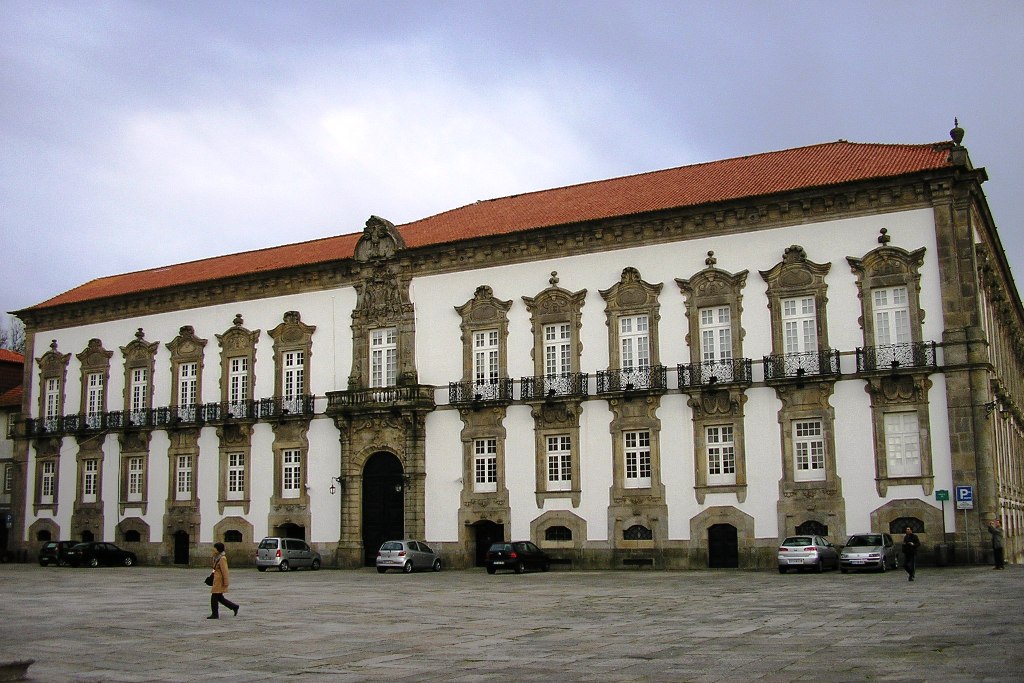
The Episcopal Palace of Porto serves as the historic residence of the bishops of Porto. Situated adjacent to the Porto Cathedral, the current structure is a significant example of late Baroque and Rococo civil architecture, designed by the Italian architect Nicolau Nasoni in the 18th century.
The palace is characterized by its imposing granite facade and symmetrical design, which reflects the prestige of the ecclesiastical authority in Northern Portugal. It remains a prominent landmark within the historic center of Porto, which is recognized as a UNESCO World Heritage site.
Key Facts
- Materials
- Granite, Stone
- Civilization
- Portuguese
- Accessibility
- Limited; historic building with stairs
- Date(s)
- 1734-1741
- Condition
- Well-preserved, used for administrative and cultural purposes
- Original Function
- Episcopal residence
- Key Figures
- Nicolau Nasoni, Bishop João Rafael de Mendonça
Origins and Medieval Predecessors
12th-17th centuryThe site has served as the seat of the bishopric since the Middle Ages. The original medieval palace was a fortified structure that underwent various modifications over the centuries to accommodate the growing administrative needs of the diocese.
Baroque Reconstruction
1734-1741Under the patronage of Bishop João Rafael de Mendonça, the architect Nicolau Nasoni was commissioned to rebuild the palace. Nasoni, who was instrumental in shaping Porto's Baroque landscape, transformed the site into a sophisticated Rococo-style residence.
Modern Era and Preservation
20th century - presentThe palace has undergone several restoration campaigns to preserve its architectural integrity. Today, it functions as a site of cultural interest and administrative office, maintaining its connection to the adjacent Porto Cathedral.
Cultural Significance
The Episcopal Palace is a symbol of the historical influence of the Catholic Church in the development of Porto. Its architectural style, particularly the work of Nasoni, represents the transition of Portuguese civil architecture toward the ornate Rococo aesthetic, influencing the urban fabric of the city's historic center.
Interpretive Notes
Scholarly debates and areas of uncertainty
There is ongoing academic discussion regarding the extent of Nasoni's original design versus later 19th-century modifications, as some interior elements were altered to suit changing administrative requirements.
Visiting Information
Entry Rules
Open to the public during standard visiting hours. Visitors are requested to respect the quiet nature of the site and follow posted signage regarding restricted areas.
Best Times to Visit
Morning hours are recommended to avoid peak tourist traffic in the surrounding cathedral district.
Photography
Personal photography is permitted in public areas; flash and tripods are prohibited inside the galleries.
Preservation Notes
The structure is a protected monument. Visitors must remain on designated paths and avoid touching the historic masonry and interior finishes.
Nearby POIs
11 shown- Igreja dos Grilos0.1 km
- Se do Porto0.1 km
- Igreja de Santa Clara0.2 km
- Igreja de Sao Francisco0.4 km
- Palacio da Bolsa0.4 km
- Igreja dos Clerigos0.5 km
- Monastery of Serra do Pilar0.5 km
- Igreja de Santo Ildefonso0.6 km
- Chapel of Santa Catarina1 km
- Soares dos Reis National Museum1.1 km
- Museu Militar do Porto1.4 km
Sources & Further Reading
- [1]Nicolau Nasoni: Arquitecto do Porto — Robert C. Smith. Livraria Civilização (1973)
- [2]Historic Centre of Oporto, Luiz I Bridge and Monastery of Serra do Pilar — UNESCO World Heritage Centre. UNESCO (1996)View
Key Facts
- Materials
- Granite, Stone
- Civilization
- Portuguese
- Accessibility
- Limited; historic building with stairs
- Date(s)
- 1734-1741
- Condition
- Well-preserved, used for administrative and cultural purposes
- Original Function
- Episcopal residence
- Key Figures
- Nicolau Nasoni, Bishop João Rafael de Mendonça
Nearby POIs
11 shown- Igreja dos Grilos0.1 km
- Se do Porto0.1 km
- Igreja de Santa Clara0.2 km
- Igreja de Sao Francisco0.4 km
- Palacio da Bolsa0.4 km
- Igreja dos Clerigos0.5 km
- Monastery of Serra do Pilar0.5 km
- Igreja de Santo Ildefonso0.6 km
- Chapel of Santa Catarina1 km
- Soares dos Reis National Museum1.1 km
- Museu Militar do Porto1.4 km