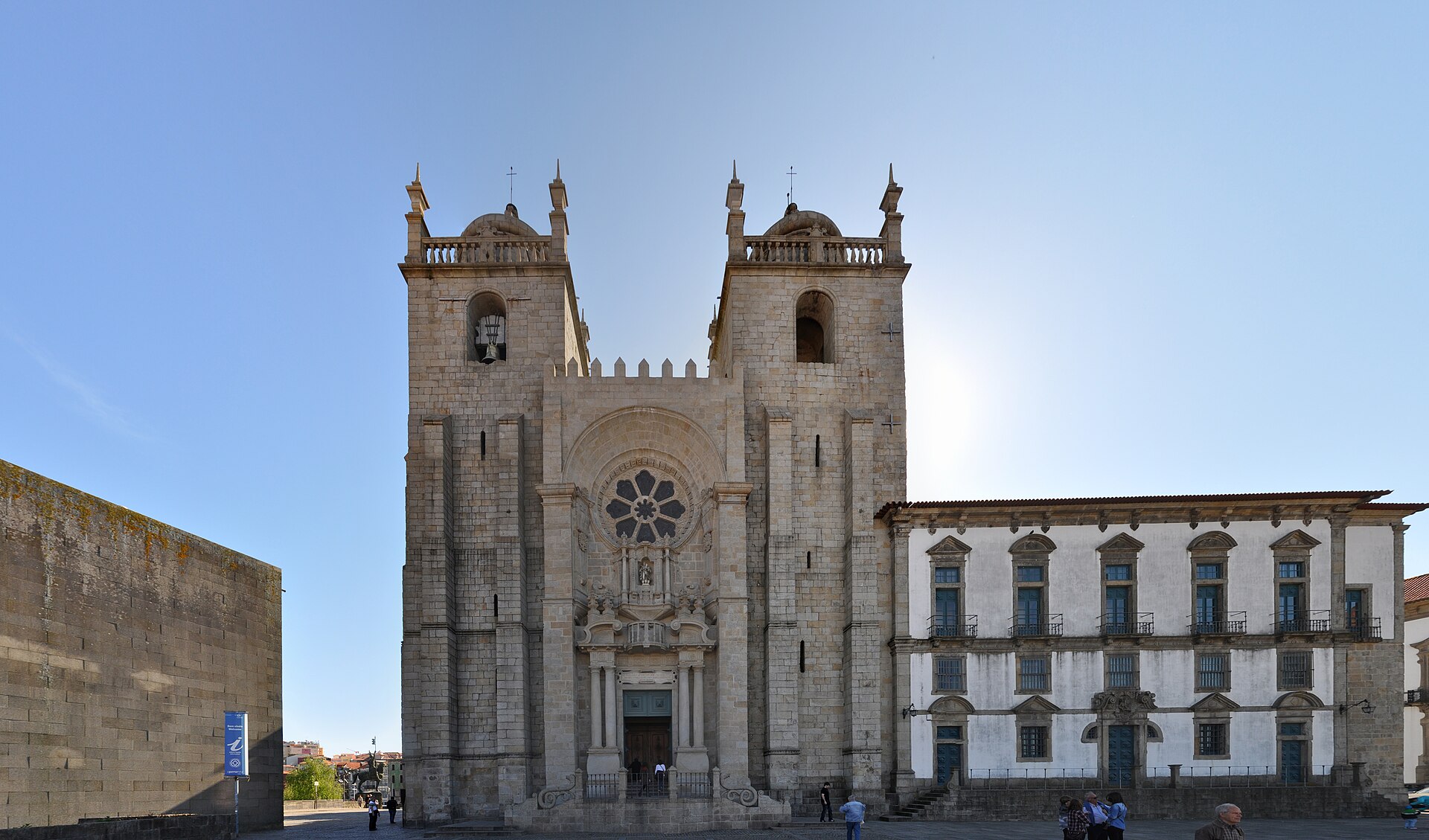
The Porto Cathedral, or Sé do Porto, is a Roman Catholic church located in the historical center of Porto, Portugal. It stands as one of the city's oldest monuments and serves as a primary example of Romanesque architecture in the region, having undergone significant modifications throughout the centuries.
The structure occupies a prominent position on a hill overlooking the Douro River. While its foundations date back to the 12th century, the cathedral displays a blend of architectural styles, including Gothic elements from its 14th-century cloister and ornate Baroque additions applied during the 17th and 18th centuries.
Key Facts
- Materials
- Granite, Azulejo tiles, Gilded wood
- Civilization
- Portuguese
- Accessibility
- Limited due to steep terrain and historic stone stairs
- Date(s)
- 12th century - 18th century
- Condition
- Well-preserved and active religious site
- Original Function
- Cathedral and defensive fortress
- Key Figures
- Bishop Hugo, Nicolau Nasoni
Foundation and Romanesque Origins
12th centuryThe cathedral was founded in the 12th century by Bishop Hugo. Its original Romanesque design featured a fortress-like appearance with crenelated walls, reflecting the defensive needs of the period.
Gothic Additions
14th centuryDuring the 14th century, the Gothic cloister was added, featuring pointed arches and intricate stone carvings. This period also saw the construction of the funerary chapel of João Gordo, a knight of the Order of the Hospital.
Baroque Transformation
17th-18th centuryThe cathedral underwent extensive Baroque renovations. The architect Nicolau Nasoni was instrumental in redesigning the loggia and the main altar, introducing the elaborate gilded wood carvings characteristic of the era.
Cultural Significance
The Sé do Porto is a cornerstone of Porto's identity, representing the city's religious and political history. It has served as the site for royal weddings and significant historical events, including the marriage of King John I to Philippa of Lancaster in 1387.
Today, it remains a vital part of the UNESCO World Heritage site of the Historic Centre of Porto. It is a focal point for local religious processions and a symbol of the city's endurance through the medieval and early modern periods.
Interpretive Notes
Scholarly debates and areas of uncertainty
There is ongoing academic discussion regarding the extent of the original 12th-century Romanesque layout versus the modifications made during the 13th-century reconstruction. The exact influence of the Cistercian architectural style on the cathedral's early design remains a subject of study.
Visiting Information
Entry Rules
Open daily. Entry to the main nave is free, while the cloister and museum require a small admission fee. Modest dress is requested as it is an active place of worship.
Best Times to Visit
Early morning or late afternoon to avoid peak tourist crowds and the heat of the day. The cathedral square offers significant views of the city at sunset.
Photography
Photography is permitted in the nave without flash. Tripods are prohibited. Commercial photography requires prior authorization from the Diocese.
Preservation Notes
The cathedral is subject to ongoing maintenance due to the humidity of the coastal climate affecting the granite and the integrity of the historic azulejo tiles. Visitors are asked to remain on designated paths.
Nearby POIs
11 shown- Paco Episcopal0.1 km
- Igreja dos Grilos0.1 km
- Igreja de Santa Clara0.2 km
- Igreja dos Clerigos0.4 km
- Palacio da Bolsa0.4 km
- Igreja de Sao Francisco0.4 km
- Igreja de Santo Ildefonso0.5 km
- Monastery of Serra do Pilar0.6 km
- Chapel of Santa Catarina0.9 km
- Soares dos Reis National Museum1 km
- Museu Militar do Porto1.4 km
Sources & Further Reading
- [1]The Cathedral of Porto: Architecture and History — Domingos Tavares. Porto Editora (2010)
- [2]Romanesque Architecture in Portugal — José Mattoso. Círculo de Leitores (2005)
Key Facts
- Materials
- Granite, Azulejo tiles, Gilded wood
- Civilization
- Portuguese
- Accessibility
- Limited due to steep terrain and historic stone stairs
- Date(s)
- 12th century - 18th century
- Condition
- Well-preserved and active religious site
- Original Function
- Cathedral and defensive fortress
- Key Figures
- Bishop Hugo, Nicolau Nasoni
Nearby POIs
11 shown- Paco Episcopal0.1 km
- Igreja dos Grilos0.1 km
- Igreja de Santa Clara0.2 km
- Igreja dos Clerigos0.4 km
- Palacio da Bolsa0.4 km
- Igreja de Sao Francisco0.4 km
- Igreja de Santo Ildefonso0.5 km
- Monastery of Serra do Pilar0.6 km
- Chapel of Santa Catarina0.9 km
- Soares dos Reis National Museum1 km
- Museu Militar do Porto1.4 km