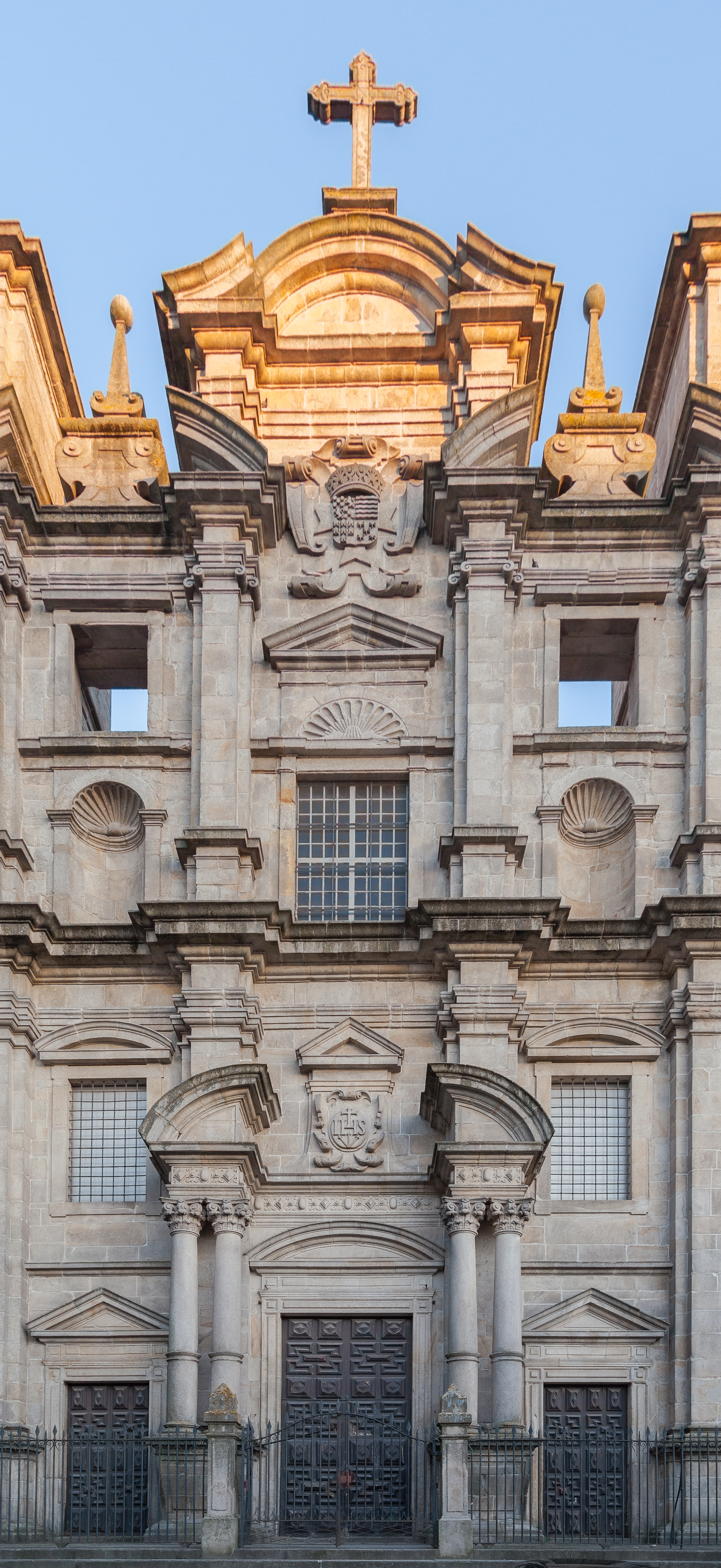
The Igreja dos Grilos, formally known as the Church of São Lourenço, is a significant religious structure located in the historic center of Porto. Originally established by the Society of Jesus in the 16th century, the church served as the primary place of worship for the adjacent Jesuit college, playing a pivotal role in the city's intellectual and religious life during the Counter-Reformation.
The architecture reflects a transition between late Mannerist and Baroque styles, characterized by a monumental facade and a spacious, austere interior typical of Jesuit design. Following the expulsion of the Jesuits from Portugal in 1759, the complex was acquired by the Order of the Discalced Augustinians—popularly known as the 'Grilos'—from whom the church derives its common name.
Key Facts
- Materials
- Granite, Gilded wood
- Civilization
- Portuguese
- Accessibility
- Ground level access; some stairs in the surrounding historic district
- Date(s)
- 1577-1622
- Condition
- Well-preserved, active religious site
- Original Function
- Jesuit College Church
- Key Figures
- Society of Jesus, Discalced Augustinians
Jesuit Foundation
16th centuryThe Jesuits arrived in Porto in the mid-16th century and began construction of their college and church in 1577. The site was intended to serve as a center for education and missionary training in Northern Portugal.
Construction and Completion
1577-1622The church was built over several decades, with the main structure completed by 1622. Its design followed the strict architectural principles favored by the Jesuit order, emphasizing clarity and space for preaching.
Expulsion and Transition
1759Following the Marquis of Pombal's decree expelling the Jesuits from Portuguese territories, the church and college were confiscated by the state. The property was subsequently granted to the Discalced Augustinians.
Modern Era
20th century - presentThe church remains an active site of worship and is recognized as a key component of Porto's historic urban fabric. It has undergone various conservation efforts to maintain its structural integrity and interior ornamentation.
Cultural Significance
The Igreja dos Grilos stands as a testament to the influence of the Jesuit order in Porto's history, particularly regarding the Counter-Reformation. Its transition from a Jesuit institution to an Augustinian one reflects the broader political and religious shifts in 18th-century Portugal. Today, it is a protected monument within the UNESCO World Heritage site of the Historic Centre of Porto.
Interpretive Notes
Scholarly debates and areas of uncertainty
There is ongoing academic discussion regarding the extent of the original Jesuit architectural influence versus the later modifications introduced by the Augustinians during the 18th-century interior renovations.
Visiting Information
Entry Rules
Open to the public for visits and religious services. Modest dress is requested as it is an active place of worship.
Best Times to Visit
Weekday mornings are generally quieter for visitors wishing to appreciate the architecture without the disruption of services.
Photography
Photography is permitted for personal use; flash and tripods are prohibited.
Preservation Notes
Visitors are asked to remain within designated areas and refrain from touching the gilded wood altarpieces.
Nearby POIs
11 shownSources & Further Reading
- [1]Porto: A History of the City — Joel Cleto. Porto Editora (2015)
- [2]The Jesuit Architecture in Portugal — José Eduardo Horta Correia. University of Lisbon Press (2008)
Key Facts
- Materials
- Granite, Gilded wood
- Civilization
- Portuguese
- Accessibility
- Ground level access; some stairs in the surrounding historic district
- Date(s)
- 1577-1622
- Condition
- Well-preserved, active religious site
- Original Function
- Jesuit College Church
- Key Figures
- Society of Jesus, Discalced Augustinians