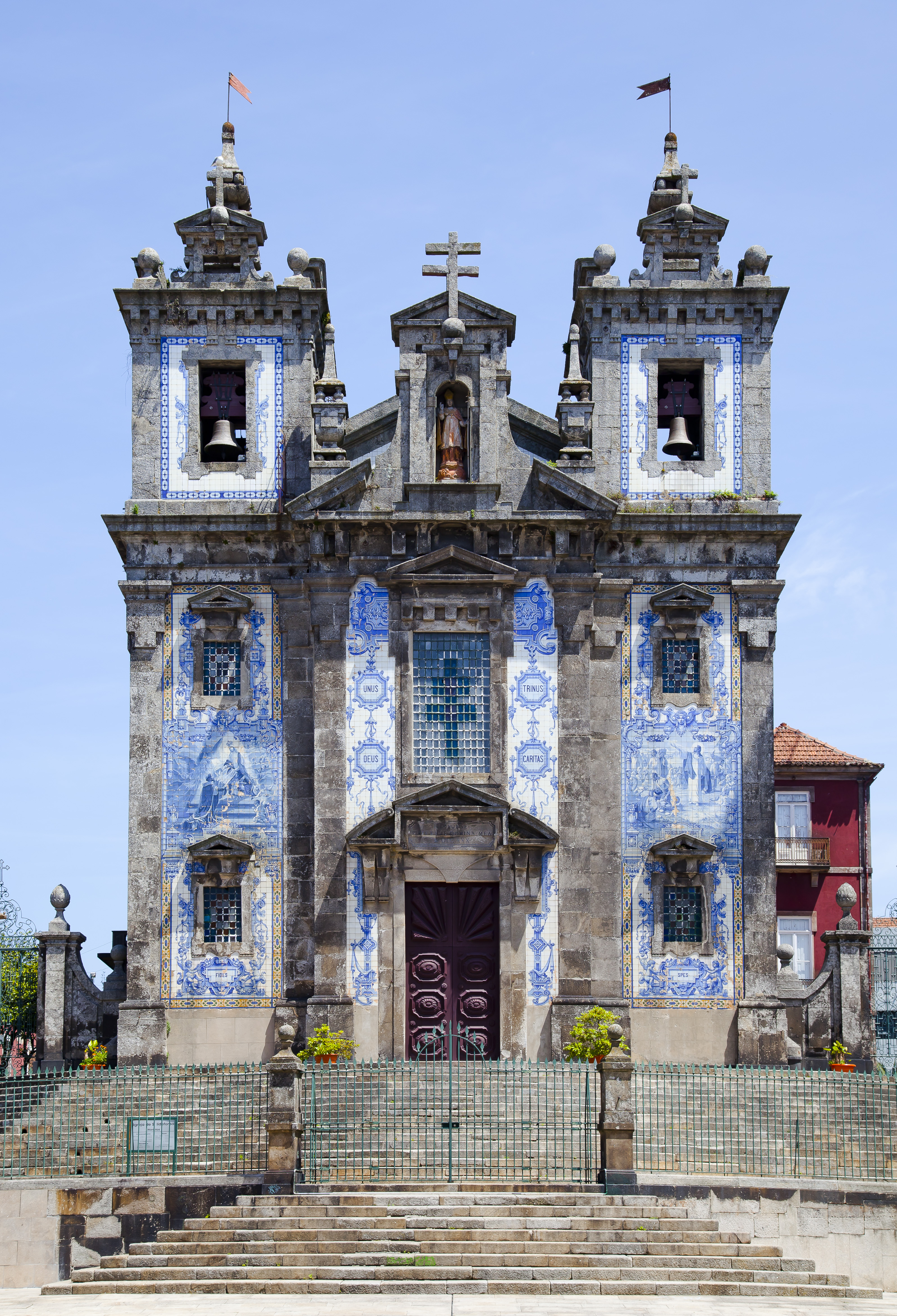
The Church of Saint Ildefonso is an 18th-century religious structure located in the Batalha neighborhood of Porto, Portugal. It is renowned for its striking façade, which is covered in approximately 11,000 azulejo tiles designed by the artist Jorge Colaço in 1932. These blue-and-white tiles depict scenes from the life of Saint Ildefonso and allegorical representations of the Eucharist.
The building features a distinct proto-Baroque architectural style, characterized by its twin bell towers and a complex, rhythmic façade. While the original structure dates back to the early 1700s, the current appearance reflects several phases of construction and decorative updates that have made it a prominent landmark in the city's historic center.
Key Facts
- Materials
- Granite, Azulejo tiles
- Civilization
- Portuguese
- Accessibility
- Ground level access, limited interior mobility due to historic layout
- Date(s)
- 1709-1739
- Condition
- Well-preserved and active
- Original Function
- Parish church
- Key Figures
- Jorge Colaço
Foundations
1709The original chapel of Saint Ildefonso was demolished due to its poor state of repair, leading to the commissioning of a new, larger parish church to serve the growing population of the Batalha area.
Construction
1730-1739The main body of the church was completed in 1730, with the twin bell towers finished in 1739. The architecture reflects the transition from traditional Portuguese styles to the more ornate Baroque influences of the period.
Azulejo Installation
1932The iconic tile work was added to the exterior façade in 1932. Created by Jorge Colaço, these panels were intended to enhance the visual narrative of the church and celebrate the local tradition of ceramic art.
Cultural Significance
The church serves as a primary example of the integration of azulejo tile work into religious architecture, a hallmark of Northern Portuguese cultural identity. It remains an active parish church, playing a central role in the local community's religious life and serving as a major visual reference point for the city's historic urban landscape.
Interpretive Notes
Scholarly debates and areas of uncertainty
There is occasional academic discussion regarding the aesthetic impact of the 1932 tile installation on the original 18th-century architectural integrity, with some purists debating the balance between historical preservation and the later decorative additions.
Visiting Information
Entry Rules
Open to the public daily. Visitors are requested to maintain silence and respect ongoing religious services. Modest attire is expected.
Best Times to Visit
Early morning or late afternoon to avoid peak tourist crowds and to experience the natural light hitting the blue tiles.
Photography
Photography is permitted, but the use of flash is prohibited inside the church during services.
Preservation Notes
The azulejo tiles are fragile; visitors should refrain from touching the exterior walls. The site is subject to ongoing maintenance to protect the ceramic surfaces from environmental degradation.
Nearby POIs
11 shownSources & Further Reading
- [1]Igreja de Santo Ildefonso — Direção-Geral do Património Cultural. Patrimonio Cultural Portugal (2020)View
- [2]Azulejos in Portugal: A History of Ceramic Art — Santos, J.. Porto Academic Press (2015)
Key Facts
- Materials
- Granite, Azulejo tiles
- Civilization
- Portuguese
- Accessibility
- Ground level access, limited interior mobility due to historic layout
- Date(s)
- 1709-1739
- Condition
- Well-preserved and active
- Original Function
- Parish church
- Key Figures
- Jorge Colaço