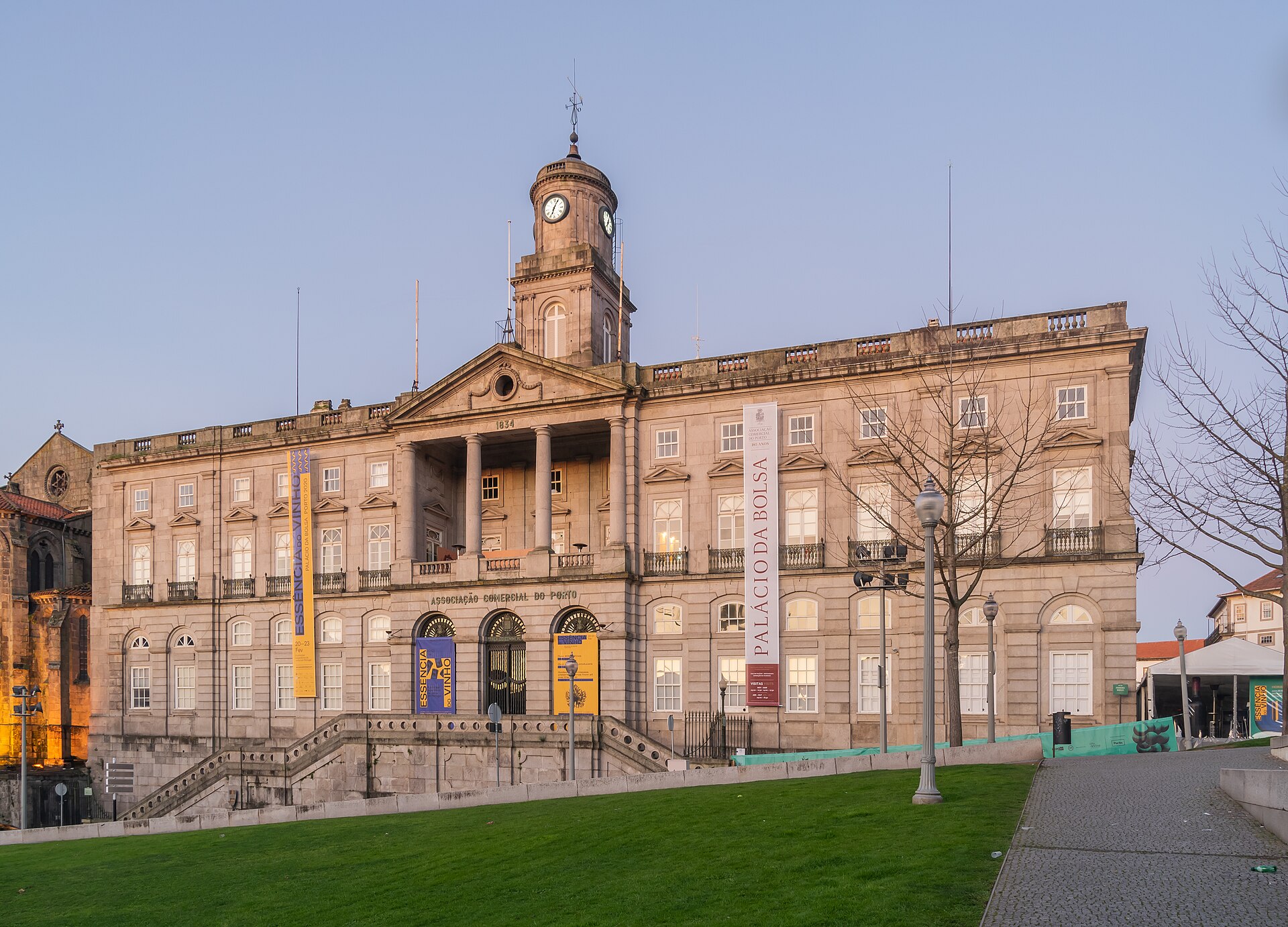
The Palácio da Bolsa, or Stock Exchange Palace, is a 19th-century neoclassical building located in the historic center of Porto. It was commissioned by the city's Commercial Association to house the stock exchange and to impress potential foreign investors, serving as a testament to the economic prosperity and influence of the local merchant class during the Industrial Revolution.
Designed by architect Joaquim da Costa Lima Júnior, the construction began in 1842 on the site of the former Franciscan convent. The interior is renowned for its diverse architectural styles, most notably the Salão Árabe (Arab Room), which features intricate stucco work inspired by the Alhambra in Granada, reflecting the 19th-century fascination with Orientalism.
Key Facts
- Materials
- Granite, Marble, Stucco, Wood
- Civilization
- Portuguese
- Accessibility
- Limited; guided tours only with stairs
- Date(s)
- 1842 - 1910
- Condition
- Well-preserved, used for ceremonial and cultural events
- Original Function
- Stock Exchange and Commercial Association headquarters
- Key Figures
- Joaquim da Costa Lima Júnior, Gustave Eiffel
Founding and Construction
1842-1850Following the Liberal Wars, the Commercial Association of Porto sought a permanent headquarters. Construction commenced in 1842 under the direction of architect Joaquim da Costa Lima Júnior, utilizing the ruins of the adjacent St. Francis Church's cloister.
Interior Development
1862-1890The interior decoration was completed in phases, involving prominent artists and craftsmen. The most significant addition, the Arab Room, was designed by Gonçalves de Sousa and completed in 1880, showcasing the peak of the building's decorative opulence.
Modern Era
20th Century - PresentThe building ceased its function as a stock exchange in the 20th century. It was classified as a National Monument in 1982 and currently serves as a major cultural venue, hosting official state receptions and guided tours.
Cultural Significance
The Palácio da Bolsa is a symbol of Porto's mercantile identity and its historical role as a gateway for international trade. It represents the transition of the city into a modern industrial hub, where the wealth of the bourgeoisie was translated into architectural prestige.
The building remains a focal point for the city's cultural life, serving as a venue for high-level diplomatic meetings and international summits, reinforcing its status as the 'living room' of Porto.
Interpretive Notes
Scholarly debates and areas of uncertainty
Debates often center on the building's eclectic architectural style, specifically the juxtaposition of the austere neoclassical exterior with the highly ornate, exoticist interior. Scholars discuss whether this contrast was a deliberate attempt to project a 'serious' business image to the outside world while indulging in private luxury within.
Visiting Information
Entry Rules
Access is restricted to guided tours, which run throughout the day. Tickets should be purchased in advance via the official website to ensure availability, as group sizes are limited.
Best Times to Visit
Weekdays during the shoulder season (May-June or September-October) to avoid the peak summer tourist crowds.
Photography
Photography is permitted for personal use, but the use of tripods, monopods, and flash is strictly prohibited inside the rooms to protect the delicate surfaces.
Preservation Notes
Visitors must follow the guided tour path and refrain from touching the walls, furniture, or decorative elements. The building is subject to ongoing maintenance due to the fragility of the plasterwork in the Arab Room.
Nearby POIs
11 shownSources & Further Reading
- [1]
- [2]The Architecture of 19th Century Porto — Maria Helena Mendes Pinto. Porto University Press (2008)
Key Facts
- Materials
- Granite, Marble, Stucco, Wood
- Civilization
- Portuguese
- Accessibility
- Limited; guided tours only with stairs
- Date(s)
- 1842 - 1910
- Condition
- Well-preserved, used for ceremonial and cultural events
- Original Function
- Stock Exchange and Commercial Association headquarters
- Key Figures
- Joaquim da Costa Lima Júnior, Gustave Eiffel