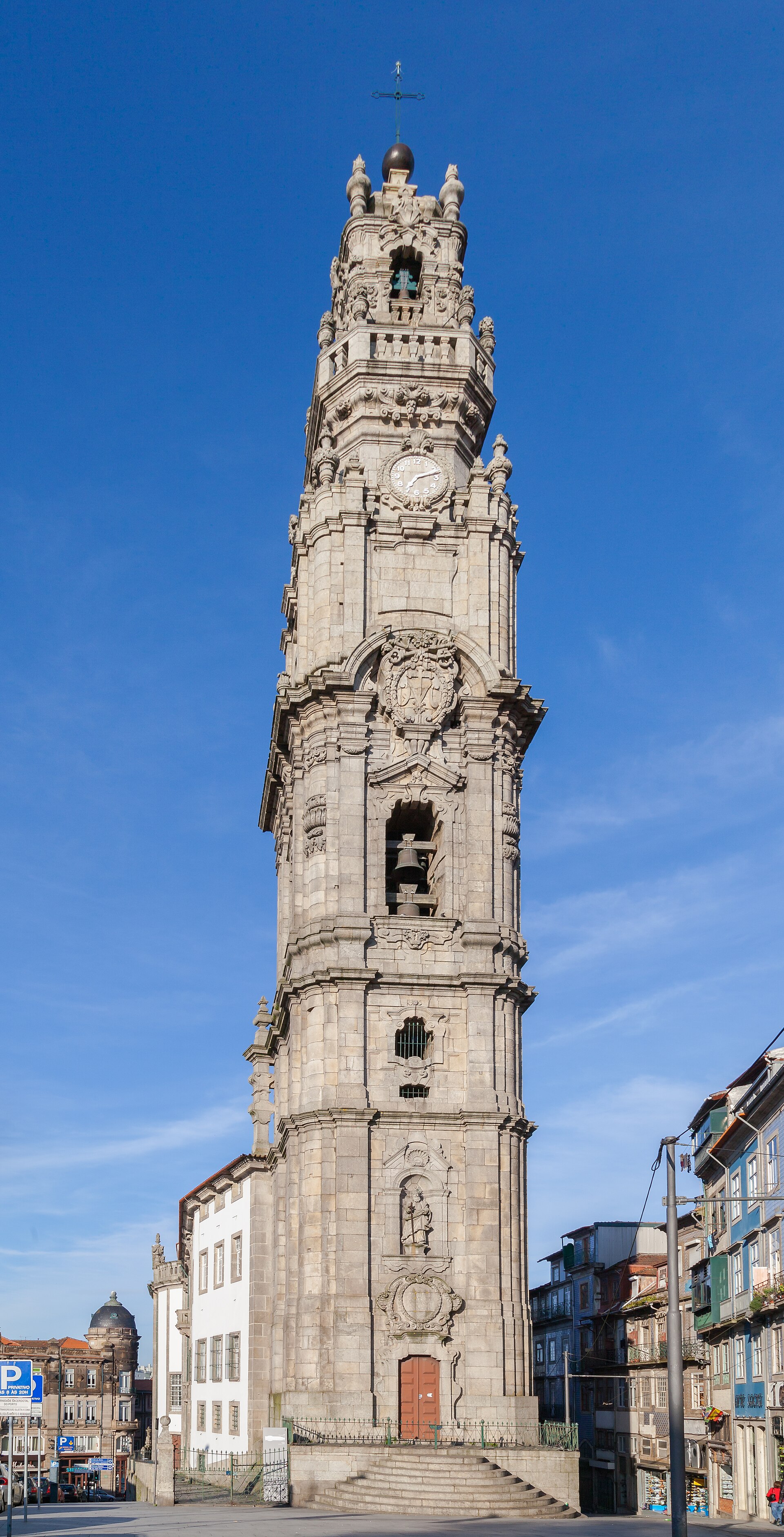
The Igreja dos Clérigos is a prominent Baroque church located in the historic center of Porto, Portugal. Commissioned by the Brotherhood of the Clérigos and designed by the Italian architect Nicolau Nasoni, the church was constructed between 1732 and 1750. It is renowned for its elaborate granite facade and its integration into the urban landscape of the city.
The site is most famous for the Torre dos Clérigos, a bell tower that rises over 75 meters above the city. Completed in 1763, the tower serves as a landmark of Porto and a prime example of the transition from Baroque to Rococo architectural styles in Northern Portugal. The interior of the church features intricate gilded woodcarvings and a complex elliptical floor plan that reflects the sophisticated engineering of the 18th century.
Key Facts
- Materials
- Granite, Gilded wood, Marble
- Civilization
- Portuguese
- Accessibility
- Church is accessible; tower requires climbing stairs
- Date(s)
- 1732-1750
- Condition
- Well-preserved, active religious site and museum
- Original Function
- Religious worship and brotherhood headquarters
- Key Figures
- Nicolau Nasoni
Commission and Design
1732The Brotherhood of the Clérigos commissioned the construction of a new church and infirmary. They selected the Italian architect Nicolau Nasoni, who had recently arrived in Porto, to design the structure.
Construction Phase
1732-1750Work on the church proceeded steadily, with the main structure completed by 1750. Nasoni's design introduced a sophisticated Baroque aesthetic, characterized by dynamic movement and ornate stone detailing.
The Tower Completion
1754-1763The iconic bell tower, the Torre dos Clérigos, was built in a second phase. It became the tallest structure in the city at the time and remains a symbol of Porto's architectural heritage.
Modern Restoration
20th-21st centuryThe site has undergone several restoration projects to preserve its granite facade and interior woodcarvings. It was classified as a National Monument in 1910 and continues to function as a major cultural site.
Cultural Significance
The Igreja dos Clérigos is a defining element of Porto's skyline and a testament to the influence of Italian Baroque architecture in Portugal. It represents the wealth and religious devotion of the 18th-century brotherhoods that shaped the city's social and architectural fabric.
Today, the site is a major tourist destination and a symbol of Porto's identity. The tower is frequently featured in literature and media, serving as a focal point for both local residents and international visitors exploring the city's historical center.
Interpretive Notes
Scholarly debates and areas of uncertainty
Scholarly discussion often centers on the extent of Nicolau Nasoni's influence on the broader development of the Portuguese Baroque style. While his role in the Clérigos project is undisputed, researchers continue to analyze how his Italian training merged with local Portuguese craftsmanship to create the unique 'Nasonian' style.
Visiting Information
Entry Rules
The church is open daily for visitors. Tickets are required to access the tower and the museum areas. Modest dress is requested as it is an active place of worship.
Best Times to Visit
Early morning or late afternoon to avoid peak tourist crowds and to enjoy the best light for photography from the top of the tower.
Photography
Photography is permitted inside the church without flash. Commercial photography requires prior authorization from the Brotherhood.
Preservation Notes
Visitors are advised to stay within marked areas. The tower involves a steep climb; visitors should be aware of physical requirements before ascending.
Nearby POIs
11 shownSources & Further Reading
- [1]Nicolau Nasoni: Architect of the Baroque in Porto — Robert C. Smith. University of Porto Press (1973)
- [2]The Baroque Architecture of Northern Portugal — José Fernandes Pereira. Fundação Calouste Gulbenkian (1989)
Key Facts
- Materials
- Granite, Gilded wood, Marble
- Civilization
- Portuguese
- Accessibility
- Church is accessible; tower requires climbing stairs
- Date(s)
- 1732-1750
- Condition
- Well-preserved, active religious site and museum
- Original Function
- Religious worship and brotherhood headquarters
- Key Figures
- Nicolau Nasoni