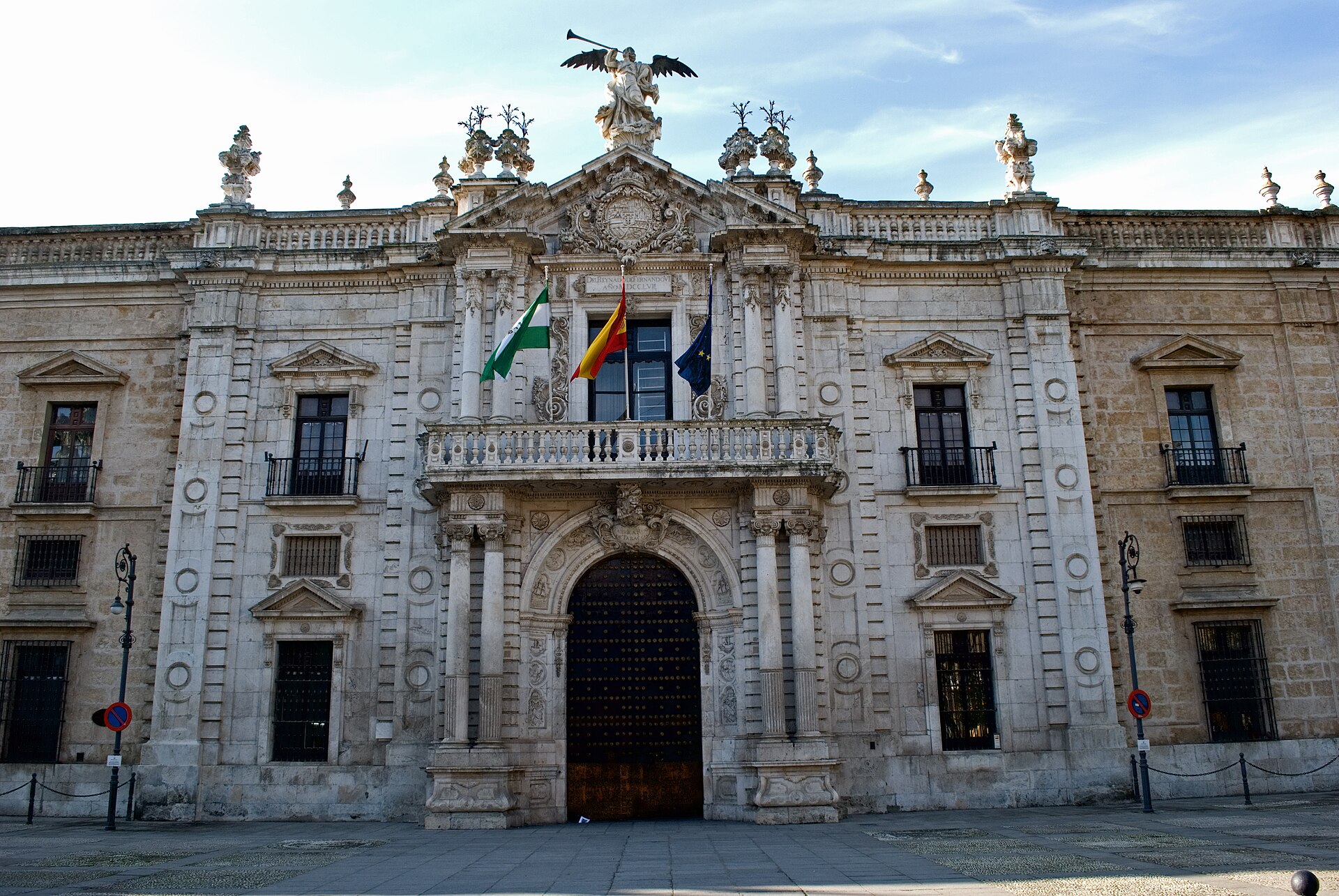
The Real Fábrica de Tabacos in Seville is a monumental 18th-century industrial building that served as the primary tobacco processing center for the Spanish Empire. Designed by architect Sebastián van der Borcht, the structure is a prime example of industrial architecture from the Enlightenment period, featuring a moat, drawbridges, and a symmetrical layout that reflects the defensive and administrative needs of the era.
Following the decline of the tobacco industry in the 20th century, the building was repurposed to house the central offices and several faculties of the University of Seville. It remains one of the most significant historical landmarks in the city, renowned for its architectural scale and its role in the literary imagination, most notably as the setting for Prosper Mérimée's novella Carmen.
Key Facts
- Materials
- Stone, Brick
- Civilization
- Spanish
- Accessibility
- Ground floor accessible to the public
- Date(s)
- 1728-1770
- Condition
- Well-preserved, repurposed as a university building
- Original Function
- Tobacco manufacturing plant
- Key Figures
- Sebastián van der Borcht, Prosper Mérimée
Construction and Industrial Peak
1728-1770Construction began in 1728 to centralize tobacco production in Seville. The massive complex was designed to be self-sufficient, including its own chapel, prison, and housing for workers, reflecting the immense economic importance of the tobacco trade to the Spanish Crown.
The Carmen Legend
19th CenturyDuring the 19th century, the factory employed thousands of women, known as cigarreras. This unique social environment inspired Prosper Mérimée to write his 1845 novella Carmen, which later became the basis for Georges Bizet's famous opera, cementing the factory's place in global cultural history.
University Conversion
1950s-PresentAs industrial production methods changed, the factory ceased operations. In the mid-20th century, the building underwent extensive renovations to adapt its vast interior spaces for academic use, becoming the seat of the University of Seville.
Cultural Significance
The factory stands as a symbol of Seville's historical role as a gateway for goods from the Americas. Its architectural design, which incorporates military-style defenses like a moat, highlights the high value of tobacco as a state-monopolized commodity during the 18th century.
Beyond its industrial history, the site holds deep cultural resonance through its association with the figure of Carmen. The factory is viewed as the birthplace of the archetypal 'femme fatale' in Western literature, influencing countless artistic interpretations and shaping the romanticized international perception of Andalusian culture.
Interpretive Notes
Scholarly debates and areas of uncertainty
Historians often debate the extent to which the factory's design was influenced by contemporary military fortification trends versus purely functional industrial requirements. Additionally, there is ongoing discussion regarding the impact of the factory's labor conditions on the social development of 19th-century Seville.
Visiting Information
Entry Rules
The building is open to the public as part of the University of Seville campus. Visitors are expected to respect academic activities and remain in designated public areas.
Best Times to Visit
Weekdays during university term time to experience the academic atmosphere, or early morning to avoid the heat of the Andalusian summer.
Photography
Photography is permitted in public areas and courtyards. Flash and tripods are prohibited inside academic buildings.
Preservation Notes
The structure is a protected historical monument. Visitors should refrain from touching original stonework and stay within marked pathways in the courtyards.
Nearby POIs
11 shownSources & Further Reading
- [1]The Royal Tobacco Factory of Seville — Antonio de la Banda y Vargas. University of Seville Press (1995)
- [2]Industrial Architecture in 18th Century Spain — Javier M. González. Journal of Spanish Heritage (2012)
Key Facts
- Materials
- Stone, Brick
- Civilization
- Spanish
- Accessibility
- Ground floor accessible to the public
- Date(s)
- 1728-1770
- Condition
- Well-preserved, repurposed as a university building
- Original Function
- Tobacco manufacturing plant
- Key Figures
- Sebastián van der Borcht, Prosper Mérimée