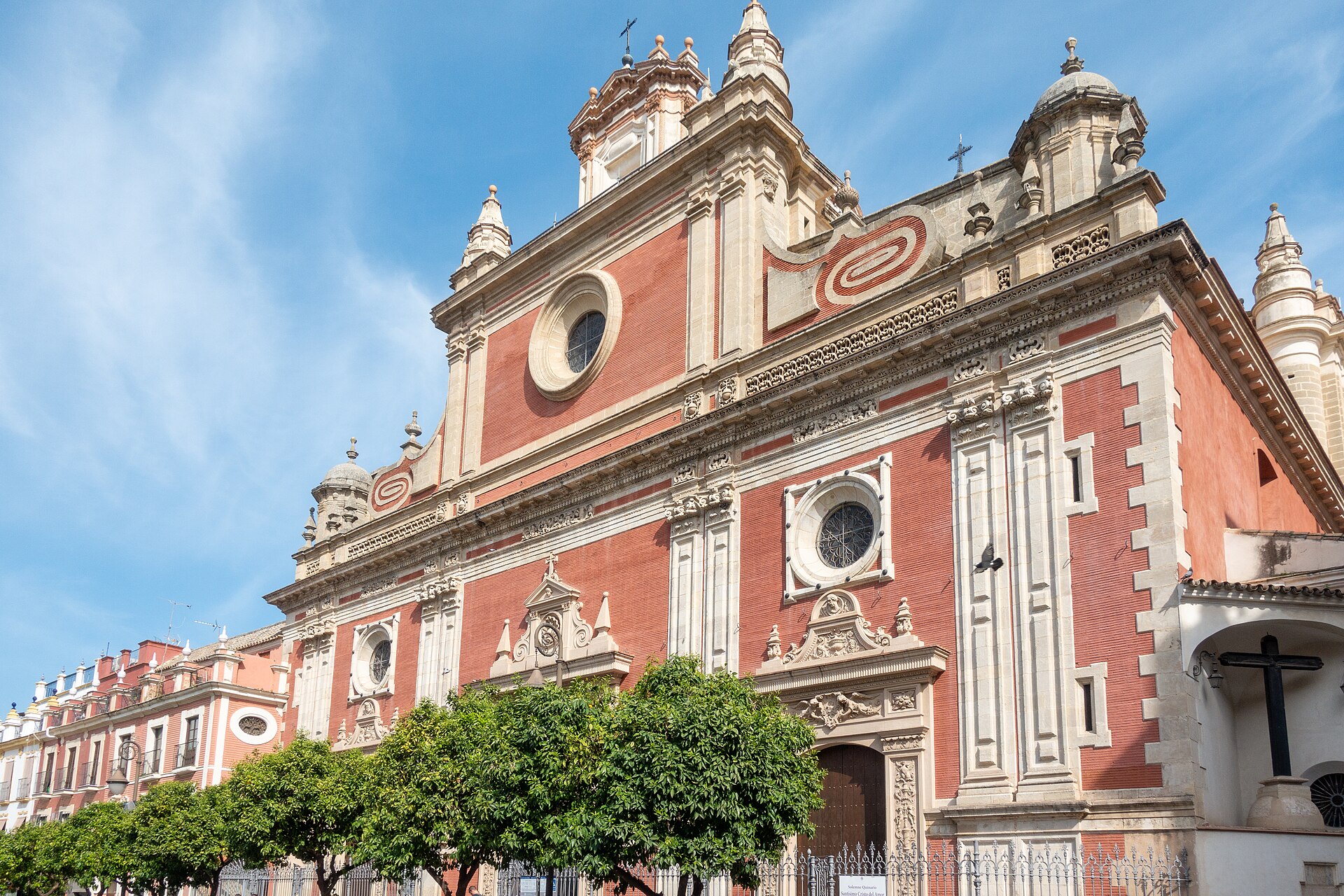
The Iglesia del Salvador is the second-largest church in Seville, situated on the site of the former 9th-century Umayyad Mosque of Ibn Adabbas. The current structure, built between 1674 and 1712, represents a significant example of Sevillian Baroque architecture, designed by architect Esteban García. Its prominent location in the city center has made it a focal point for religious and social life for centuries.
The interior is renowned for its elaborate collection of Baroque art, featuring monumental altarpieces and sculptures by masters such as Juan de Mesa and Martínez Montañés. The church retains elements of its Islamic past, including the base of the minaret, which was converted into the current bell tower, and a courtyard that preserves the layout of the original mosque's ablution area.
Key Facts
- Materials
- Brick, Stone, Plaster, Wood
- Civilization
- Spanish
- Accessibility
- Ground level accessible
- Date(s)
- 1674-1712
- Condition
- Well-preserved, active parish church
- Original Function
- Mosque (predecessor), Catholic Church
- Key Figures
- Esteban García, Juan de Mesa, Martínez Montañés
Islamic Origins
9th centuryThe site originally housed the Great Mosque of Seville, commissioned by Abd al-Rahman II. It served as the city's primary mosque until the construction of the Almohad Mosque in the 12th century.
Christian Conversion
13th centuryFollowing the Reconquista of Seville in 1248, the mosque was consecrated as a Christian church. It functioned as the main parish church of the city for several centuries while retaining much of the original Islamic architectural footprint.
Baroque Reconstruction
1674-1712Due to the structural deterioration of the medieval building, the current Baroque church was commissioned. Esteban García designed the new structure, which integrated the remaining foundations of the mosque while introducing a grand, theatrical interior aesthetic.
Modern Restoration
2003-2008A comprehensive restoration project was undertaken to stabilize the structure and clean the extensive collection of altarpieces. This project revealed significant archaeological layers, including Roman and Visigothic remains beneath the floor.
Cultural Significance
The Iglesia del Salvador serves as a physical manifestation of Seville's layered history, bridging the Islamic and Christian eras. It is a vital site for the city's Holy Week (Semana Santa) traditions, as several brotherhoods use the church as a starting point for their processions.
Beyond its religious role, the church is a repository of the 'Sevillian School' of sculpture. The presence of works by Montañés and de Mesa makes it a primary site for the study of 17th-century Spanish religious art and the development of the Baroque style in Andalusia.
Interpretive Notes
Scholarly debates and areas of uncertainty
There is ongoing academic discussion regarding the extent of the original mosque's layout that remains preserved beneath the current church. While the minaret base is confirmed, the exact configuration of the mosque's prayer hall and its relationship to the Roman-era structures found during recent excavations remain subjects of archaeological investigation.
Visiting Information
Entry Rules
Open daily for visitors. A small entrance fee is required for tourists, which includes access to the church and the archaeological courtyard. Modest dress is requested as it is an active place of worship.
Best Times to Visit
Weekday mornings are generally quieter. The church is particularly significant during the week leading up to Easter, though access may be restricted due to religious processions.
Photography
Photography is permitted for personal use without flash. Tripods and professional equipment require prior authorization from the parish office.
Preservation Notes
Visitors are asked to respect the cordoned-off areas around the historic altarpieces. The church is a fragile environment; do not touch the gilded wood or stone carvings.
Nearby POIs
11 shownSources & Further Reading
- [1]The Baroque Architecture of Seville — Antonio Sancho Corbacho. Editorial Castalia (1982)
- [2]Archaeological Excavations at the Church of El Salvador — Fernando Amores Carredano. Journal of Andalusian Archaeology (2009)
Key Facts
- Materials
- Brick, Stone, Plaster, Wood
- Civilization
- Spanish
- Accessibility
- Ground level accessible
- Date(s)
- 1674-1712
- Condition
- Well-preserved, active parish church
- Original Function
- Mosque (predecessor), Catholic Church
- Key Figures
- Esteban García, Juan de Mesa, Martínez Montañés