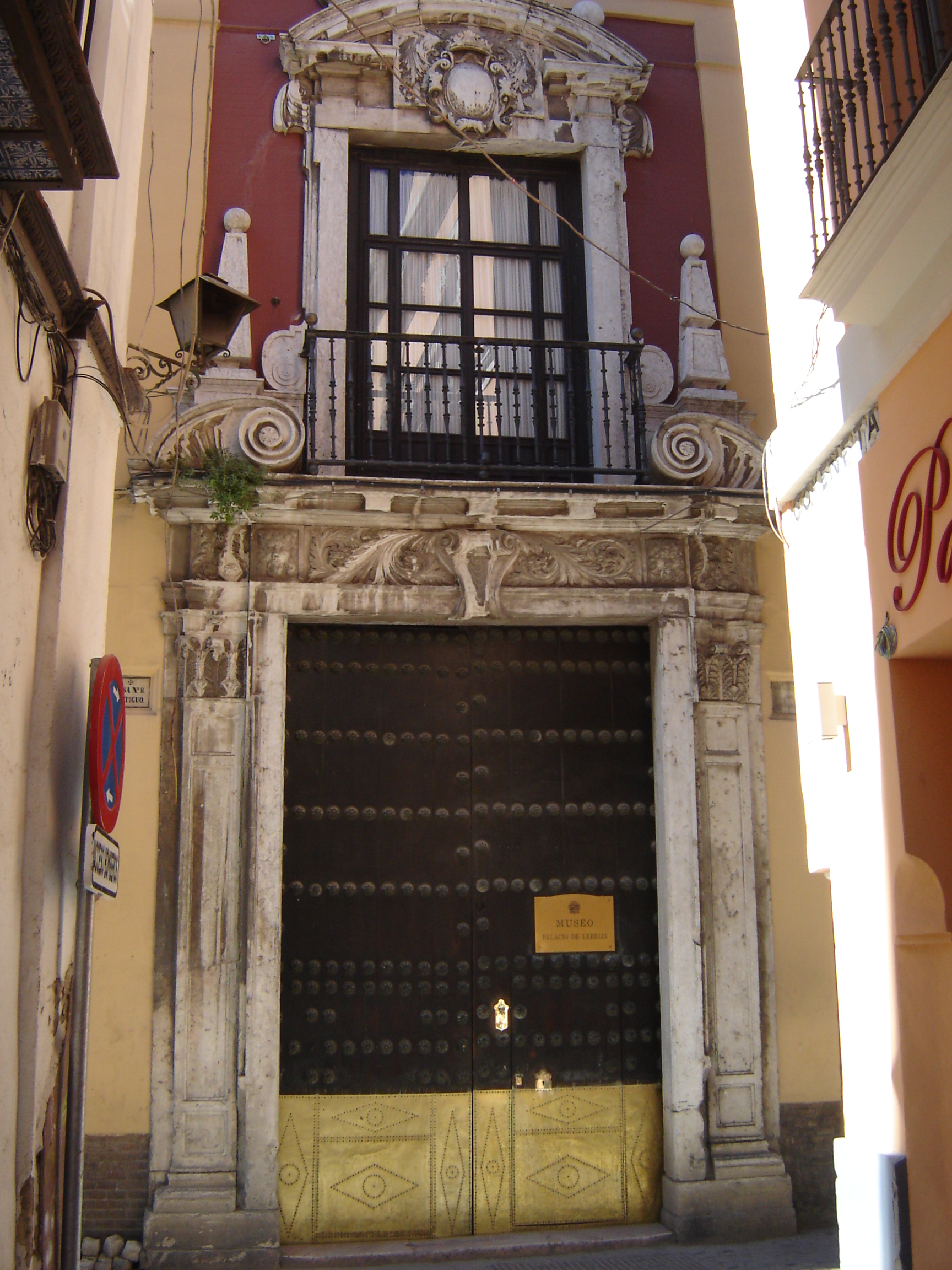
The Palace of the Countess of Lebrija is a historic mansion located on Calle Cuna in Seville, Spain. Originally constructed in the 16th century, the building underwent significant modifications in the early 20th century under the direction of Regla Manjón Mergelina, the Countess of Lebrija, who transformed the residence into a private museum to house her extensive collection of antiquities and fine art.
The palace is renowned for its architectural fusion of Mudéjar and Renaissance styles, centered around a grand Andalusian patio. The ground floor is particularly noted for its collection of Roman mosaics, which were integrated into the flooring during the palace's renovation, alongside a diverse array of artifacts ranging from Greek pottery and Roman busts to Flemish paintings and Asian decorative arts.
Key Facts
- Materials
- Brick, Marble, Ceramic tiles, Wood
- Civilization
- Spanish
- Accessibility
- Ground floor accessible; upper floor access limited
- Date(s)
- 16th century (original), 1901-1914 (renovation)
- Condition
- Well-preserved house museum
- Original Function
- Private residence
- Key Figures
- Regla Manjón Mergelina
Origins and Early History
16th CenturyThe palace was built in the 16th century as a traditional Sevillian noble residence. It followed the classic layout of the region, featuring a central courtyard that provided light and ventilation to the surrounding rooms.
The Countess's Vision
1901-1914Regla Manjón Mergelina, the Countess of Lebrija, acquired the property and initiated a comprehensive restoration. Her goal was to create a space that could accommodate her vast collection of archaeological finds and art, blending historical preservation with the display of her personal acquisitions.
Modern Museum Status
20th Century - PresentFollowing the death of the Countess, the palace was opened to the public as a museum. It remains one of the most significant private collections in Seville, maintained by the family foundation to preserve both the architectural heritage and the eclectic art collection.
Cultural Significance
The Palace of the Countess of Lebrija serves as a testament to the 19th and early 20th-century aristocratic interest in archaeology and collecting. It is a vital example of how private residences in Seville were adapted to preserve and display cultural heritage, effectively bridging the gap between private domestic space and public museum exhibition.
Interpretive Notes
Scholarly debates and areas of uncertainty
There is ongoing scholarly discussion regarding the provenance of several Roman mosaics within the collection, specifically concerning their original archaeological sites of extraction and the ethics of their integration into the palace floor during the early 20th-century renovation.
Visiting Information
Entry Rules
Open daily. Tickets can be purchased at the entrance or online. Guided tours are available for the upper floor. Modest dress is appreciated.
Best Times to Visit
Weekday mornings to avoid weekend tourist crowds. Spring is ideal for enjoying the central patio.
Photography
Personal photography is permitted without flash or tripods. Commercial photography requires prior authorization.
Preservation Notes
Do not step on the Roman mosaics in the central courtyard. Follow all marked pathways and refrain from touching the artifacts or furniture.
Nearby POIs
11 shown- Setas de Sevilla0.2 km
- Iglesia del Salvador0.2 km
- Palacio de las Duenas0.5 km
- Museo de Bellas Artes de Sevilla0.6 km
- Casa de Pilatos0.6 km
- Catedral de Sevilla0.7 km
- Archivo General de Indias0.8 km
- Royal Alcazar of Seville1 km
- Torre del Oro1.1 km
- Real Fabrica de Tabacos1.2 km
- Archeological Museum of Seville2.4 km
Sources & Further Reading
- [1]
- [2]Seville: The Architecture of the City — Antonio González. University of Seville Press (2018)
Key Facts
- Materials
- Brick, Marble, Ceramic tiles, Wood
- Civilization
- Spanish
- Accessibility
- Ground floor accessible; upper floor access limited
- Date(s)
- 16th century (original), 1901-1914 (renovation)
- Condition
- Well-preserved house museum
- Original Function
- Private residence
- Key Figures
- Regla Manjón Mergelina
Nearby POIs
11 shown- Setas de Sevilla0.2 km
- Iglesia del Salvador0.2 km
- Palacio de las Duenas0.5 km
- Museo de Bellas Artes de Sevilla0.6 km
- Casa de Pilatos0.6 km
- Catedral de Sevilla0.7 km
- Archivo General de Indias0.8 km
- Royal Alcazar of Seville1 km
- Torre del Oro1.1 km
- Real Fabrica de Tabacos1.2 km
- Archeological Museum of Seville2.4 km