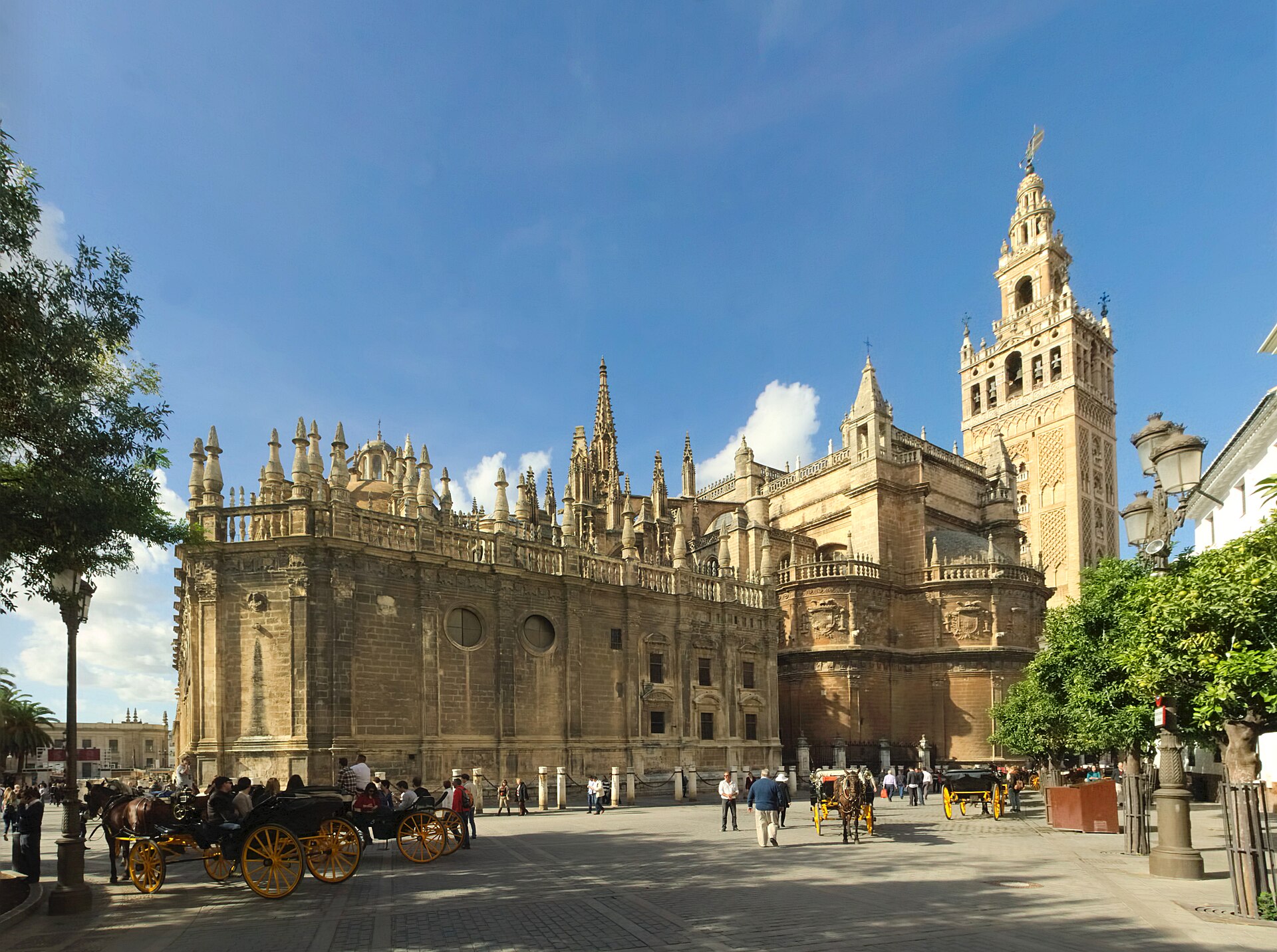
The Cathedral of Saint Mary of the See, commonly known as the Seville Cathedral, is the largest Gothic cathedral in the world and the third-largest church in total area. Constructed between 1401 and 1506, it was built on the site of the 12th-century Almohad Mosque to demonstrate the city's wealth and power following the Reconquista.
The structure incorporates the Giralda, a former minaret converted into a bell tower, and features a vast interior with five naves and numerous side chapels. It serves as the final resting place for several historical figures, most notably Christopher Columbus, whose tomb is housed within the cathedral's transept.
Key Facts
- Materials
- Stone, Marble, Gold leaf
- Civilization
- Castilian
- Accessibility
- Wheelchair accessible via designated entrances
- Date(s)
- 1401-1506
- Condition
- Active place of worship and museum
- Original Function
- Catholic Cathedral
- Key Figures
- Christopher Columbus, Ferdinand III of Castile, Alonso Cano
Almohad Origins
1172-1248The site originally housed the Great Mosque of Seville, commissioned by the Almohad Caliphate. The Giralda tower was completed in 1198 as a minaret, serving as the architectural foundation for the later Christian structure.
Gothic Construction
1401-1506Following the Reconquista, the mosque was repurposed as a church before being demolished to make way for the current Gothic cathedral. The project was intended to be so grand that the builders famously declared, 'Let us build a church so beautiful and so great that those who see it finished will think we are mad.'
Renaissance Additions
16th centuryThe cathedral underwent significant interior modifications during the Renaissance, including the addition of the Royal Chapel and the completion of the main altarpiece, which remains one of the largest and most complex in Christendom.
Modern Preservation
19th century - presentThe cathedral has undergone extensive restoration efforts to preserve its structural integrity, particularly following the 1755 Lisbon earthquake which caused damage to the Giralda. It was designated a UNESCO World Heritage site in 1987.
Cultural Significance
The Seville Cathedral is a profound symbol of the transition from Islamic to Christian rule in the Iberian Peninsula. Its architecture serves as a physical record of the Reconquista, blending Almohad foundations with European Gothic and Renaissance styles.
Beyond its religious function, the cathedral is a repository of Spanish national history. The presence of Christopher Columbus's tomb links the site to the Age of Discovery, making it a focal point for discussions regarding Spain's colonial legacy and maritime history.
Interpretive Notes
Scholarly debates and areas of uncertainty
There is ongoing academic discussion regarding the exact extent of the original Almohad mosque's layout that remains beneath the current floor plan. Additionally, the authenticity of the remains attributed to Christopher Columbus has been the subject of forensic investigation, with DNA analysis confirming their identity in 2006, though some debate persists regarding the movement of his remains between various locations over the centuries.
Visiting Information
Entry Rules
Open daily for visitors. Tickets are required for entry and can be purchased online or at the box office. Modest dress is required; shoulders and knees should be covered. Security checks are mandatory at the entrance.
Best Times to Visit
Early morning or late afternoon on weekdays to avoid peak tourist crowds. The Giralda tower is best visited during cooler hours due to the ramp-based ascent.
Photography
Personal photography is permitted without flash or tripods. Professional photography requires prior authorization from the Cathedral administration.
Preservation Notes
Visitors are requested to remain within marked areas and refrain from touching the altarpieces or historical tombs. The cathedral is an active religious site; please maintain silence during services.
Nearby POIs
11 shown- Archivo General de Indias0.1 km
- Royal Alcazar of Seville0.4 km
- Iglesia del Salvador0.5 km
- Torre del Oro0.5 km
- Real Fabrica de Tabacos0.6 km
- Lebrija Palace0.7 km
- Casa de Pilatos0.7 km
- Setas de Sevilla0.8 km
- Museo de Bellas Artes de Sevilla0.9 km
- Palacio de las Duenas1.1 km
- Archeological Museum of Seville1.8 km
Sources & Further Reading
- [1]The Cathedral of Seville: A History — Luis Martinez Montiel. University of Seville Press (2012)
- [2]Gothic Architecture in Spain — John Harvey. Cambridge University Press (1995)
Key Facts
- Materials
- Stone, Marble, Gold leaf
- Civilization
- Castilian
- Accessibility
- Wheelchair accessible via designated entrances
- Date(s)
- 1401-1506
- Condition
- Active place of worship and museum
- Original Function
- Catholic Cathedral
- Key Figures
- Christopher Columbus, Ferdinand III of Castile, Alonso Cano
Nearby POIs
11 shown- Archivo General de Indias0.1 km
- Royal Alcazar of Seville0.4 km
- Iglesia del Salvador0.5 km
- Torre del Oro0.5 km
- Real Fabrica de Tabacos0.6 km
- Lebrija Palace0.7 km
- Casa de Pilatos0.7 km
- Setas de Sevilla0.8 km
- Museo de Bellas Artes de Sevilla0.9 km
- Palacio de las Duenas1.1 km
- Archeological Museum of Seville1.8 km