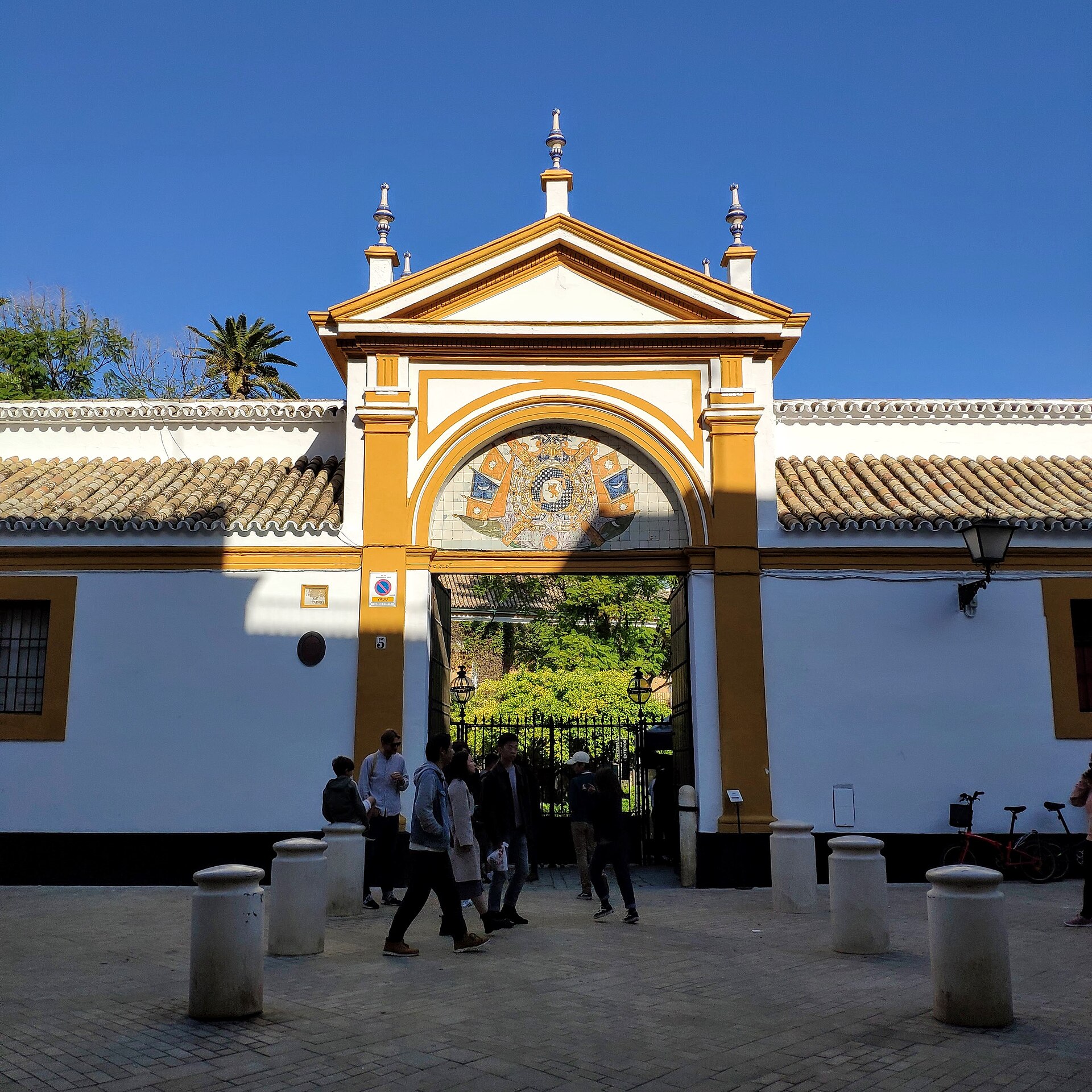
The Palacio de las Dueñas is a historic residence in Seville, Spain, known for its blend of Gothic-Mudejar and Renaissance architectural styles. Built primarily between the 15th and 16th centuries, the palace served as the primary residence of the House of Alba, one of Spain's most prominent noble families. The structure is organized around a series of courtyards and gardens, reflecting the traditional Andalusian domestic layout.
Beyond its architecture, the palace houses an extensive collection of fine art, tapestries, and historical artifacts. It is also noted for its literary connections, most famously as the birthplace of the poet Antonio Machado, whose family lived in the palace during his childhood. The site remains a significant example of aristocratic residential heritage in southern Spain.
Key Facts
- Materials
- Brick, Ceramic tiles, Marble, Wood
- Civilization
- Spanish
- Accessibility
- Partially accessible; some areas have uneven historic flooring
- Date(s)
- 15th - 16th century
- Condition
- Well-preserved, museum and private residence
- Original Function
- Noble residence
- Key Figures
- Antonio Machado, Cayetana Fitz-James Stuart, House of Alba
Origins and Construction
15th centuryThe palace was commissioned by the Pineda family in the late 15th century. It was later acquired by the House of Alba through marriage and inheritance, becoming a central hub for the family's social and political life in Seville.
Literary Significance
19th centuryThe palace gained cultural prominence as the birthplace of the poet Antonio Machado in 1875. His father served as the administrator of the estate, and the palace's gardens and courtyards frequently appear as motifs in Machado's later literary works.
Modern Era and Public Access
21st centuryIn 2016, the palace was opened to the public as a museum. It continues to be managed by the House of Alba, preserving its extensive art collection and historical archives while allowing visitors to explore the private living quarters and gardens.
Cultural Significance
The Palacio de las Dueñas is a vital repository of Andalusian aristocratic history, representing the evolution of noble domestic architecture from the late Middle Ages through the Renaissance. Its preservation of both physical structures and personal archives provides insight into the lifestyle of the Spanish nobility over five centuries.
Furthermore, its status as a literary landmark, tied to the legacy of Antonio Machado, elevates the site beyond its architectural value. It serves as a bridge between the historical grandeur of the House of Alba and the cultural identity of modern Seville.
Interpretive Notes
Scholarly debates and areas of uncertainty
Debates exist regarding the attribution of specific architectural elements within the palace, particularly the transition points between the original Mudejar foundations and the later Renaissance additions. Scholars also discuss the extent to which the 20th-century renovations altered the original spatial configuration of the gardens.
Visiting Information
Entry Rules
Open daily. Tickets can be purchased online or at the entrance. Visitors are expected to maintain a quiet demeanor and follow designated paths through the gardens and interior rooms.
Best Times to Visit
Spring (March-May) is ideal to see the gardens in bloom. Early morning visits are recommended to avoid peak tourist crowds.
Photography
Personal photography is permitted for non-commercial use. Tripods and professional lighting equipment are prohibited without prior authorization.
Preservation Notes
Visitors are requested not to touch the tapestries, furniture, or historical artifacts. Stay within marked areas to protect the delicate tilework and garden vegetation.
Nearby POIs
11 shownSources & Further Reading
- [1]Palacio de las Dueñas: Historia y Arte — Fundación Casa de Alba. Casa de Alba Official Archives (2016)View
- [2]Antonio Machado: Vida y Obra — Ian Gibson. Editorial Planeta (2006)
Key Facts
- Materials
- Brick, Ceramic tiles, Marble, Wood
- Civilization
- Spanish
- Accessibility
- Partially accessible; some areas have uneven historic flooring
- Date(s)
- 15th - 16th century
- Condition
- Well-preserved, museum and private residence
- Original Function
- Noble residence
- Key Figures
- Antonio Machado, Cayetana Fitz-James Stuart, House of Alba