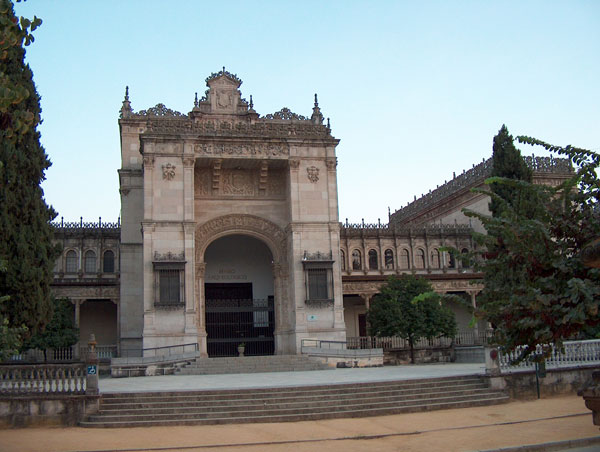
The Archaeological Museum of Seville is housed in the Neo-Renaissance Pavilion of Fine Arts, designed by Aníbal González for the 1929 Ibero-American Exposition. It serves as the primary repository for archaeological findings in the province of Seville, documenting human activity from the prehistoric era through the Middle Ages.
The collection is particularly noted for its extensive holdings of Tartessian artifacts, including the famous Carambolo Treasure, a collection of gold jewelry dating to the 7th century BCE. The museum also features significant Roman mosaics and sculptures recovered from the nearby ancient city of Italica, providing a comprehensive overview of the region's complex cultural history.
Key Facts
- Materials
- Brick, Ceramic, Stone
- Civilization
- Spanish
- Accessibility
- Wheelchair accessible
- Date(s)
- 1910-1916
- Condition
- Active museum
- Original Function
- Pavilion of Fine Arts for the 1929 Ibero-American Exposition
- Key Figures
- Aníbal González
Origins and the 1929 Exposition
Early 20th CenturyThe building was constructed as the Fine Arts Pavilion for the Ibero-American Exposition of 1929. Architect Aníbal González utilized a regionalist style, blending Neo-Renaissance elements with traditional Andalusian brickwork and ceramics.
Establishment of the Museum
1942The museum was officially established in its current location in 1942, moving from its previous site at the Convent of La Merced. It was tasked with preserving the growing collection of artifacts discovered during regional excavations.
Modernization and Restoration
21st CenturyThe museum has undergone several phases of modernization to improve conservation standards and exhibition accessibility. It remains a critical center for the study of the Tartessian civilization and Roman Hispania.
Cultural Significance
The museum is central to the understanding of the Tartessian culture, a semi-mythical civilization that flourished in southwestern Spain. By housing the Carambolo Treasure, it serves as a focal point for research into the early metal-working traditions of the Iberian Peninsula and the subsequent Romanization of the region.
Interpretive Notes
Scholarly debates and areas of uncertainty
The exact nature and extent of the Tartessian civilization remain a subject of ongoing debate among archaeologists, particularly regarding the degree of influence from Phoenician traders versus indigenous development.
Visiting Information
Entry Rules
Open Tuesday to Sunday. Free entry for EU citizens; small fee for non-EU visitors. No large bags allowed in exhibition halls.
Best Times to Visit
Weekday mornings to avoid weekend crowds. The museum is located in Maria Luisa Park, which is best visited in the cooler spring or autumn months.
Photography
Personal photography permitted without flash or tripods. Commercial photography requires prior authorization.
Preservation Notes
Maintain a respectful distance from artifacts. Do not use flash photography as it can damage sensitive materials.
Nearby POIs
11 shownSources & Further Reading
- [1]Museo Arqueológico de Sevilla: Guía de la colección — Junta de Andalucía. Consejería de Cultura (2015)View
- [2]The Tartessos and the Carambolo Treasure — Aubet, M. E.. Journal of Iberian Archaeology (2001)
Key Facts
- Materials
- Brick, Ceramic, Stone
- Civilization
- Spanish
- Accessibility
- Wheelchair accessible
- Date(s)
- 1910-1916
- Condition
- Active museum
- Original Function
- Pavilion of Fine Arts for the 1929 Ibero-American Exposition
- Key Figures
- Aníbal González