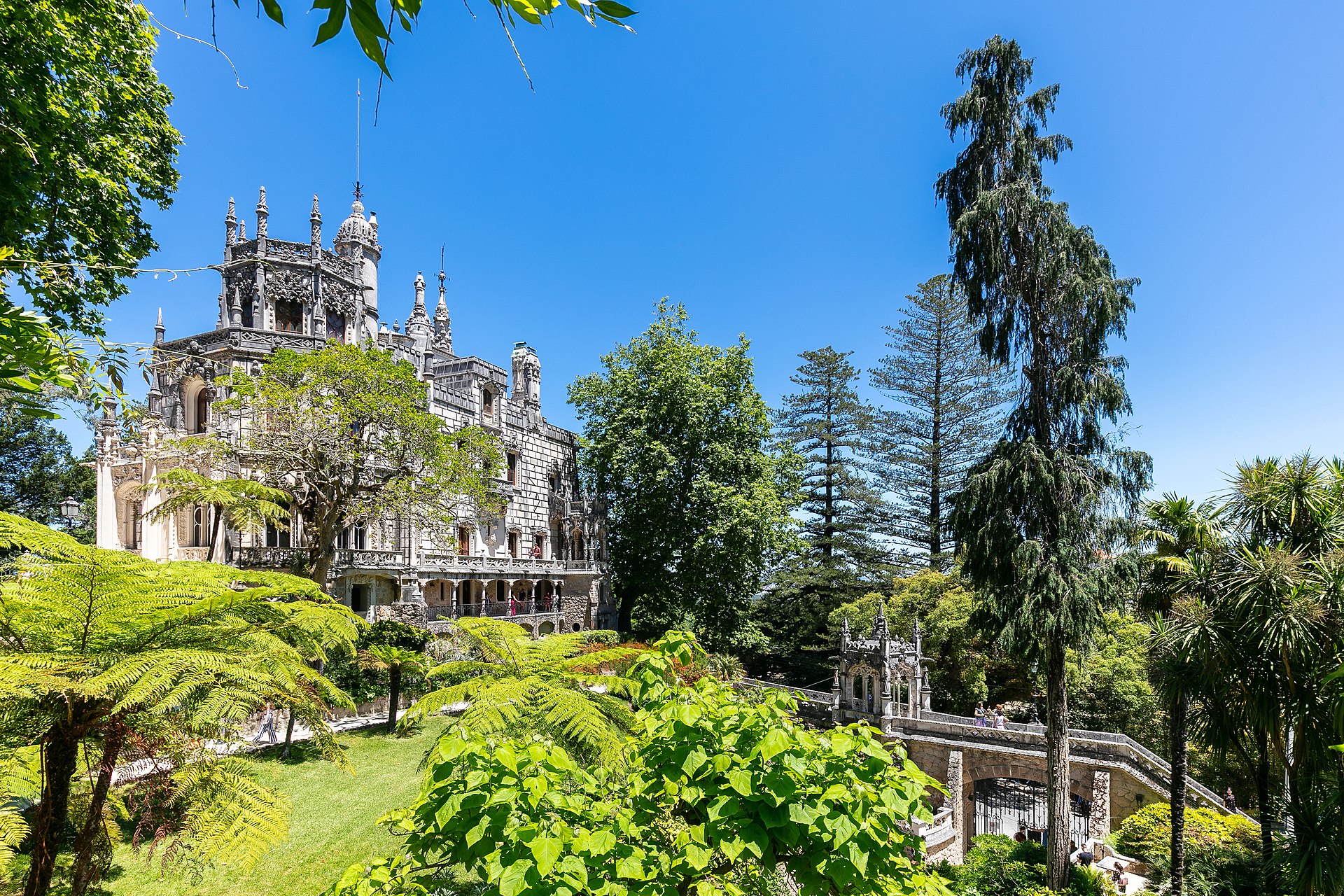
Quinta da Regaleira is a 20th-century estate located in the historic center of Sintra, Portugal. The property is renowned for its eclectic architecture, which blends Neo-Manueline, Neo-Gothic, and Neo-Renaissance styles, and its expansive, symbolic gardens designed to reflect the esoteric interests of its former owner, António Augusto Carvalho Monteiro.
The estate features a main palace, a Roman Catholic chapel, and a complex landscape of lakes, grottoes, and subterranean tunnels. The most iconic feature is the Initiation Well, a subterranean tower with a spiral staircase that descends into the earth, reflecting themes of alchemy, Freemasonry, and Rosicrucianism.
Key Facts
- Materials
- Limestone, Granite, Stained glass, Wrought iron
- Civilization
- Portuguese
- Accessibility
- Partial; some garden paths and tunnels are steep or uneven
- Date(s)
- 1904-1910
- Condition
- Well-preserved, public museum and park
- Original Function
- Private residence and estate
- Key Figures
- António Augusto Carvalho Monteiro, Luigi Manini
Early Ownership
17th-19th centuryThe estate changed hands several times throughout the 18th and 19th centuries. It was known as the 'Quinta da Torre' or 'Quinta do Relógio' before being purchased by Carvalho Monteiro in 1898.
Construction of the Current Estate
1904-1910Carvalho Monteiro commissioned the Italian architect Luigi Manini to redesign the estate. The project aimed to create a microcosm of the owner's philosophical and esoteric interests, resulting in the current palace and the highly symbolic garden landscape.
Public Acquisition and Preservation
1997-presentThe Sintra Town Council acquired the property in 1997. Extensive restoration work was undertaken to preserve the structures and gardens, leading to its opening as a public cultural site and its inclusion in the UNESCO World Heritage cultural landscape of Sintra.
Cultural Significance
Quinta da Regaleira serves as a primary example of the Romantic movement in Portugal, specifically the revivalist architectural trends of the late 19th and early 20th centuries. Its design is deeply rooted in the cultural and intellectual atmosphere of the time, where interest in occultism, mythology, and national identity was expressed through architecture.
The site is a significant cultural landmark in Sintra, attracting visitors interested in both its architectural beauty and its complex, symbolic garden design. It remains a focal point for studies on the intersection of landscape architecture and esoteric symbolism in European history.
Interpretive Notes
Scholarly debates and areas of uncertainty
There is ongoing scholarly discussion regarding the exact interpretation of the symbolism within the gardens. While the influence of Freemasonry and the Knights Templar is widely acknowledged, some historians argue that the iconography is a broader synthesis of various mythological and literary references rather than a strictly coded esoteric map.
Visiting Information
Entry Rules
Open daily from 10:00 to 18:30 (last entry 17:30). Tickets can be purchased at the entrance or online. Visitors are advised to wear comfortable footwear due to the steep terrain and uneven surfaces in the gardens.
Best Times to Visit
Weekdays during the shoulder seasons (spring and autumn) to avoid the high volume of weekend tourists and the intense summer heat.
Photography
Personal photography is permitted throughout the estate. Tripods and commercial filming require prior authorization from the administration.
Preservation Notes
The subterranean structures, particularly the Initiation Well, are sensitive to moisture and foot traffic. Visitors are required to stay on marked paths and refrain from touching the carvings or wall surfaces.
Nearby POIs
11 shownSources & Further Reading
- [1]
- [2]The Romantic Architecture of Sintra — José Augusto França. Editorial Presença (2004)
Key Facts
- Materials
- Limestone, Granite, Stained glass, Wrought iron
- Civilization
- Portuguese
- Accessibility
- Partial; some garden paths and tunnels are steep or uneven
- Date(s)
- 1904-1910
- Condition
- Well-preserved, public museum and park
- Original Function
- Private residence and estate
- Key Figures
- António Augusto Carvalho Monteiro, Luigi Manini