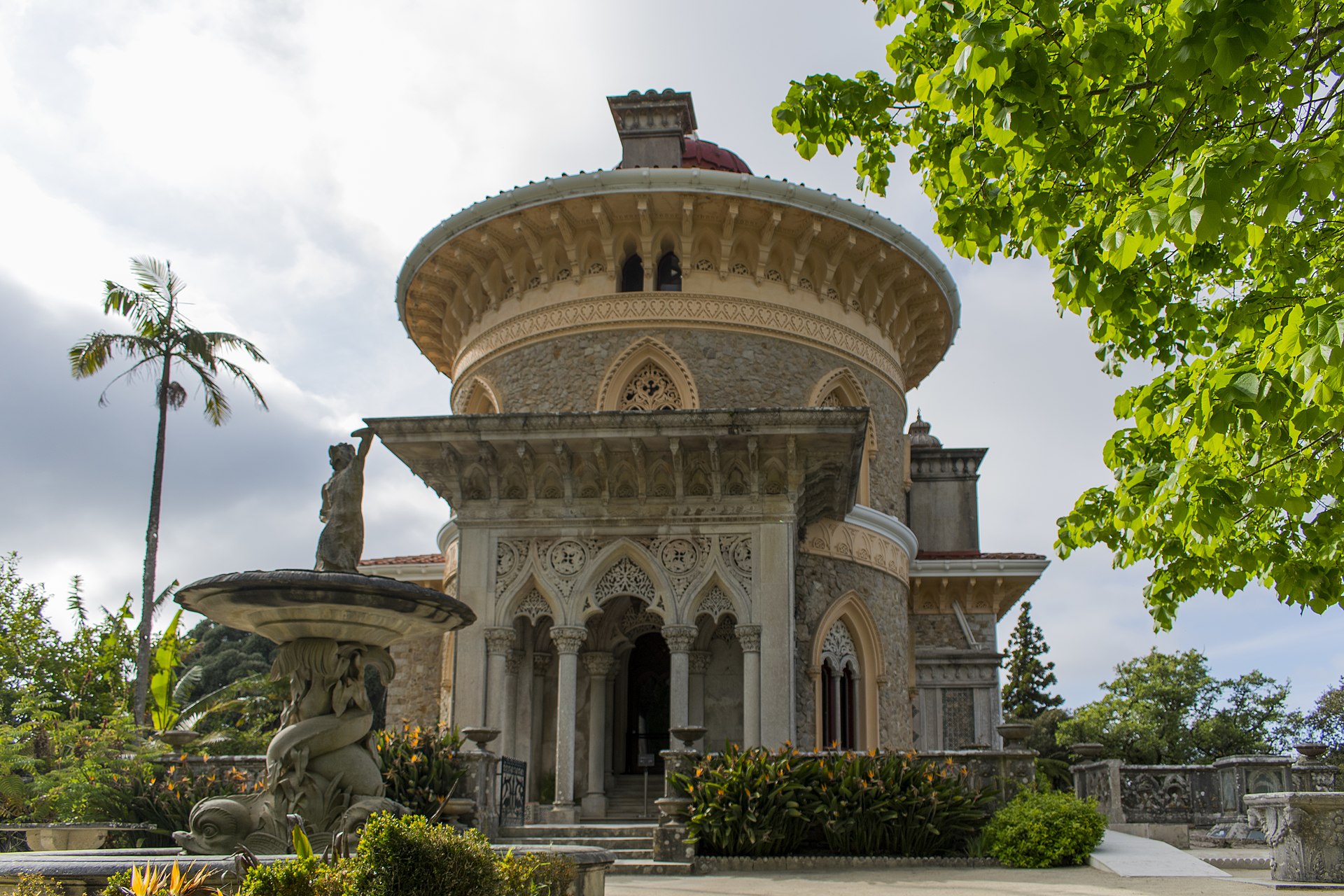
The Palácio de Monserrate is a 19th-century villa located in the hills of Sintra, Portugal. Originally built as a neo-Gothic residence, it was transformed in 1858 by Sir Francis Cook, a wealthy British textile magnate, into a lavish summer retreat. The architecture is a distinctive example of Romanticism, blending Neo-Mudéjar, Neo-Gothic, and Indian architectural influences, characterized by intricate stucco work, marble carvings, and expansive glass domes.
The palace is set within a sprawling botanical garden that features exotic plant species from across the globe, organized by geographic origin. The estate reflects the 19th-century European fascination with orientalism and botanical exploration, serving as a testament to the aesthetic sensibilities of the Portuguese aristocracy and the British expatriate community during the era.
Key Facts
- Materials
- Marble, Stucco, Iron, Glass
- Civilization
- Portuguese
- Accessibility
- Partially accessible; some garden paths are steep or uneven
- Date(s)
- 1858
- Condition
- Restored and open to the public
- Original Function
- Summer residence
- Key Figures
- Sir Francis Cook, James Knowles, William Beckford
Early Origins
16th centuryThe site originally housed a chapel dedicated to Our Lady of Monserrate. By the late 18th century, the property had become a popular destination for travelers, including William Beckford, who leased the estate and began developing its early gardens.
The Cook Transformation
1858-1863Sir Francis Cook purchased the estate and commissioned architect James Knowles to design the current palace. The project integrated diverse architectural styles, creating a unique structure that served as a private residence for the Cook family for several generations.
State Acquisition and Restoration
20th century - presentThe Portuguese state acquired the palace in 1949. After decades of neglect, extensive restoration work began in the early 2000s, focusing on the structural integrity of the palace and the revitalization of the surrounding botanical gardens.
Cultural Significance
Monserrate Palace is a primary example of the Romantic movement in Portugal, symbolizing the cultural exchange between Britain and Portugal in the 19th century. It represents the 'Sintra Romanticism' style, which sought to harmonize architecture with the surrounding natural landscape.
Today, the site is a key component of the Cultural Landscape of Sintra, a UNESCO World Heritage site. It serves as a venue for cultural events and remains a significant site for the study of 19th-century landscape architecture and exotic botany.
Interpretive Notes
Scholarly debates and areas of uncertainty
Debates persist regarding the extent of the influence of William Beckford's original vision versus the later modifications by Francis Cook. Additionally, scholars continue to analyze the ethical implications of the colonial-era botanical collection and the environmental impact of maintaining non-native species in the Sintra microclimate.
Visiting Information
Entry Rules
Open daily. Tickets are required for entry to both the palace and the park. Visitors are expected to follow marked paths in the gardens to protect the botanical collections.
Best Times to Visit
Spring and early autumn offer the best conditions for exploring the extensive gardens. Weekday mornings are recommended to avoid peak tourist traffic from Lisbon.
Photography
Personal photography is permitted without flash or tripods. Commercial photography requires prior authorization from the Parques de Sintra administration.
Preservation Notes
The palace interior features delicate stucco and marble surfaces; touching walls or architectural elements is strictly prohibited. Visitors should remain on designated paths to prevent soil erosion in the garden areas.
Nearby POIs
11 shownSources & Further Reading
- [1]The Romantic Architecture of Sintra — José Custódio Vieira da Silva. Sintra Heritage Press (2015)
- [2]Monserrate: The Garden of the World — Gerard Luckhurst. Parques de Sintra-Monte da Lua (2018)
Key Facts
- Materials
- Marble, Stucco, Iron, Glass
- Civilization
- Portuguese
- Accessibility
- Partially accessible; some garden paths are steep or uneven
- Date(s)
- 1858
- Condition
- Restored and open to the public
- Original Function
- Summer residence
- Key Figures
- Sir Francis Cook, James Knowles, William Beckford