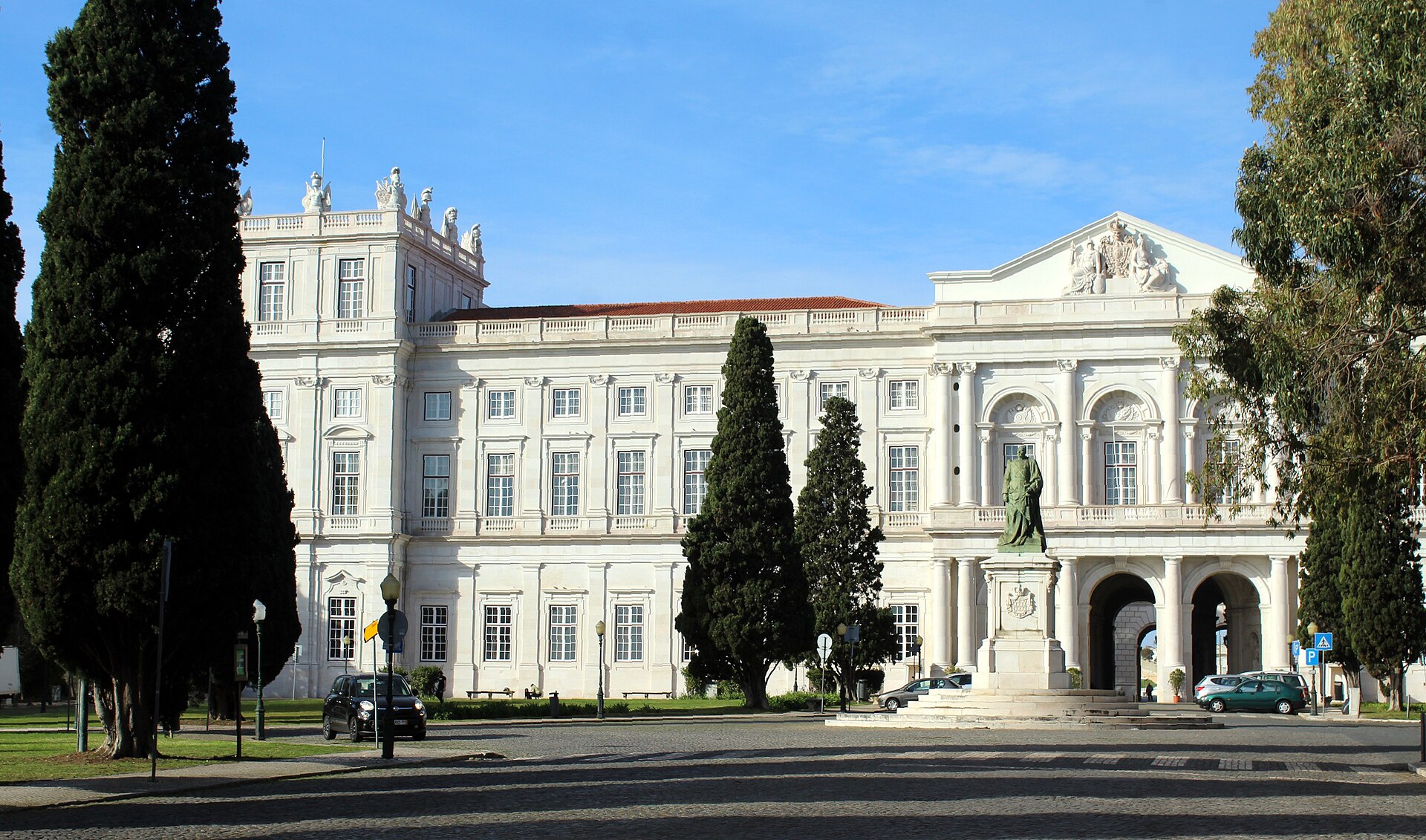
The Palace of Ajuda is a monumental Neoclassical residence located in Lisbon, commissioned by King Dom João VI and Queen Carlota Joaquina following the 1755 earthquake. Construction began in 1796 under the direction of architects Manuel Caetano de Sousa and later Francisco Xavier Fabri and José da Costa e Silva, though the project remained unfinished for decades due to the Portuguese royal family's flight to Brazil during the Napoleonic invasions.
Today, the palace serves as a museum housing an extensive collection of decorative arts, including tapestries, furniture, and jewelry belonging to the Portuguese royal family. It remains one of the few examples of a royal residence in Portugal that retains its original 19th-century interior layout and decor, offering insight into the lifestyle of the House of Braganza.
Key Facts
- Materials
- Lioz limestone, Marble, Gold leaf
- Civilization
- Portuguese
- Accessibility
- Partially accessible; some areas require stairs
- Date(s)
- 1796 - 19th century
- Condition
- Well-preserved museum
- Original Function
- Royal Residence
- Key Figures
- King Dom João VI, Queen Carlota Joaquina, King Dom Luís I
Origins and Royal Flight
1796-1807Following the destruction of the Ribeira Palace in the 1755 earthquake, the royal family sought a safer location. Construction began on a grand scale, but work was abruptly halted in 1807 when the royal court fled to Brazil to escape the invading Napoleonic forces.
Resumption and Completion
19th CenturyConstruction resumed intermittently throughout the 19th century. The palace became the official residence of King Dom Luís I and Queen Maria Pia of Savoy in 1861, who oversaw the final interior decorations and modernization of the state rooms.
Transition to Museum
1910-PresentFollowing the proclamation of the Portuguese Republic in 1910, the palace was closed as a royal residence. It was subsequently converted into a museum, preserving the royal collections and state apartments for public viewing.
Cultural Significance
The Palace of Ajuda stands as a symbol of the transition from the absolute monarchy to the constitutional era in Portugal. It represents the aesthetic tastes of the 19th-century European aristocracy and serves as a vital repository for Portuguese decorative arts and royal history.
Interpretive Notes
Scholarly debates and areas of uncertainty
There is ongoing scholarly discussion regarding the original architectural intent versus the final realized structure, as the palace was never completed according to the initial, much larger designs. Debates also persist regarding the conservation of the palace's extensive textile and furniture collections.
Visiting Information
Entry Rules
Open daily except Thursdays. Tickets can be purchased at the entrance. Modest attire is recommended as it is a historical site.
Best Times to Visit
Weekday mornings to avoid weekend tourist groups. The palace is particularly pleasant in the spring when the surrounding gardens are in bloom.
Photography
Personal photography is permitted without flash or tripods. Professional photography requires prior authorization from the museum administration.
Preservation Notes
Visitors are requested to refrain from touching furniture, tapestries, or wall coverings. Flash photography is strictly prohibited to protect light-sensitive artifacts.
Nearby POIs
11 shownSources & Further Reading
- [1]
- [2]The Royal Residences of Portugal — José Sarmento de Matos. Scala Arts & Heritage Publishers (2015)
Key Facts
- Materials
- Lioz limestone, Marble, Gold leaf
- Civilization
- Portuguese
- Accessibility
- Partially accessible; some areas require stairs
- Date(s)
- 1796 - 19th century
- Condition
- Well-preserved museum
- Original Function
- Royal Residence
- Key Figures
- King Dom João VI, Queen Carlota Joaquina, King Dom Luís I