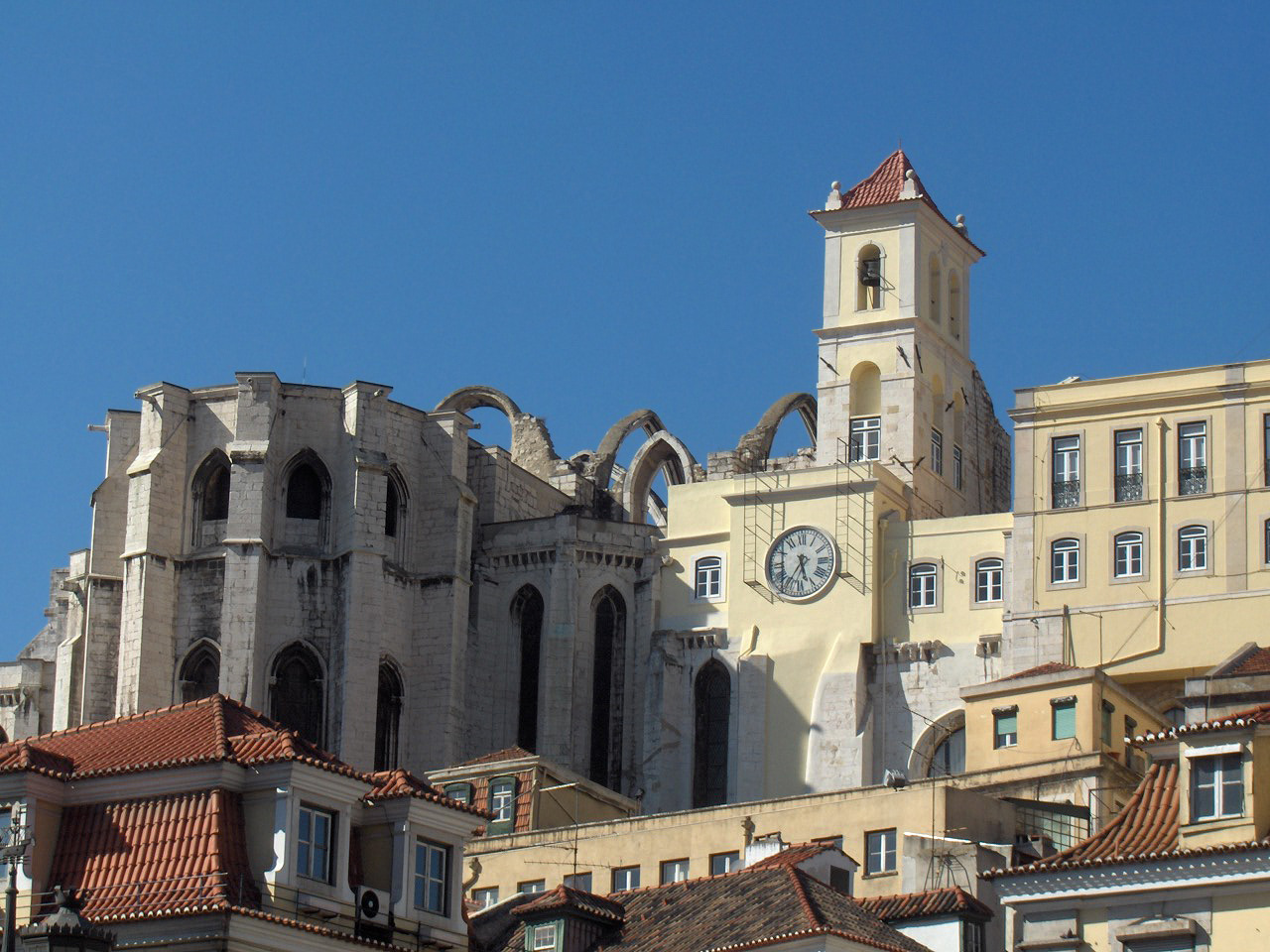
The Carmo Convent is a former Catholic religious complex located in the Chiado district of Lisbon. Founded in 1389 by Nuno Álvares Pereira for the Order of Our Lady of Mount Carmel, it served as one of the most prominent Gothic structures in the city until the devastating 1755 Lisbon earthquake.
The earthquake and subsequent fire caused the collapse of the convent's roof and the destruction of its library, leaving the nave exposed to the sky. Today, the ruins are preserved as a poignant memorial to the disaster, housing the Carmo Archaeological Museum within the remains of the church and sacristy.
Key Facts
- Materials
- Limestone, Marble
- Civilization
- Portuguese
- Accessibility
- Wheelchair accessible in the museum area
- Date(s)
- 1389 - 1423
- Condition
- Ruined nave preserved as an archaeological site
- Original Function
- Convent and Church
- Key Figures
- Nuno Álvares Pereira, King John I
Foundation and Construction
1389-1423The convent was established by the Constable of Portugal, Nuno Álvares Pereira, as a place of worship for the Carmelite Order. Construction began in 1389 and was completed in the early 15th century, featuring a grand Gothic design that dominated the Lisbon skyline.
The 1755 Earthquake
1755On November 1, 1755, a massive earthquake struck Lisbon. The convent's roof collapsed during the All Saints' Day mass, killing many worshippers and destroying the interior. The structure was never fully rebuilt, remaining a skeletal ruin as a reminder of the city's destruction.
Archaeological Transformation
19th century - presentIn the mid-19th century, the ruins were acquired by the Association of Portuguese Archaeologists. The site was converted into an archaeological museum to house artifacts collected from across Portugal, preserving the Gothic arches as the primary exhibit.
Cultural Significance
The Carmo Convent serves as the primary physical symbol of the 1755 Lisbon earthquake. Its exposed Gothic arches are iconic landmarks of the city, representing the transition from the medieval period to the Enlightenment-era reconstruction of Lisbon led by the Marquis of Pombal.
Beyond its architectural value, the site is deeply tied to the legacy of Nuno Álvares Pereira, a national hero of Portugal. The convent remains a site of historical reflection, bridging the gap between the city's medieval past and its modern identity.
Interpretive Notes
Scholarly debates and areas of uncertainty
There has been historical debate regarding the extent of the original Gothic design versus later Manueline additions. While the church is primarily categorized as Gothic, some scholars argue that the decorative elements added in the early 16th century represent a distinct transition into the Manueline style that was later obscured by the earthquake damage.
Visiting Information
Entry Rules
Open Tuesday to Saturday. Tickets are required for entry. Visitors are expected to maintain a respectful demeanor as the site serves as both a museum and a memorial.
Best Times to Visit
Early morning or late afternoon to experience the light filtering through the open nave. Weekdays are significantly quieter than weekends.
Photography
Personal photography is permitted. Tripods and commercial filming require prior authorization from the museum administration.
Preservation Notes
The ruins are fragile; visitors must stay within designated pathways. Restoration work is ongoing to stabilize the masonry of the remaining arches.
Nearby POIs
11 shownSources & Further Reading
- [1]The 1755 Lisbon Earthquake: A Historical Perspective — Edward Paice. Penguin Books (2008)
- [2]Carmo Archaeological Museum: Guide to the Collection — Associação dos Arqueólogos Portugueses. Museu Arqueológico do Carmo (2015)
Key Facts
- Materials
- Limestone, Marble
- Civilization
- Portuguese
- Accessibility
- Wheelchair accessible in the museum area
- Date(s)
- 1389 - 1423
- Condition
- Ruined nave preserved as an archaeological site
- Original Function
- Convent and Church
- Key Figures
- Nuno Álvares Pereira, King John I