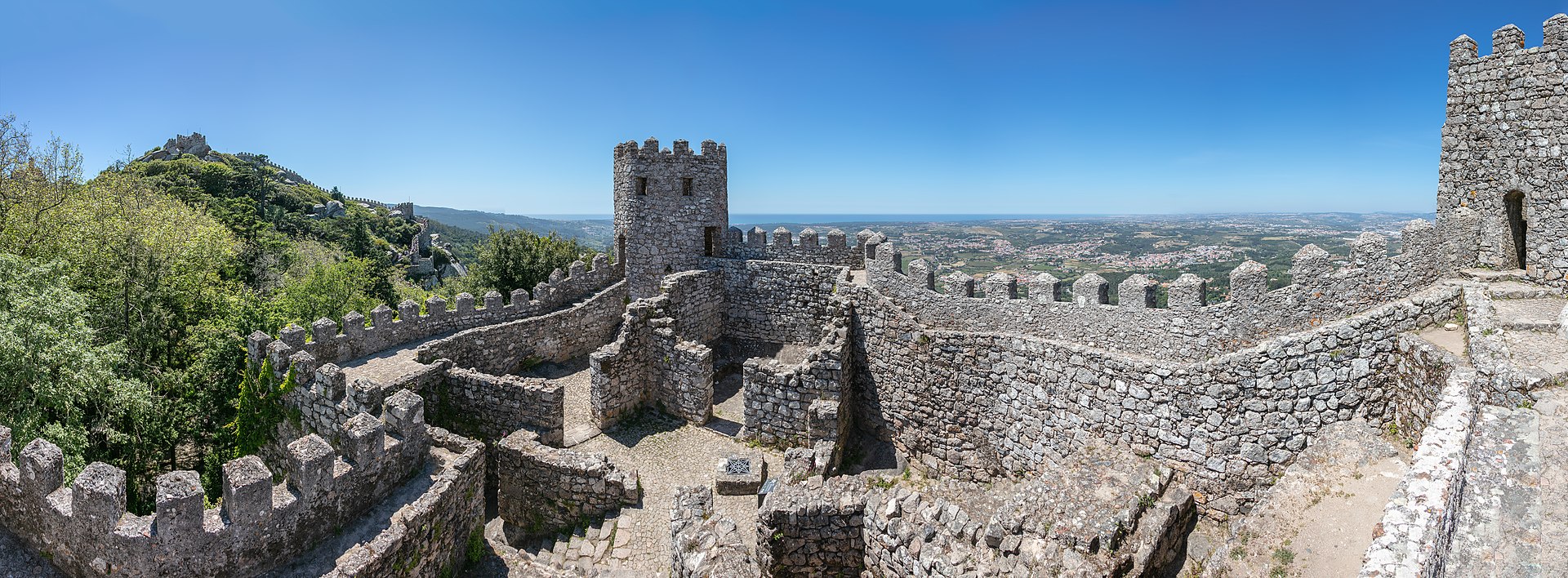
The Castelo dos Mouros is a hilltop fortification located in the Sintra Mountains, overlooking the town of Sintra. Constructed primarily during the 8th and 9th centuries by the Umayyad Caliphate, the castle served as a strategic defensive outpost to control the region and the maritime routes leading to Lisbon. Its rugged position on the granite peaks provided a natural advantage, allowing the garrison to monitor the surrounding territory during the period of Muslim rule in the Iberian Peninsula.
Following the Christian Reconquista, the castle underwent several phases of modification and repair, most notably under the reign of King Afonso Henriques and later King Ferdinand II, who integrated the ruins into the Romantic landscape of the 19th century. Today, the site remains a significant example of medieval military architecture, featuring extensive defensive walls, cisterns, and towers that offer panoramic views of the Sintra-Cascais Natural Park.
Key Facts
- Materials
- Granite, Lime mortar
- Civilization
- Umayyad Caliphate
- Accessibility
- Steep terrain, partially accessible via wooden walkways
- Date(s)
- 8th - 9th century
- Condition
- Restored ruins
- Original Function
- Military fortification
- Key Figures
- Afonso Henriques, Ferdinand II of Portugal
Islamic Origins
8th - 11th centuryThe castle was established by the Moors during the Umayyad conquest of the Iberian Peninsula. It served as a vital defensive point for the settlement of Sintra, which was then a significant agricultural and strategic hub.
The Reconquista
12th centuryThe fortress changed hands several times during the conflict between Christian and Muslim forces. It was finally captured by King Afonso Henriques in 1147 following the fall of Lisbon, marking the end of Islamic control in the region.
Decline and Romantic Restoration
14th - 19th centuryThe castle gradually lost its military importance and fell into disrepair. In the 19th century, King Ferdinand II undertook a major restoration project, preserving the ruins as a picturesque feature within the surrounding parkland of the Pena Palace.
Cultural Significance
The Castelo dos Mouros stands as a physical testament to the complex history of the Iberian Peninsula, representing the transition from Islamic rule to the formation of the Portuguese kingdom. It is a central element of the Cultural Landscape of Sintra, a UNESCO World Heritage site, and serves as a symbol of the region's layered historical identity.
Interpretive Notes
Scholarly debates and areas of uncertainty
There is ongoing discussion regarding the extent of the original Islamic layout versus the modifications made during the 19th-century Romantic restoration. Some archaeologists argue that the current appearance of the walls reflects more of Ferdinand II's aesthetic vision than the original medieval defensive structure.
Visiting Information
Entry Rules
Open daily. Tickets are required for entry. Visitors are advised to wear comfortable walking shoes due to the uneven terrain and steep paths.
Best Times to Visit
Early morning or late afternoon to avoid peak tourist crowds and midday heat. Spring and autumn offer the most temperate weather for exploring the outdoor ramparts.
Photography
Personal photography is permitted throughout the site. Commercial photography requires prior authorization from the management.
Preservation Notes
The site is a protected monument. Visitors must remain on marked paths and refrain from climbing on the historic walls or masonry to prevent further erosion.
Nearby POIs
11 shown- Palacio da Pena0.6 km
- Palacio de Sintra0.6 km
- Quinta da Regaleira0.7 km
- Palácio de Monserrate2.8 km
- Convento da Ordem do Carmo4.8 km
- Palácio de Queluz12.3 km
- Basilica of Our Lady and Saint Anthony of Mafra16.9 km
- Belem Tower18.7 km
- Jeronimos Monastery19 km
- Palace of Ajuda19.1 km
- Padrao dos Descobrimentos19.3 km
Sources & Further Reading
- [1]
- [2]The Castles of Portugal — Mário Jorge Barroca. IPPAR (2001)
Key Facts
- Materials
- Granite, Lime mortar
- Civilization
- Umayyad Caliphate
- Accessibility
- Steep terrain, partially accessible via wooden walkways
- Date(s)
- 8th - 9th century
- Condition
- Restored ruins
- Original Function
- Military fortification
- Key Figures
- Afonso Henriques, Ferdinand II of Portugal
Nearby POIs
11 shown- Palacio da Pena0.6 km
- Palacio de Sintra0.6 km
- Quinta da Regaleira0.7 km
- Palácio de Monserrate2.8 km
- Convento da Ordem do Carmo4.8 km
- Palácio de Queluz12.3 km
- Basilica of Our Lady and Saint Anthony of Mafra16.9 km
- Belem Tower18.7 km
- Jeronimos Monastery19 km
- Palace of Ajuda19.1 km
- Padrao dos Descobrimentos19.3 km