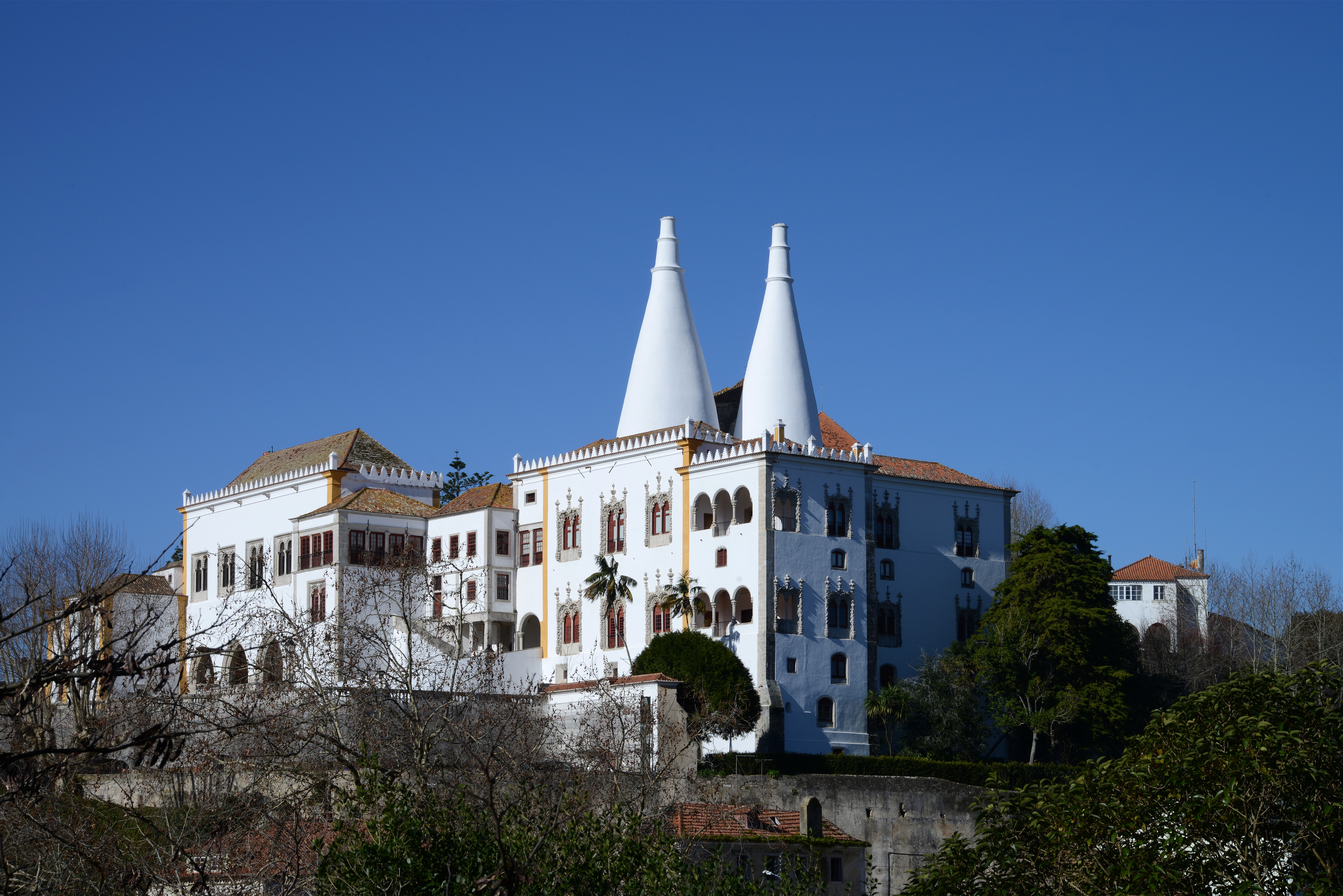
The Sintra National Palace, located in the historic center of Sintra, is the best-preserved medieval royal residence in Portugal. The palace has been inhabited by the Portuguese monarchy for nearly eight centuries, serving as a summer retreat and a center of courtly life from the early 15th century until the end of the monarchy in 1910.
The structure is a complex architectural amalgam, characterized by its iconic twin conical chimneys that rise above the kitchen. Its design reflects a blend of Gothic, Manueline, and Mudéjar styles, featuring elaborate tile work (azulejos) and ornate ceilings that document the evolution of Portuguese decorative arts over several centuries.
Key Facts
- Materials
- Stone, Ceramic tiles, Wood, Stucco
- Civilization
- Portuguese
- Accessibility
- Partially accessible; some areas involve stairs
- Date(s)
- 10th century - 19th century
- Condition
- Well-preserved, historic house museum
- Original Function
- Royal residence
- Key Figures
- King John I, King Manuel I, King Afonso VI
Moorish Origins
10th - 12th centuryThe site originated as a Moorish fortress during the period of Muslim rule in the Iberian Peninsula. Following the Christian Reconquista, the palace was integrated into the Portuguese royal estate.
Royal Expansion
15th centuryKing John I initiated major renovations, transforming the site into a primary royal residence. The construction of the iconic conical chimneys and the expansion of the central courtyard date to this period.
Manueline Influence
16th centuryKing Manuel I oversaw significant additions, including the incorporation of intricate Manueline architectural details and the extensive use of Hispano-Moresque azulejos, which remain among the oldest in the country.
Modern Era
19th century - presentThe palace remained a favored residence for the royal family until the 1910 revolution. It was subsequently declared a National Monument and now operates as a museum managed by Parques de Sintra-Monte da Lua.
Cultural Significance
The palace is a cornerstone of Portuguese national identity, representing the continuity of the monarchy and the synthesis of diverse cultural influences in Iberian architecture. Its unique blend of Islamic and Christian artistic traditions serves as a physical record of Portugal's complex history.
As part of the Cultural Landscape of Sintra, it is a focal point for international tourism and a protected site that highlights the historical importance of the town as a royal and aristocratic sanctuary.
Interpretive Notes
Scholarly debates and areas of uncertainty
There is ongoing academic discussion regarding the exact extent of the original Moorish foundations, as subsequent royal renovations significantly obscured the earlier Islamic structural elements. Additionally, the provenance and dating of certain early azulejo patterns remain a subject of study for art historians specializing in Iberian ceramics.
Visiting Information
Entry Rules
Open daily. Tickets are required for entry. Visitors are expected to follow museum guidelines regarding the protection of historical interiors. Large bags are not permitted in the exhibition rooms.
Best Times to Visit
Early morning or late afternoon to avoid peak tourist crowds. Weekdays during the shoulder season (spring and autumn) offer the most comfortable visiting experience.
Photography
Personal photography is permitted without flash or tripods. Commercial photography requires prior authorization from the management.
Preservation Notes
Do not touch the walls, tiles, or furniture. The palace is an active conservation site; some rooms may occasionally be closed for maintenance or restoration work.
Nearby POIs
11 shown- Quinta da Regaleira0.6 km
- Castelo dos Mouros0.6 km
- Palacio da Pena1.1 km
- Palácio de Monserrate2.6 km
- Convento da Ordem do Carmo4.6 km
- Palácio de Queluz12.7 km
- Basilica of Our Lady and Saint Anthony of Mafra16.4 km
- Belem Tower19.2 km
- Jeronimos Monastery19.5 km
- Palace of Ajuda19.5 km
- Padrao dos Descobrimentos19.8 km
Key Facts
- Materials
- Stone, Ceramic tiles, Wood, Stucco
- Civilization
- Portuguese
- Accessibility
- Partially accessible; some areas involve stairs
- Date(s)
- 10th century - 19th century
- Condition
- Well-preserved, historic house museum
- Original Function
- Royal residence
- Key Figures
- King John I, King Manuel I, King Afonso VI
Nearby POIs
11 shown- Quinta da Regaleira0.6 km
- Castelo dos Mouros0.6 km
- Palacio da Pena1.1 km
- Palácio de Monserrate2.6 km
- Convento da Ordem do Carmo4.6 km
- Palácio de Queluz12.7 km
- Basilica of Our Lady and Saint Anthony of Mafra16.4 km
- Belem Tower19.2 km
- Jeronimos Monastery19.5 km
- Palace of Ajuda19.5 km
- Padrao dos Descobrimentos19.8 km