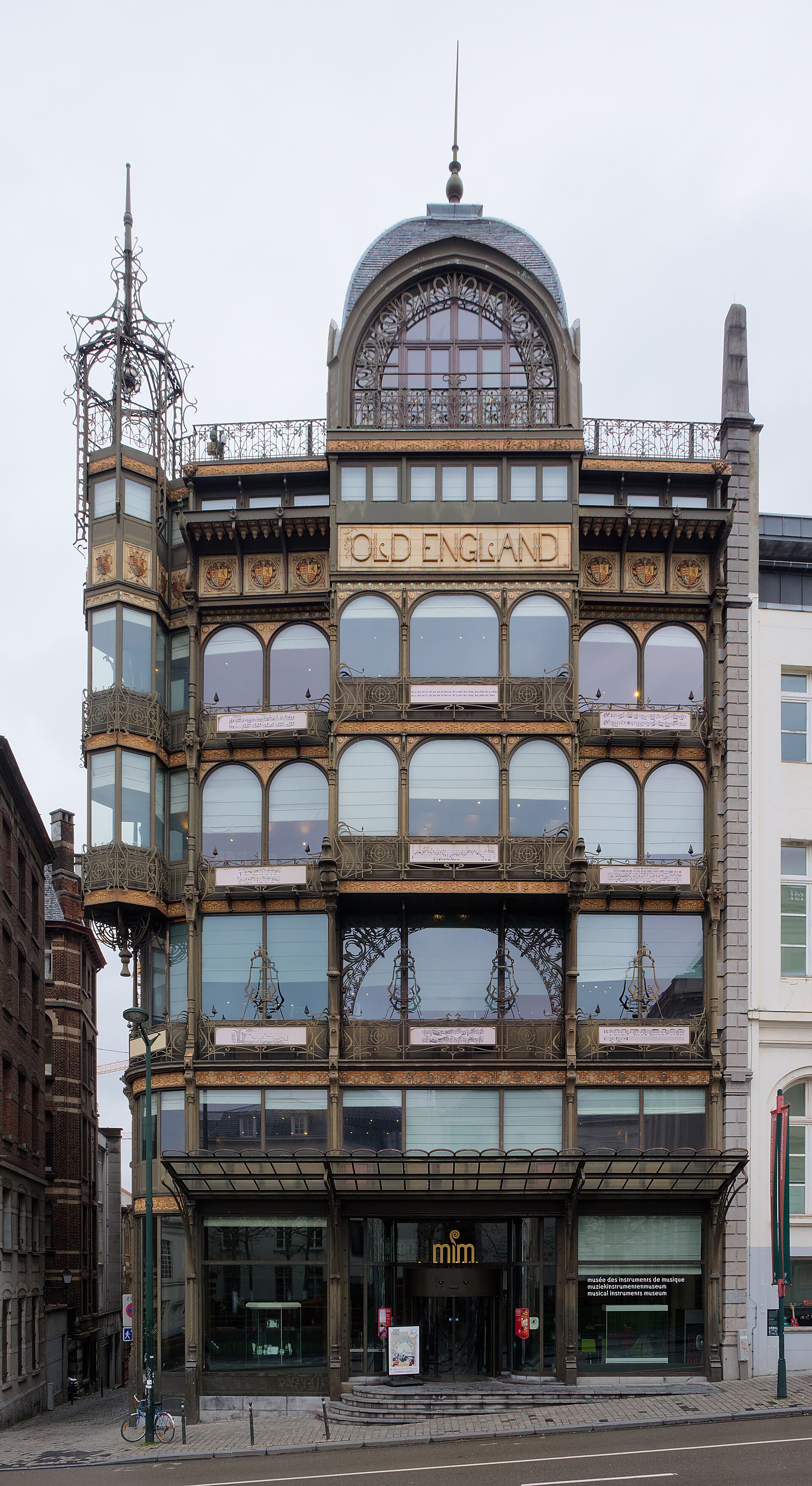
The Musical Instruments Museum (MIM) in Brussels is a world-renowned institution housing one of the most significant collections of musical instruments globally. Located within the historic Old England building, a masterpiece of Art Nouveau architecture designed by Paul Saintenoy, the museum showcases the evolution of musical technology and craftsmanship across centuries and cultures.
The collection comprises over 8,000 items, with approximately 1,200 instruments currently on display. The exhibits are organized into specialized galleries that highlight European mechanical and keyboard traditions, as well as a diverse array of traditional instruments from five continents, providing a comprehensive overview of global musical heritage.
Key Facts
- Materials
- Cast iron, Glass, Steel
- Civilization
- Belgian
- Accessibility
- Fully wheelchair accessible with elevator access to all floors
- Date(s)
- 1899
- Condition
- Well-preserved, active museum
- Original Function
- Department store (Old England)
- Key Figures
- Paul Saintenoy, François-Joseph Fétis
Founding and Early Collection
1877The museum originated from the collection of the Royal Conservatory of Brussels. It was initially established to provide students with historical examples of instruments, with the first major acquisition being the collection of the Indian Rajah Sourindro Mohun Tagore.
The Old England Building
1899The museum moved to its current location in the former Old England department store. The building is celebrated for its intricate Art Nouveau facade, characterized by extensive use of iron and glass, which was a revolutionary architectural style at the time of its construction.
Integration into the Royal Museums
20th centuryThroughout the 20th century, the collection expanded significantly through donations and acquisitions. In 1992, the museum became part of the Royal Museums of Art and History, solidifying its status as a premier national cultural institution.
Modern Restoration
2000 - presentFollowing a major renovation of the Old England building, the museum reopened in 2000 with a modern layout that integrates interactive audio guides, allowing visitors to hear the instruments on display.
Cultural Significance
The museum serves as a vital repository for European and global organology. Its presence in the Old England building highlights the intersection of industrial-era architecture and cultural preservation, making it a landmark of Brussels' urban identity.
Interpretive Notes
Scholarly debates and areas of uncertainty
There is ongoing academic discussion regarding the ethics of provenance for colonial-era acquisitions within the collection, particularly concerning instruments sourced from non-European regions during the 19th century.
Visiting Information
Entry Rules
Open Tuesday to Sunday. Tickets can be purchased online or at the entrance. Audio guides are included with admission.
Best Times to Visit
Weekday mornings are generally quieter. The rooftop restaurant offers panoramic views of the city, making it a popular destination during clear weather.
Photography
Personal photography is permitted without flash. Tripods and professional equipment require prior authorization.
Preservation Notes
Maintain a respectful distance from display cases. The museum maintains strict climate control to protect sensitive wooden and metallic components of the instruments.
Nearby POIs
11 shown- BELvue Museum0.1 km
- Palace of Justice of Brussels0.1 km
- Royal Museums of Fine Arts of Belgium0.1 km
- Mont des Arts0.2 km
- Royal Palace of Brussels0.2 km
- Church of Our Lady of Victories at the Sablon0.3 km
- Cathedral of St. Michael and St. Gudula0.6 km
- Brussels City Museum0.6 km
- Brussels Town Hall0.7 km
- Choco-Story Brussels0.7 km
- Belgian Comic Strip Center0.9 km
Sources & Further Reading
- [1]Musical Instruments Museum: The Collection — Malou Haine. Royal Museums of Art and History (2000)View
- [2]Art Nouveau in Brussels: The Old England Building — Françoise Dierkens-Aubry. Brussels Heritage Press (2015)
Key Facts
- Materials
- Cast iron, Glass, Steel
- Civilization
- Belgian
- Accessibility
- Fully wheelchair accessible with elevator access to all floors
- Date(s)
- 1899
- Condition
- Well-preserved, active museum
- Original Function
- Department store (Old England)
- Key Figures
- Paul Saintenoy, François-Joseph Fétis
Nearby POIs
11 shown- BELvue Museum0.1 km
- Palace of Justice of Brussels0.1 km
- Royal Museums of Fine Arts of Belgium0.1 km
- Mont des Arts0.2 km
- Royal Palace of Brussels0.2 km
- Church of Our Lady of Victories at the Sablon0.3 km
- Cathedral of St. Michael and St. Gudula0.6 km
- Brussels City Museum0.6 km
- Brussels Town Hall0.7 km
- Choco-Story Brussels0.7 km
- Belgian Comic Strip Center0.9 km