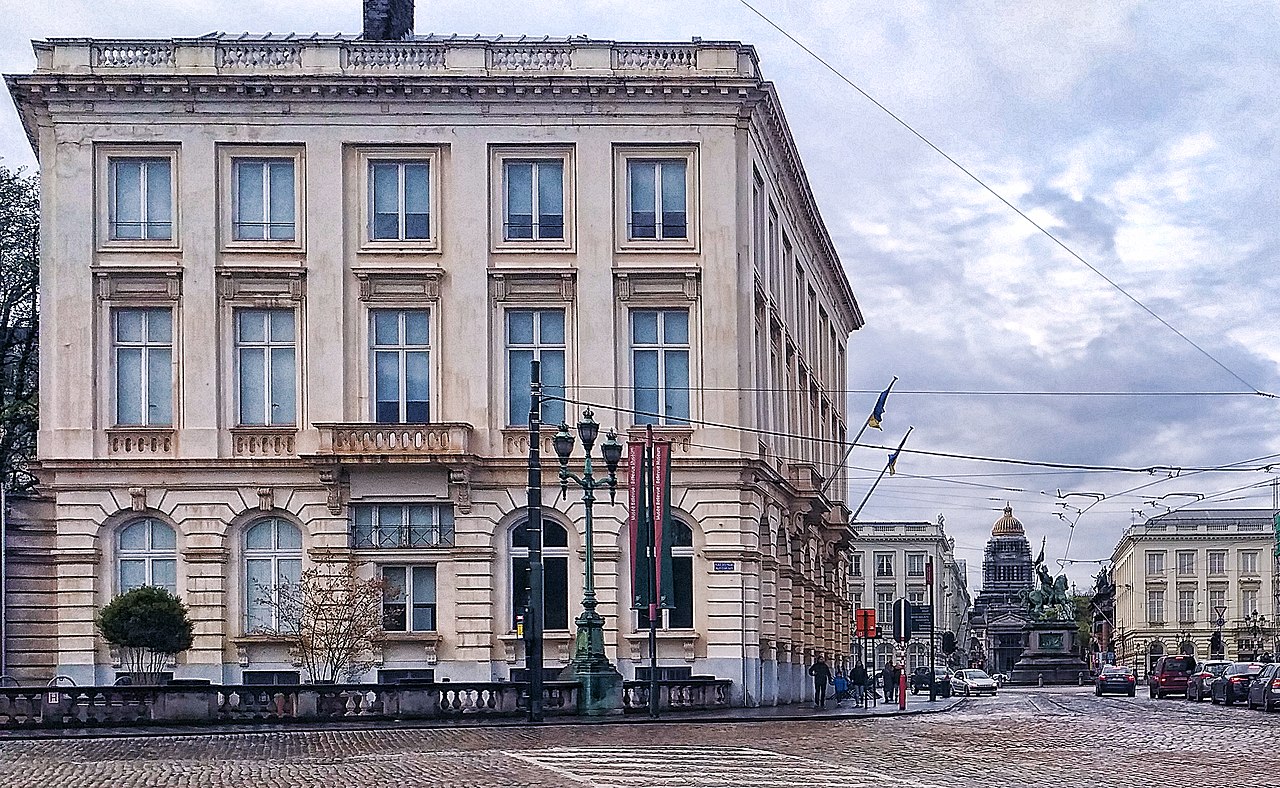
The BELvue Museum is a history museum located in Brussels, Belgium, housed within the former Hôtel Bellevue, an 18th-century neoclassical townhouse adjacent to the Royal Palace. The museum focuses on the history of Belgium, examining the nation's political, social, and economic development from the 1830 revolution to the present day.
The exhibits are organized thematically rather than strictly chronologically, utilizing interactive displays and historical artifacts to explore concepts such as democracy, prosperity, solidarity, pluralism, and language. The museum serves as a center for civic education, aiming to provide visitors with a deeper understanding of the complexities of the Belgian state and its societal evolution.
Key Facts
- Materials
- Stone, Brick, Glass
- Civilization
- Belgian
- Accessibility
- Fully wheelchair accessible
- Date(s)
- 1776-1777
- Condition
- Well-preserved, active museum
- Original Function
- Hotel and royal residence
- Key Figures
- King Leopold I, King Leopold II
Origins as a Hotel
18th CenturyThe building was constructed in 1776-1777 as a luxury hotel, known as the Hôtel Bellevue. It became a prominent establishment in Brussels, frequently hosting European nobility and royalty visiting the city.
Royal Residence
19th CenturyIn the 19th century, the building was integrated into the royal estate. It served as a residence for members of the Belgian royal family, most notably King Leopold I, who lived there until his death in 1865.
Establishment of the Museum
20th-21st CenturyFollowing its use as a royal residence, the building was repurposed to house the BELvue Museum. It underwent significant renovations to modernize the interior for exhibition purposes, officially opening as a history museum dedicated to the Belgian state in 2005.
Cultural Significance
The BELvue Museum plays a vital role in the Belgian national narrative by providing a space for critical reflection on the country's identity. By focusing on the challenges of a multi-lingual and federalized state, it encourages public discourse on the values that bind the Belgian population together.
Interpretive Notes
Scholarly debates and areas of uncertainty
There is ongoing academic discussion regarding the museum's thematic approach to history, with some historians debating whether the focus on abstract concepts like 'solidarity' or 'pluralism' sufficiently captures the nuances of specific historical events or political crises in Belgian history.
Visiting Information
Entry Rules
Open Tuesday to Sunday. Tickets can be purchased online or at the entrance. Visitors are encouraged to check the official website for specific holiday closures.
Best Times to Visit
Weekday mornings are generally quieter, allowing for a more focused experience of the interactive exhibits.
Photography
Personal photography is permitted for non-commercial use. Flash and tripods are prohibited in exhibition galleries.
Preservation Notes
The building is a protected heritage site. Visitors are requested to refrain from touching artifacts and to follow all posted signage regarding exhibit interaction.
Nearby POIs
11 shown- Palace of Justice of Brussels0.1 km
- Musical Instruments Museum0.1 km
- Royal Palace of Brussels0.1 km
- Royal Museums of Fine Arts of Belgium0.2 km
- Mont des Arts0.3 km
- Church of Our Lady of Victories at the Sablon0.4 km
- Cathedral of St. Michael and St. Gudula0.6 km
- Brussels City Museum0.7 km
- Brussels Town Hall0.8 km
- Choco-Story Brussels0.8 km
- Belgian Comic Strip Center1 km
Sources & Further Reading
- [1]
- [2]Brussels: A History of the City — Paul De Ridder. Brussels Heritage Publications (2012)
Key Facts
- Materials
- Stone, Brick, Glass
- Civilization
- Belgian
- Accessibility
- Fully wheelchair accessible
- Date(s)
- 1776-1777
- Condition
- Well-preserved, active museum
- Original Function
- Hotel and royal residence
- Key Figures
- King Leopold I, King Leopold II
Nearby POIs
11 shown- Palace of Justice of Brussels0.1 km
- Musical Instruments Museum0.1 km
- Royal Palace of Brussels0.1 km
- Royal Museums of Fine Arts of Belgium0.2 km
- Mont des Arts0.3 km
- Church of Our Lady of Victories at the Sablon0.4 km
- Cathedral of St. Michael and St. Gudula0.6 km
- Brussels City Museum0.7 km
- Brussels Town Hall0.8 km
- Choco-Story Brussels0.8 km
- Belgian Comic Strip Center1 km