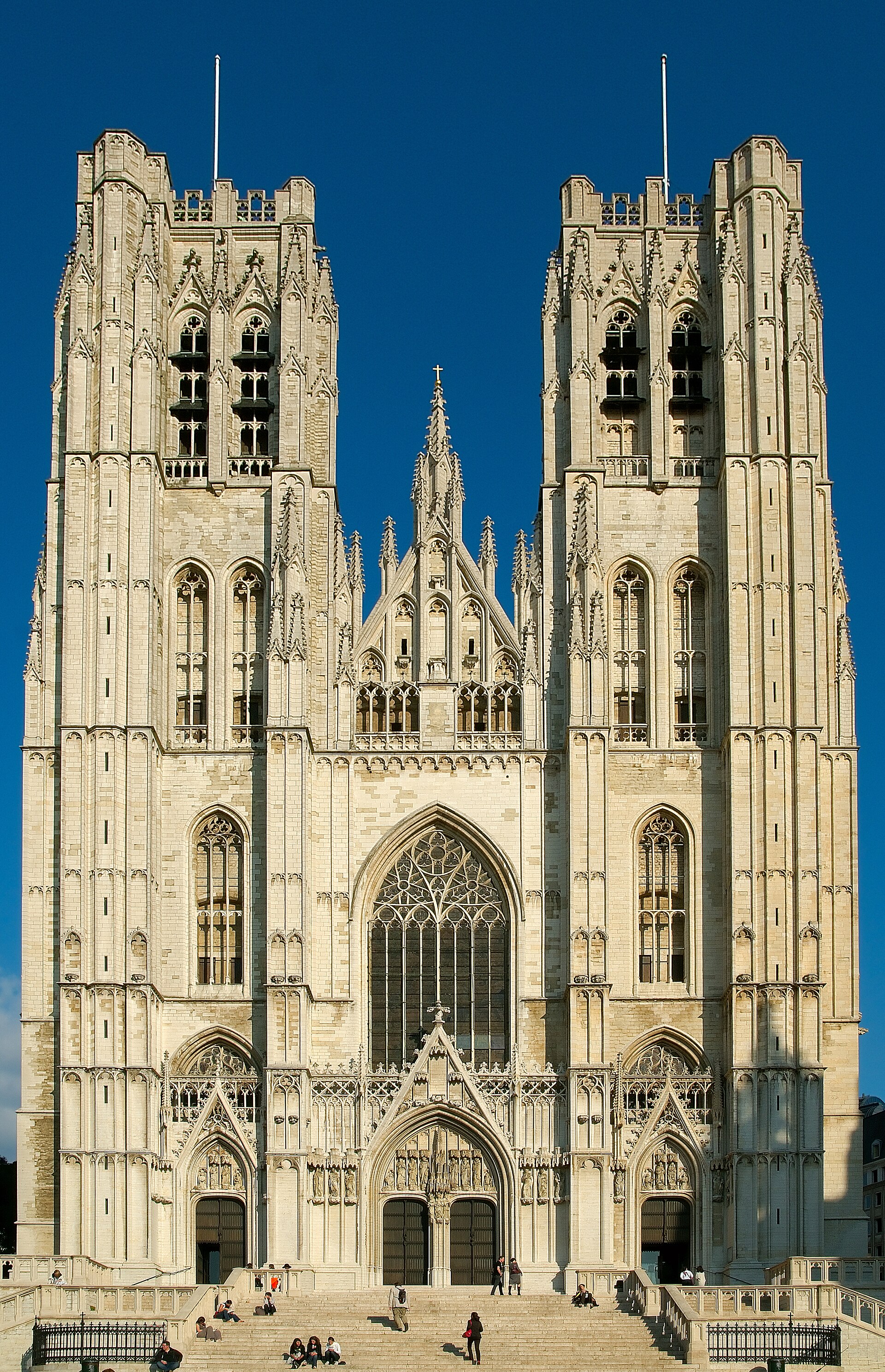
The Cathedral of St. Michael and St. Gudula is a medieval Roman Catholic church located on the Treurenberg hill in Brussels. Construction began in the 13th century on the site of an earlier Romanesque chapel, with the primary structure completed in the Brabantine Gothic style by the 15th century. It serves as the co-cathedral of the Archdiocese of Mechelen-Brussels and is dedicated to the patron saints of the city.
The cathedral is renowned for its twin towers, intricate stained glass windows, and its role as the site for royal weddings, funerals, and state ceremonies in Belgium. Its architecture reflects the transition from early Gothic influences to the distinct regional style characterized by the use of white Lede stone and vertical emphasis.
Key Facts
- Materials
- Lede stone, Sandstone, Stained glass
- Civilization
- Duchy of Brabant
- Accessibility
- Wheelchair accessible via side entrance
- Date(s)
- 1226 - 1500
- Condition
- Well-preserved, active cathedral
- Original Function
- Collegiate church
- Key Figures
- Duke Henry I of Brabant, Charles V, Holy Roman Emperor
Origins and Early Construction
11th - 13th centuryA Romanesque chapel dedicated to St. Michael existed on the site since the 11th century. In 1047, the relics of St. Gudula were transferred to the church, establishing its status as a collegiate church. The current Gothic structure was initiated in 1226 under the patronage of Henry I, Duke of Brabant.
Gothic Expansion
13th - 15th centuryThe choir was constructed between 1226 and 1276. The nave and transept were added in the 14th century, followed by the iconic twin towers, which were completed in the late 15th century under the reign of the Habsburgs.
National Significance
19th - 20th centuryFollowing the independence of Belgium in 1830, the church became the national cathedral for royal ceremonies. It was elevated to the status of a cathedral in 1962, sharing the seat of the Archbishop with St. Rumbold's Cathedral in Mechelen.
Modern Restoration
1983 - 1999A major restoration project was undertaken at the end of the 20th century to stabilize the masonry and clean the exterior facade, revealing the original color of the Lede stone and preserving the intricate sculptural details.
Cultural Significance
The cathedral serves as the primary venue for major Belgian state events, including the weddings of the Belgian royal family and the funerals of monarchs. It acts as a physical manifestation of the historical link between the city of Brussels and the Catholic Church, standing as a landmark of Brabantine Gothic architecture.
Interpretive Notes
Scholarly debates and areas of uncertainty
There is ongoing academic discussion regarding the extent of the influence of French Gothic models versus the development of the indigenous Brabantine style, particularly concerning the structural engineering of the choir and the specific proportions of the twin towers.
Visiting Information
Entry Rules
Open daily to the public. Entry to the main nave is free, though there is a fee for visiting the archaeological crypt and the treasury. Visitors are expected to maintain a respectful demeanor as it is an active place of worship.
Best Times to Visit
Weekday mornings are generally quieter. The cathedral is best viewed during the afternoon when sunlight illuminates the stained glass windows in the choir.
Photography
Photography is permitted for personal use without flash. Tripods and professional equipment require prior authorization from the cathedral administration.
Preservation Notes
The structure is subject to ongoing maintenance due to urban pollution affecting the Lede stone. Visitors are requested to remain within designated areas and avoid touching the historical stonework.
Nearby POIs
11 shown- Belgian Comic Strip Center0.4 km
- Mont des Arts0.5 km
- Brussels City Museum0.5 km
- Musical Instruments Museum0.6 km
- BELvue Museum0.6 km
- Brussels Town Hall0.6 km
- Palace of Justice of Brussels0.6 km
- Royal Palace of Brussels0.7 km
- Royal Museums of Fine Arts of Belgium0.7 km
- Choco-Story Brussels0.8 km
- Church of Our Lady of Victories at the Sablon0.9 km
Sources & Further Reading
- [1]The Cathedral of St. Michael and St. Gudula — Raymond Lemaire. Brussels Heritage Publications (1995)
- [2]Gothic Architecture in the Low Countries — Paul Vandenbroeck. Leuven University Press (2002)
Key Facts
- Materials
- Lede stone, Sandstone, Stained glass
- Civilization
- Duchy of Brabant
- Accessibility
- Wheelchair accessible via side entrance
- Date(s)
- 1226 - 1500
- Condition
- Well-preserved, active cathedral
- Original Function
- Collegiate church
- Key Figures
- Duke Henry I of Brabant, Charles V, Holy Roman Emperor
Nearby POIs
11 shown- Belgian Comic Strip Center0.4 km
- Mont des Arts0.5 km
- Brussels City Museum0.5 km
- Musical Instruments Museum0.6 km
- BELvue Museum0.6 km
- Brussels Town Hall0.6 km
- Palace of Justice of Brussels0.6 km
- Royal Palace of Brussels0.7 km
- Royal Museums of Fine Arts of Belgium0.7 km
- Choco-Story Brussels0.8 km
- Church of Our Lady of Victories at the Sablon0.9 km