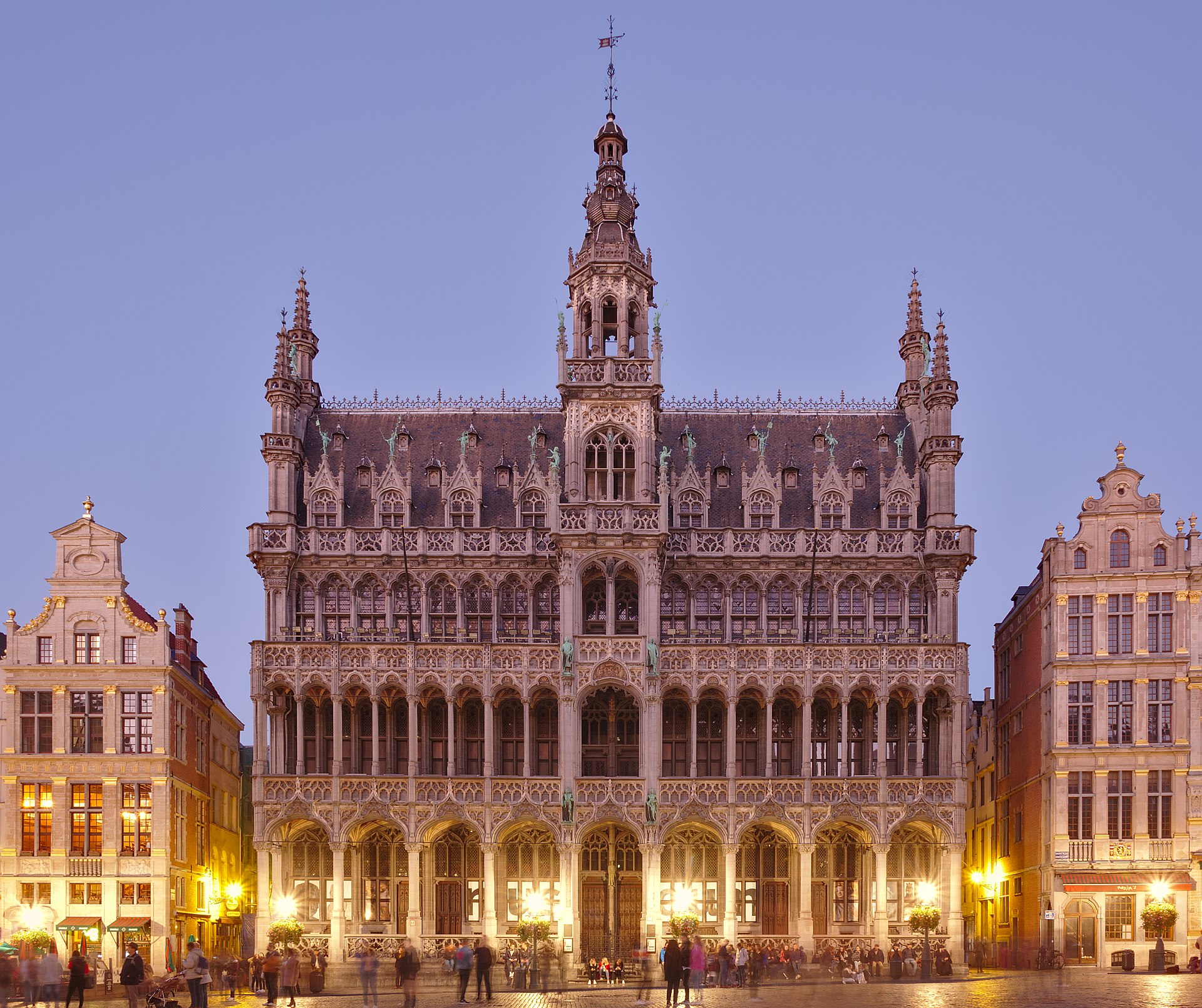
The Brussels City Museum, known locally as the Maison du Roi or Broodhuis, is a historic building located on the Grand Place in Brussels. Originally a 13th-century wooden bread market, the current structure is a 19th-century Neo-Gothic reconstruction designed by architect Victor Jamaer, intended to harmonize with the surrounding guildhalls.
The museum houses an extensive collection of over 7,000 artifacts documenting the history, urban development, and folklore of Brussels. Notable holdings include original 15th-century stone sculptures from the nearby Town Hall, tapestries, paintings, and the extensive wardrobe of the Manneken Pis, which contains over 1,000 distinct costumes donated by various organizations and nations over the centuries.
Key Facts
- Materials
- Sandstone, Slate
- Civilization
- Belgian
- Accessibility
- Wheelchair accessible with elevator
- Date(s)
- 1873-1887
- Condition
- Well-preserved, active museum
- Original Function
- Bread market and administrative building
- Key Figures
- Victor Jamaer, Charles V
Medieval Origins
13th CenturyThe site originally housed a wooden building known as the 'Bread Market' (Broodhuis), where bakers sold their wares. By the 15th century, it was replaced by a stone building that served as the administrative seat for the Duke of Brabant.
The Maison du Roi
16th-18th CenturyThe building became known as the 'Maison du Roi' (King's House) during the reign of Charles V. It served various administrative functions, including a prison and a tax office, and survived the bombardment of Brussels in 1695 with significant damage.
Neo-Gothic Reconstruction
1873-1887Due to the dilapidated state of the original structure, the city commissioned architect Victor Jamaer to rebuild it in a flamboyant Neo-Gothic style. The new building was designed to reflect the architectural grandeur of the Grand Place.
Museum Establishment
1887-PresentUpon completion of the reconstruction, the building was repurposed as the Brussels City Museum. It has since served as the primary repository for the city's historical artifacts and civic heritage.
Cultural Significance
The Brussels City Museum is central to the identity of the city, acting as the guardian of its municipal history. Its location on the Grand Place, a UNESCO World Heritage site, reinforces its role as a focal point for both local heritage and international tourism.
The museum's collection, particularly the Manneken Pis costumes, highlights the unique blend of civic pride and whimsical folklore that defines Brussels' cultural character. The building itself serves as a testament to the 19th-century movement to preserve and romanticize the medieval urban landscape.
Interpretive Notes
Scholarly debates and areas of uncertainty
There is ongoing academic discussion regarding the authenticity of the 19th-century Neo-Gothic reconstruction. Some architectural historians debate the extent to which Jamaer's design accurately reflects the original medieval structure versus an idealized interpretation of the period.
Visiting Information
Entry Rules
Open Tuesday to Sunday. Tickets can be purchased at the entrance or online. Visitors are requested to refrain from using flash photography in galleries containing light-sensitive textiles.
Best Times to Visit
Weekday mornings are generally quieter. The museum is particularly busy during the summer months and the Christmas market season.
Photography
Personal photography is permitted without flash or tripods. Professional photography requires prior authorization from the museum administration.
Preservation Notes
The textile collection, including the Manneken Pis costumes, is kept in climate-controlled environments. Visitors are asked to maintain a respectful distance from all displays and avoid touching the artifacts.
Nearby POIs
11 shown- Brussels Town Hall0.1 km
- Choco-Story Brussels0.3 km
- Mont des Arts0.4 km
- Cathedral of St. Michael and St. Gudula0.5 km
- Musical Instruments Museum0.6 km
- Royal Museums of Fine Arts of Belgium0.7 km
- Belgian Comic Strip Center0.7 km
- BELvue Museum0.7 km
- Palace of Justice of Brussels0.8 km
- Church of Our Lady of Victories at the Sablon0.8 km
- Royal Palace of Brussels0.9 km
Sources & Further Reading
- [1]The Grand Place in Brussels: A History — Paul De Ridder. Brussels City Archives (2010)
- [2]Victor Jamaer and the Neo-Gothic Revival — Jean-Marie Duvosquel. Belgian Journal of Architectural History (2015)
Key Facts
- Materials
- Sandstone, Slate
- Civilization
- Belgian
- Accessibility
- Wheelchair accessible with elevator
- Date(s)
- 1873-1887
- Condition
- Well-preserved, active museum
- Original Function
- Bread market and administrative building
- Key Figures
- Victor Jamaer, Charles V
Nearby POIs
11 shown- Brussels Town Hall0.1 km
- Choco-Story Brussels0.3 km
- Mont des Arts0.4 km
- Cathedral of St. Michael and St. Gudula0.5 km
- Musical Instruments Museum0.6 km
- Royal Museums of Fine Arts of Belgium0.7 km
- Belgian Comic Strip Center0.7 km
- BELvue Museum0.7 km
- Palace of Justice of Brussels0.8 km
- Church of Our Lady of Victories at the Sablon0.8 km
- Royal Palace of Brussels0.9 km