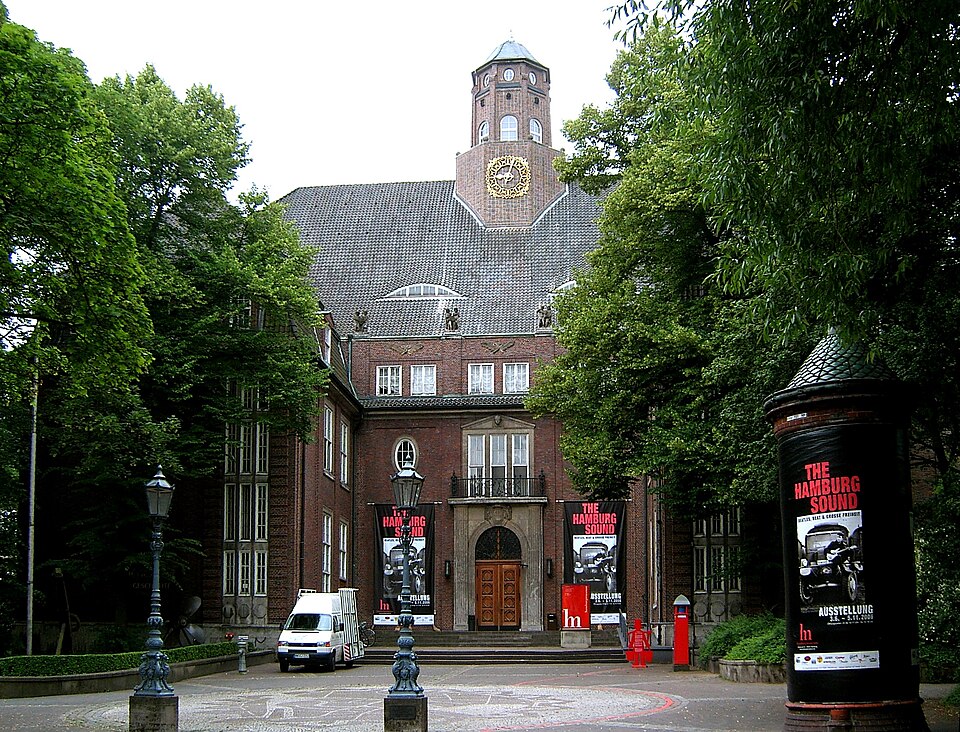
The Museum of Hamburg History, located in the Holstenwall area, is one of the largest urban history museums in Germany. Housed in a building designed by Fritz Schumacher and opened in 1922, the institution preserves over 600,000 artifacts that chronicle the city's evolution from its 9th-century origins as the Hammaburg fortress to its emergence as a global maritime hub.
The collection spans diverse themes including the history of the Hanseatic League, the impact of the Great Fire of 1842, the development of the Port of Hamburg, and the city's transformation during the 20th century. The museum is particularly noted for its extensive model railway exhibit and its detailed displays on the social and economic shifts that defined Hamburg's identity.
Key Facts
- Materials
- Brick, Stone
- Civilization
- German
- Accessibility
- Fully wheelchair accessible
- Date(s)
- 1914-1922
- Condition
- Active
- Original Function
- Museum of Hamburg History
- Key Figures
- Fritz Schumacher, Otto Lauffer
Founding and Architecture
1908-1922The museum was established to consolidate the city's historical collections. Architect Fritz Schumacher designed the building in a traditional North German brick expressionist style, integrating it into the park landscape of the Planten un Blomen.
Post-War Reconstruction
1945-1960Following significant damage during World War II, the museum underwent extensive restoration. The focus shifted toward modernizing the exhibition spaces and expanding the collection to include the city's industrial and social history.
Modern Era
2000-PresentThe museum continues to serve as a central research institution for Hamburg's history. Recent efforts have focused on digital accessibility and the integration of contemporary history into the permanent exhibition.
Cultural Significance
The museum serves as the primary repository for Hamburg's civic memory. It plays a vital role in educating the public on the city's maritime heritage and its historical relationship with international trade, which remains central to Hamburg's status as a 'Free and Hanseatic City'.
Interpretive Notes
Scholarly debates and areas of uncertainty
Discussions within the museum community often focus on the representation of Hamburg's colonial history and the extent to which the museum should address the city's role in the transatlantic slave trade and colonial exploitation.
Visiting Information
Entry Rules
Open Tuesday to Sunday. Tickets can be purchased at the entrance or online. Standard museum conduct applies; no food or drink in exhibition galleries.
Best Times to Visit
Weekday mornings are generally quieter. The museum is a popular destination during the annual 'Long Night of Museums' in Hamburg.
Photography
Non-commercial photography is permitted without flash or tripods. Professional photography requires prior authorization.
Preservation Notes
Maintain distance from artifacts and display cases. Some areas may be subject to temporary closure for exhibition rotation.
Nearby POIs
11 shown- Hauptkirche St. Michaelis0.5 km
- Rickmer Rickmers0.7 km
- St. Pauli Elbtunnel0.7 km
- St. Nikolai Kirche1.2 km
- Hamburg City Hall1.3 km
- Miniatur Wunderland1.3 km
- Soviet submarine B-5151.4 km
- Internationales Maritimes Museum Hamburg2 km
- Hamburger Kunsthalle2 km
- Deichtorhallen2.3 km
- Museum of Art and Design Hamburg2.4 km
Key Facts
- Materials
- Brick, Stone
- Civilization
- German
- Accessibility
- Fully wheelchair accessible
- Date(s)
- 1914-1922
- Condition
- Active
- Original Function
- Museum of Hamburg History
- Key Figures
- Fritz Schumacher, Otto Lauffer
Nearby POIs
11 shown- Hauptkirche St. Michaelis0.5 km
- Rickmer Rickmers0.7 km
- St. Pauli Elbtunnel0.7 km
- St. Nikolai Kirche1.2 km
- Hamburg City Hall1.3 km
- Miniatur Wunderland1.3 km
- Soviet submarine B-5151.4 km
- Internationales Maritimes Museum Hamburg2 km
- Hamburger Kunsthalle2 km
- Deichtorhallen2.3 km
- Museum of Art and Design Hamburg2.4 km