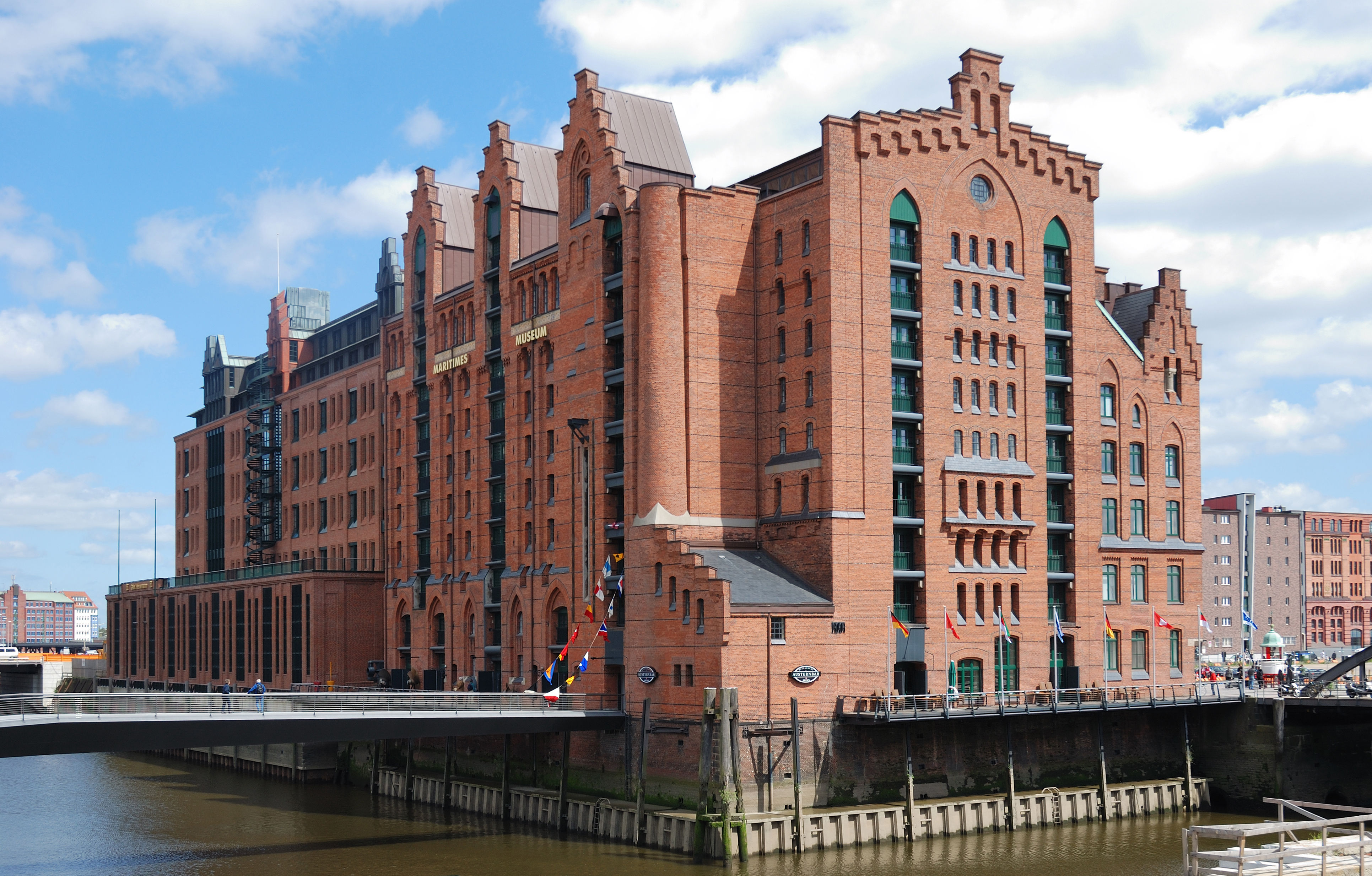
The Internationales Maritimes Museum Hamburg is housed within the Kaispeicher B, the oldest surviving warehouse in Hamburg's Speicherstadt district. Built in 1878, the building serves as a repository for an extensive private collection amassed by Peter Tamm, covering over 3,000 years of maritime history across nine exhibition decks.
The museum's collection includes approximately 40,000 miniature ship models, one million historical photographs, and thousands of nautical artifacts, including navigation instruments, uniforms, and maritime art. It functions as a comprehensive archive of global seafaring, ranging from ancient exploration to modern naval technology.
Key Facts
- Materials
- Brick, Steel, Timber
- Civilization
- German
- Accessibility
- Fully wheelchair accessible with elevators to all decks
- Date(s)
- 1878
- Condition
- Restored and active museum
- Original Function
- Warehouse (Kaispeicher B)
- Key Figures
- Peter Tamm
Warehouse Origins
1878The Kaispeicher B was constructed as a warehouse in the newly developed Speicherstadt, the world's largest warehouse district built on oak log foundations. It served as a critical hub for the Port of Hamburg's international trade operations.
Collection Development
1934-2000sJournalist Peter Tamm began collecting maritime artifacts in 1934. Over seven decades, his private collection grew to become one of the most significant maritime archives in the world, eventually requiring a dedicated facility for public display.
Museum Establishment
2008Following extensive renovations to the historic warehouse, the Internationales Maritimes Museum Hamburg officially opened to the public in 2008, transforming the industrial space into a cultural institution.
Cultural Significance
The museum is central to Hamburg's identity as a 'Gateway to the World.' It preserves the legacy of the city's maritime heritage and the broader history of global trade, exploration, and naval conflict. By housing the collection in the Speicherstadt—a UNESCO World Heritage site—the museum reinforces the architectural and economic history of the Hanseatic city.
Interpretive Notes
Scholarly debates and areas of uncertainty
Discussions often center on the balance between the museum's role as a private collection versus a public educational institution, particularly regarding the curation of sensitive naval history and the preservation of the warehouse's original industrial fabric during modern structural adaptations.
Visiting Information
Entry Rules
Open daily from 10:00 to 18:00. Tickets can be purchased online or at the entrance. No specific dress code required.
Best Times to Visit
Weekdays during the morning hours to avoid weekend crowds. The museum is climate-controlled, making it suitable for year-round visits.
Photography
Personal photography is permitted without flash or tripods. Commercial photography requires prior authorization from the museum administration.
Preservation Notes
Visitors are requested to refrain from touching the exhibits, particularly the delicate ship models. The building is a protected historic monument; please follow all posted safety guidelines.
Nearby POIs
11 shownKey Facts
- Materials
- Brick, Steel, Timber
- Civilization
- German
- Accessibility
- Fully wheelchair accessible with elevators to all decks
- Date(s)
- 1878
- Condition
- Restored and active museum
- Original Function
- Warehouse (Kaispeicher B)
- Key Figures
- Peter Tamm