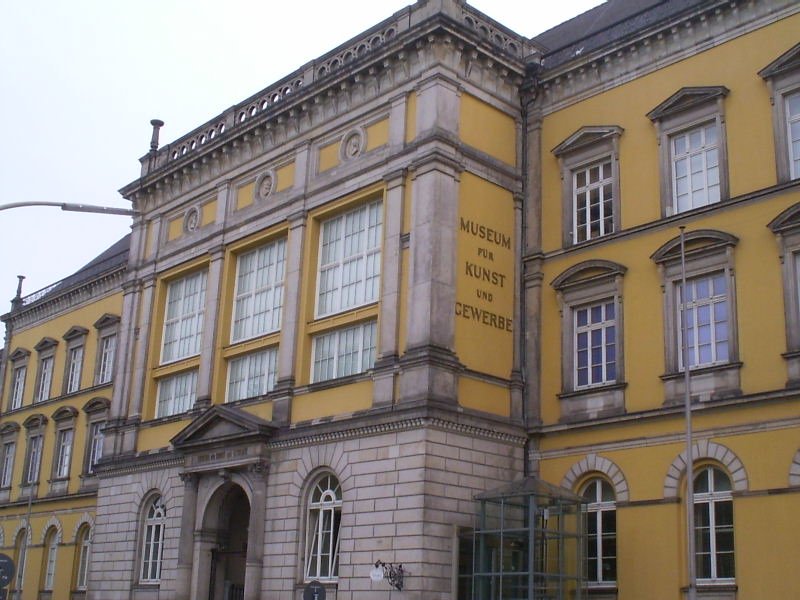
The Museum für Kunst und Gewerbe Hamburg (MK&G) is one of Europe's most prominent museums for design, applied arts, and photography. Founded in 1874, it is housed in a historicist building near the Hamburg Hauptbahnhof, designed by Carl Johann Christian Zimmermann. The institution was modeled after the Victoria and Albert Museum in London, intended to serve as a center for artistic education and the promotion of craftsmanship.
The museum's extensive collection comprises approximately 500,000 objects spanning 4,000 years of human history. Its holdings range from ancient artifacts and medieval religious art to modern industrial design, fashion, and digital media. It is particularly noted for its significant collections of Islamic art, East Asian ceramics, and its comprehensive archive of graphic design and typography.
Key Facts
- Materials
- Brick, Sandstone, Iron
- Civilization
- German
- Accessibility
- Fully wheelchair accessible
- Date(s)
- 1873-1877
- Condition
- Well-preserved and active
- Original Function
- Museum of applied arts and crafts
- Key Figures
- Justus Brinckmann, Carl Johann Christian Zimmermann
Foundation and Vision
1874The museum was established by Justus Brinckmann, who served as its first director. Inspired by the London South Kensington Museum, the institution aimed to improve the quality of industrial products through the study of historical craftsmanship.
Architectural Development
1873-1877The museum building was constructed in the Neo-Renaissance style by architect Carl Johann Christian Zimmermann. It was specifically designed to provide ample exhibition space for the growing collection of applied arts.
Expansion and Modernization
20th CenturyThroughout the 20th century, the museum expanded its focus to include modern design, photography, and fashion. Despite damage during World War II, the building was restored and the collections were systematically rebuilt and cataloged.
Contemporary Status
21st CenturyToday, the MK&G functions as a dynamic center for design discourse, hosting temporary exhibitions alongside its permanent collection. It continues to emphasize the intersection of historical craft and contemporary digital culture.
Cultural Significance
The MK&G serves as a vital cultural hub in Hamburg, bridging the gap between historical artistic traditions and modern industrial design. It plays a crucial role in the city's identity as a center for trade and creative industries, fostering public engagement with the evolution of material culture.
Its collection of Islamic art and East Asian artifacts reflects Hamburg's historical status as a global port city, highlighting the long-standing exchange of goods and ideas between Europe and the wider world.
Interpretive Notes
Scholarly debates and areas of uncertainty
Discussions within the museum community often center on the decolonization of collections and the ethical provenance of artifacts acquired during the colonial era. Scholars and curators are actively engaged in researching the origins of non-European holdings to ensure transparent and responsible stewardship.
Visiting Information
Entry Rules
Open Tuesday to Sunday. Tickets can be purchased online or at the museum entrance. Concessions are available for students and visitors with disabilities.
Best Times to Visit
Weekday mornings are generally quieter. The museum is a popular destination during the annual 'Long Night of Museums' in Hamburg.
Photography
Personal photography is permitted for non-commercial use without flash or tripods. Specific temporary exhibitions may have restricted photography policies.
Preservation Notes
Maintain a respectful distance from all exhibits. Large bags and backpacks must be stored in the provided lockers to ensure the safety of the collection.
Nearby POIs
11 shownKey Facts
- Materials
- Brick, Sandstone, Iron
- Civilization
- German
- Accessibility
- Fully wheelchair accessible
- Date(s)
- 1873-1877
- Condition
- Well-preserved and active
- Original Function
- Museum of applied arts and crafts
- Key Figures
- Justus Brinckmann, Carl Johann Christian Zimmermann