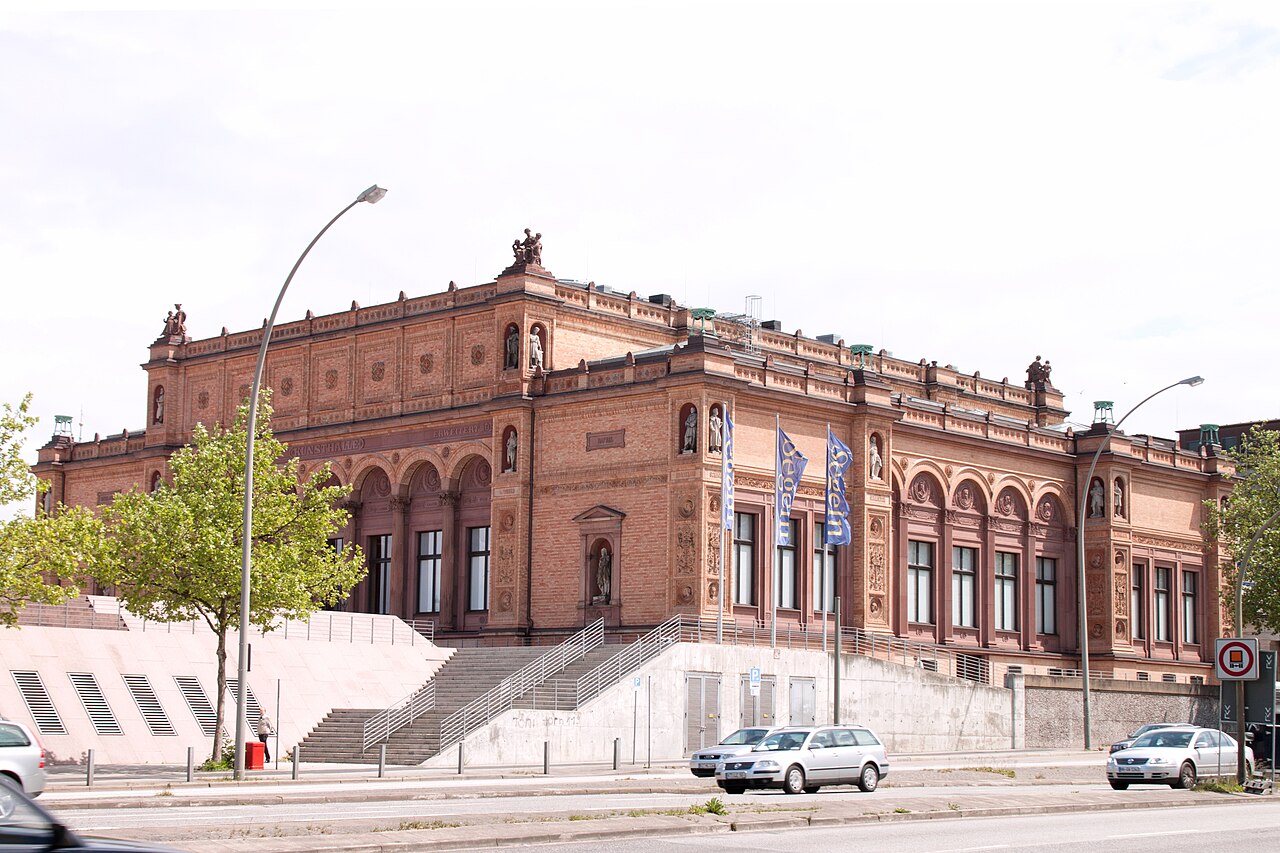
The Hamburger Kunsthalle is one of Germany's most significant art museums, located in the heart of Hamburg between the main railway station and the Alster lakes. The institution is housed in three interconnected buildings constructed between 1869 and 1997, representing a diverse architectural evolution from historicism to modernism.
The museum's collection spans seven centuries of European art, ranging from medieval altarpieces to contemporary installations. It is particularly renowned for its extensive holdings of 19th-century German Romanticism, featuring major works by Caspar David Friedrich, as well as significant collections of Dutch Golden Age painting and modern art movements including Expressionism.
Key Facts
- Materials
- Brick, Sandstone, Glass, Steel
- Civilization
- German
- Accessibility
- Fully wheelchair accessible
- Date(s)
- 1869 (original building)
- Condition
- Active, fully operational
- Original Function
- Art museum
- Key Figures
- Alfred Lichtwark, Caspar David Friedrich, Oswald Mathias Ungers
Founding and Early Years
1847-1869The Kunstverein in Hamburg began collecting art in the mid-19th century. The original brick building, designed by architects Hermann von der Hude and Georg Theodor Schirrmacher, was opened to the public in 1869 to house the growing municipal collection.
The Lichtwark Era
1886-1914Under the directorship of Alfred Lichtwark, the museum shifted its focus toward modern art and educational outreach. Lichtwark acquired significant works by German Impressionists and established the museum as a center for contemporary artistic discourse.
Expansion and Modernization
1997The museum underwent a major expansion with the addition of the 'Galerie der Gegenwart' (Gallery of Contemporary Art). Designed by architect Oswald Mathias Ungers, this cube-shaped structure provided a dedicated space for 20th and 21st-century art, connecting the historic buildings to the modern wing.
Cultural Significance
The Hamburger Kunsthalle serves as a primary cultural anchor for Northern Germany, playing a vital role in the preservation and interpretation of German art history. Its collection of Romanticist works, particularly those of Caspar David Friedrich, is central to the German national identity and the study of 19th-century European landscape painting.
Beyond its historical collections, the museum acts as a hub for contemporary art in Hamburg, hosting international exhibitions that bridge the gap between classical heritage and modern societal issues. It remains a key institution for public art education and academic research in the region.
Interpretive Notes
Scholarly debates and areas of uncertainty
There is ongoing academic discussion regarding the provenance of several works acquired during the mid-20th century. The museum actively participates in research regarding Nazi-looted art, leading to periodic debates and investigations into the restitution of specific pieces within the collection.
Visiting Information
Entry Rules
Open Tuesday to Sunday. Tickets can be purchased online or at the museum entrance. Concessions are available for students and groups. Large bags and backpacks must be stored in lockers.
Best Times to Visit
Weekday mornings are generally quieter. The museum is often crowded during special exhibition openings and on weekends.
Photography
Non-commercial photography is permitted in permanent collection galleries without flash or tripods. Photography is strictly prohibited in temporary exhibitions due to copyright restrictions.
Preservation Notes
Maintain a respectful distance from all artworks. Do not touch surfaces or frames. Climate control systems are in place to protect sensitive canvases; please follow staff instructions regarding movement through galleries.
Nearby POIs
11 shown- Museum of Art and Design Hamburg0.6 km
- Hamburg City Hall0.9 km
- Deichtorhallen0.9 km
- St. Nikolai Kirche1.2 km
- Internationales Maritimes Museum Hamburg1.3 km
- Miniatur Wunderland1.6 km
- Hauptkirche St. Michaelis1.8 km
- Museum of Hamburg History2 km
- Rickmer Rickmers2.3 km
- St. Pauli Elbtunnel2.6 km
- Soviet submarine B-5153.4 km
Sources & Further Reading
- [1]
- [2]Alfred Lichtwark and the Kunsthalle — Carolyn Kay. University of California Press (1996)
Key Facts
- Materials
- Brick, Sandstone, Glass, Steel
- Civilization
- German
- Accessibility
- Fully wheelchair accessible
- Date(s)
- 1869 (original building)
- Condition
- Active, fully operational
- Original Function
- Art museum
- Key Figures
- Alfred Lichtwark, Caspar David Friedrich, Oswald Mathias Ungers
Nearby POIs
11 shown- Museum of Art and Design Hamburg0.6 km
- Hamburg City Hall0.9 km
- Deichtorhallen0.9 km
- St. Nikolai Kirche1.2 km
- Internationales Maritimes Museum Hamburg1.3 km
- Miniatur Wunderland1.6 km
- Hauptkirche St. Michaelis1.8 km
- Museum of Hamburg History2 km
- Rickmer Rickmers2.3 km
- St. Pauli Elbtunnel2.6 km
- Soviet submarine B-5153.4 km