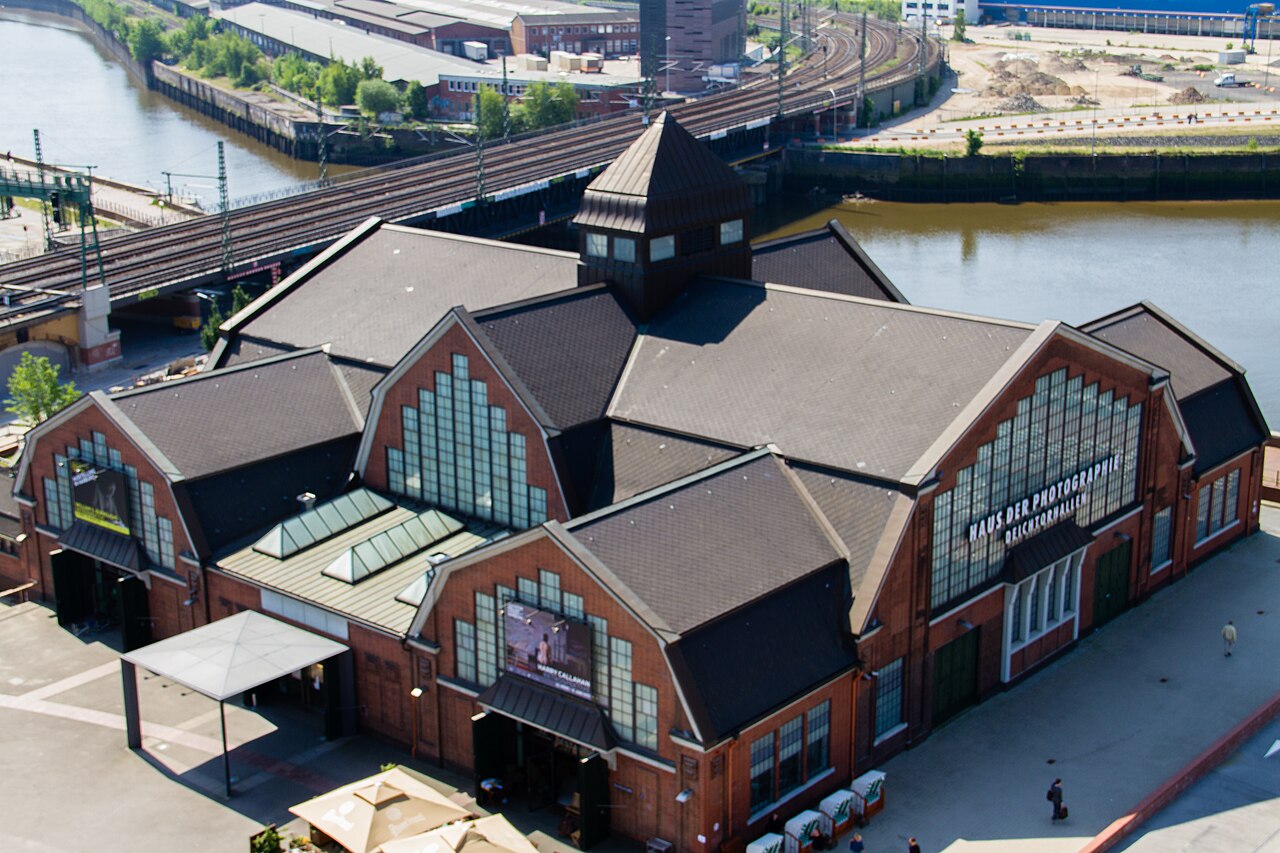
The Deichtorhallen are two historic market halls located in Hamburg, Germany, originally constructed between 1911 and 1913. Designed by Wilhelm Sperling, these structures served as the city's central wholesale market for produce and flowers, representing a significant example of early 20th-century industrial architecture characterized by their expansive glass and steel construction.
Since their conversion in the late 1980s, the halls have functioned as one of Europe's largest exhibition centers for contemporary art and photography. The North Hall is dedicated to large-scale contemporary art installations, while the South Hall, known as the House of Photography, hosts rotating exhibitions and houses the F.C. Gundlach collection.
Key Facts
- Materials
- Steel, Glass, Brick
- Civilization
- German
- Accessibility
- Fully wheelchair accessible
- Date(s)
- 1911-1913
- Condition
- Restored and active museum
- Original Function
- Wholesale market hall
- Key Figures
- Wilhelm Sperling, F.C. Gundlach
Industrial Origins
1911-1913The halls were built as part of a modernization effort for Hamburg's wholesale market infrastructure. The design utilized a then-innovative steel-frame construction, allowing for vast, unobstructed interior spaces ideal for trade.
Conversion to Cultural Space
1989-1991Following the relocation of the wholesale market, the city of Hamburg repurposed the halls for cultural use. Architect Josef Paul Kleihues oversaw the renovation, which preserved the industrial aesthetic while modernizing the climate control and lighting for art display.
Expansion and Modern Era
2000-presentIn 2000, the House of Photography was established in the South Hall. The institution has since become a cornerstone of Hamburg's cultural landscape, hosting major international retrospectives and contemporary art biennials.
Cultural Significance
The Deichtorhallen serve as a bridge between Hamburg's industrial heritage and its modern identity as a hub for contemporary visual arts. By repurposing functional market architecture, the site demonstrates the potential for industrial heritage to serve as a flexible, high-capacity venue for global art discourse.
It plays a vital role in the city's cultural tourism, anchoring the 'Kunstmeile' (Art Mile) of Hamburg. The institution is recognized for its ability to accommodate monumental works that would be impossible to display in traditional museum galleries.
Interpretive Notes
Scholarly debates and areas of uncertainty
Discussions regarding the Deichtorhallen often center on the balance between preserving the raw, industrial character of the original steel structures and the technical requirements of modern museum climate control and lighting, which can sometimes alter the intended transparency of the architecture.
Visiting Information
Entry Rules
Open Tuesday to Sunday. Tickets can be purchased online or at the box office. Concessions are available for students and groups. No large bags or backpacks are permitted in the exhibition halls.
Best Times to Visit
Weekday mornings are generally quieter. The museum is often crowded during the opening weeks of major international photography or contemporary art exhibitions.
Photography
Non-commercial photography is permitted in most areas without flash or tripods. Specific exhibitions may have stricter policies; please check signage at the entrance of each hall.
Preservation Notes
The steel and glass structure is subject to ongoing maintenance to prevent corrosion and ensure structural integrity. Visitors are requested to maintain distance from the glass walls and refrain from touching exhibits.
Nearby POIs
11 shown- Museum of Art and Design Hamburg0.5 km
- Internationales Maritimes Museum Hamburg0.6 km
- Hamburger Kunsthalle0.9 km
- Hamburg City Hall1 km
- St. Nikolai Kirche1.1 km
- Miniatur Wunderland1.2 km
- Hauptkirche St. Michaelis1.9 km
- Rickmer Rickmers2.3 km
- Museum of Hamburg History2.3 km
- St. Pauli Elbtunnel2.7 km
- BallinStadt3.1 km
Sources & Further Reading
- [1]Deichtorhallen Hamburg: Architecture and History — Josef Paul Kleihues. Hatje Cantz (1991)
- [2]Industrial Heritage in Hamburg — Hamburg Ministry of Culture. City of Hamburg Archives (2015)
Key Facts
- Materials
- Steel, Glass, Brick
- Civilization
- German
- Accessibility
- Fully wheelchair accessible
- Date(s)
- 1911-1913
- Condition
- Restored and active museum
- Original Function
- Wholesale market hall
- Key Figures
- Wilhelm Sperling, F.C. Gundlach
Nearby POIs
11 shown- Museum of Art and Design Hamburg0.5 km
- Internationales Maritimes Museum Hamburg0.6 km
- Hamburger Kunsthalle0.9 km
- Hamburg City Hall1 km
- St. Nikolai Kirche1.1 km
- Miniatur Wunderland1.2 km
- Hauptkirche St. Michaelis1.9 km
- Rickmer Rickmers2.3 km
- Museum of Hamburg History2.3 km
- St. Pauli Elbtunnel2.7 km
- BallinStadt3.1 km