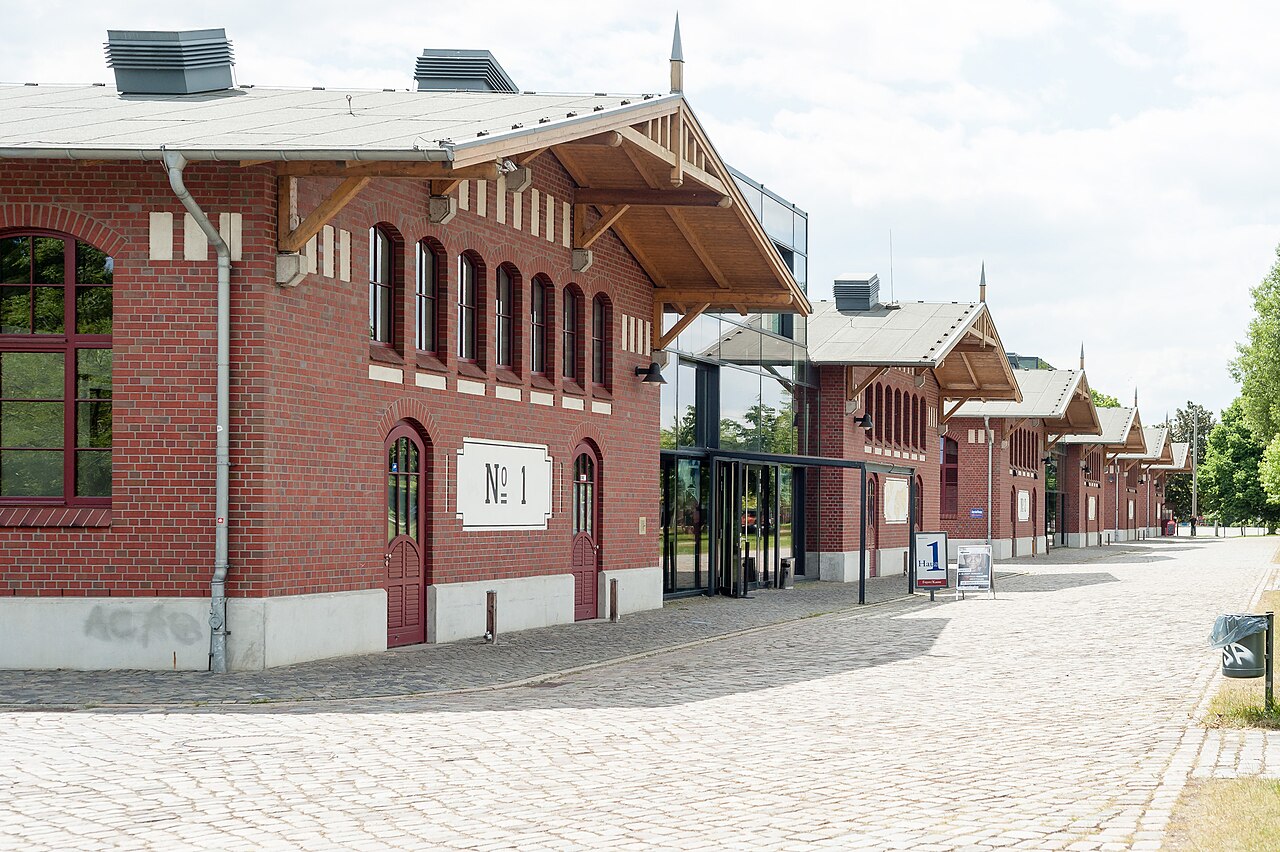
BallinStadt is an emigration museum located in Hamburg, Germany, situated within three reconstructed historical dormitories. The site commemorates the millions of people who passed through the Port of Hamburg on their journey to the Americas between 1850 and 1939.
The museum complex serves as a memorial to the mass migration movement, documenting the personal stories, living conditions, and bureaucratic processes faced by emigrants. It utilizes a vast collection of artifacts and digital archives to provide a comprehensive look at the historical significance of Hamburg as a primary gateway for European emigration.
Key Facts
- Materials
- Brick, Timber, Glass
- Civilization
- German
- Accessibility
- Fully wheelchair accessible
- Date(s)
- 1901 (original dormitories)
- Condition
- Reconstructed and restored as a museum
- Original Function
- Emigrant dormitories
- Key Figures
- Albert Ballin
Establishment of the Emigrant Halls
1901The original halls were commissioned by Albert Ballin, the director of the Hamburg-America Line (HAPAG), to provide sanitary and organized housing for the thousands of emigrants awaiting passage to the New World.
The Era of Mass Migration
1901-1939During this period, the site functioned as a 'city within a city,' offering medical examinations, dining facilities, and temporary lodging for over five million people before their departure from the Hamburg harbor.
Museum Reconstruction
2007After decades of disuse, the site was reconstructed to its original architectural style and opened as the BallinStadt Emigration Museum, dedicated to preserving the history of the migration era.
Cultural Significance
BallinStadt holds profound significance for the global diaspora, particularly in North and South America, as it serves as a genealogical and historical touchstone for millions of descendants of emigrants. It highlights Hamburg's role as a critical node in the global movement of people during the industrial age.
The site also functions as a center for historical research, housing extensive passenger lists and archival data that allow visitors to trace the journeys of their ancestors, thereby bridging the gap between personal family history and broader European migration trends.
Interpretive Notes
Scholarly debates and areas of uncertainty
Discussions often center on the balance between the museum's role as a commercial tourist attraction and its function as a serious historical archive. Scholars also debate the extent to which the 'BallinStadt' narrative emphasizes the success of the Hamburg-America Line over the often traumatic and involuntary nature of the migration experience.
Visiting Information
Entry Rules
Open daily. Tickets can be purchased on-site or online. No specific dress code required.
Best Times to Visit
Weekdays during the off-season (November to March) offer the quietest experience for archival research and viewing exhibits.
Photography
Personal photography is permitted for non-commercial use. Flash and tripods are prohibited inside the exhibition halls.
Preservation Notes
The site is a reconstructed historical monument; visitors are asked to respect the integrity of the building interiors and refrain from touching sensitive archival displays.
Nearby POIs
11 shown- Internationales Maritimes Museum Hamburg2.8 km
- Deichtorhallen3.1 km
- Miniatur Wunderland3.2 km
- Museum of Art and Design Hamburg3.5 km
- St. Nikolai Kirche3.5 km
- Hamburg City Hall3.7 km
- Rickmer Rickmers4 km
- Hamburger Kunsthalle4 km
- Hauptkirche St. Michaelis4 km
- St. Pauli Elbtunnel4.4 km
- Museum of Hamburg History4.5 km
Sources & Further Reading
- [1]The Hamburg-America Line and the Emigration Business — Lamar Cecil. Princeton University Press (1967)
- [2]BallinStadt: The Emigration Museum in Hamburg — Museum Administration. BallinStadt Official Archive (2020)View
Key Facts
- Materials
- Brick, Timber, Glass
- Civilization
- German
- Accessibility
- Fully wheelchair accessible
- Date(s)
- 1901 (original dormitories)
- Condition
- Reconstructed and restored as a museum
- Original Function
- Emigrant dormitories
- Key Figures
- Albert Ballin
Nearby POIs
11 shown- Internationales Maritimes Museum Hamburg2.8 km
- Deichtorhallen3.1 km
- Miniatur Wunderland3.2 km
- Museum of Art and Design Hamburg3.5 km
- St. Nikolai Kirche3.5 km
- Hamburg City Hall3.7 km
- Rickmer Rickmers4 km
- Hamburger Kunsthalle4 km
- Hauptkirche St. Michaelis4 km
- St. Pauli Elbtunnel4.4 km
- Museum of Hamburg History4.5 km