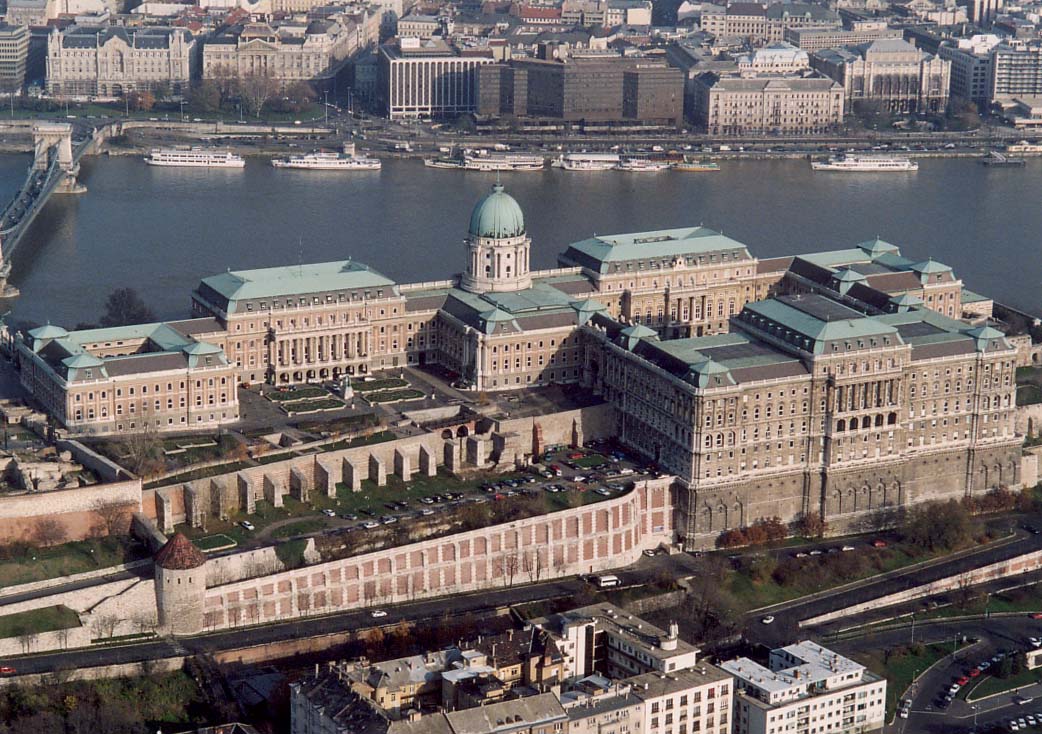
The Hungarian National Gallery is the primary institution for fine arts in Hungary, occupying the central buildings of the Buda Castle complex. It houses an extensive collection of Hungarian art spanning from the Middle Ages to the present day, including significant works of painting, sculpture, and graphic arts.
The museum's collection is distributed across several wings of the former Royal Palace, which was reconstructed following extensive damage during the Second World War. The institution serves as a repository for the nation's visual heritage, documenting the evolution of Hungarian artistic identity through various political and social shifts.
Key Facts
- Materials
- Stone, Brick, Steel, Glass
- Civilization
- Hungarian
- Accessibility
- Wheelchair accessible with elevator access to all floors
- Date(s)
- 1975 (establishment of gallery in current location)
- Condition
- Well-preserved, active museum
- Original Function
- Royal Palace
- Key Figures
- King Béla IV, Miklós Ybl, Alajos Hauszmann
The Royal Palace Foundation
13th centuryThe site originated as a royal residence established by King Béla IV following the Mongol invasion. Over subsequent centuries, it was expanded into a Gothic and later Renaissance palace, serving as the seat of Hungarian monarchs.
Reconstruction and Transformation
19th - 20th centuryThe palace underwent massive reconstruction in the late 19th century under architects Miklós Ybl and Alajos Hauszmann. Following the destruction of the Second World War, the buildings were restored and repurposed for cultural use.
Establishment of the Gallery
1975The Hungarian National Gallery was moved into the central wings of the Buda Castle in 1975, consolidating the national collection of fine arts into a single, centralized location within the historic palace complex.
Cultural Significance
The gallery is central to Hungarian cultural identity, preserving the visual history of the nation. Its location within the Buda Castle, a symbol of Hungarian statehood, reinforces its role as a guardian of national heritage. The collection provides a comprehensive narrative of Hungarian art in the context of broader European movements.
Interpretive Notes
Scholarly debates and areas of uncertainty
Debates often center on the balance between the museum's role as a national institution and the need for international integration. There is ongoing discussion regarding the future of the Buda Castle district and whether the museum should remain in the palace or be relocated to a purpose-built facility as part of the Liget Budapest Project.
Visiting Information
Entry Rules
Open Tuesday to Sunday, 10:00 to 18:00. Tickets can be purchased online or at the entrance. Security screening is mandatory for all visitors.
Best Times to Visit
Weekday mornings are recommended to avoid weekend crowds. The museum is particularly busy during temporary exhibitions.
Photography
Non-commercial photography is permitted without flash. Tripods and selfie sticks are prohibited in exhibition halls.
Preservation Notes
Maintain a safe distance from all artworks. Large bags and umbrellas must be left in the cloakroom. Flash photography is strictly prohibited to protect light-sensitive pigments.
Nearby POIs
11 shownSources & Further Reading
- [1]The Hungarian National Gallery: A History — Miklós Mojzer. Corvina Press (1995)
- [2]Buda Castle: A History of the Royal Palace — Gergely Buzás. Budapest History Museum (2012)
Key Facts
- Materials
- Stone, Brick, Steel, Glass
- Civilization
- Hungarian
- Accessibility
- Wheelchair accessible with elevator access to all floors
- Date(s)
- 1975 (establishment of gallery in current location)
- Condition
- Well-preserved, active museum
- Original Function
- Royal Palace
- Key Figures
- King Béla IV, Miklós Ybl, Alajos Hauszmann