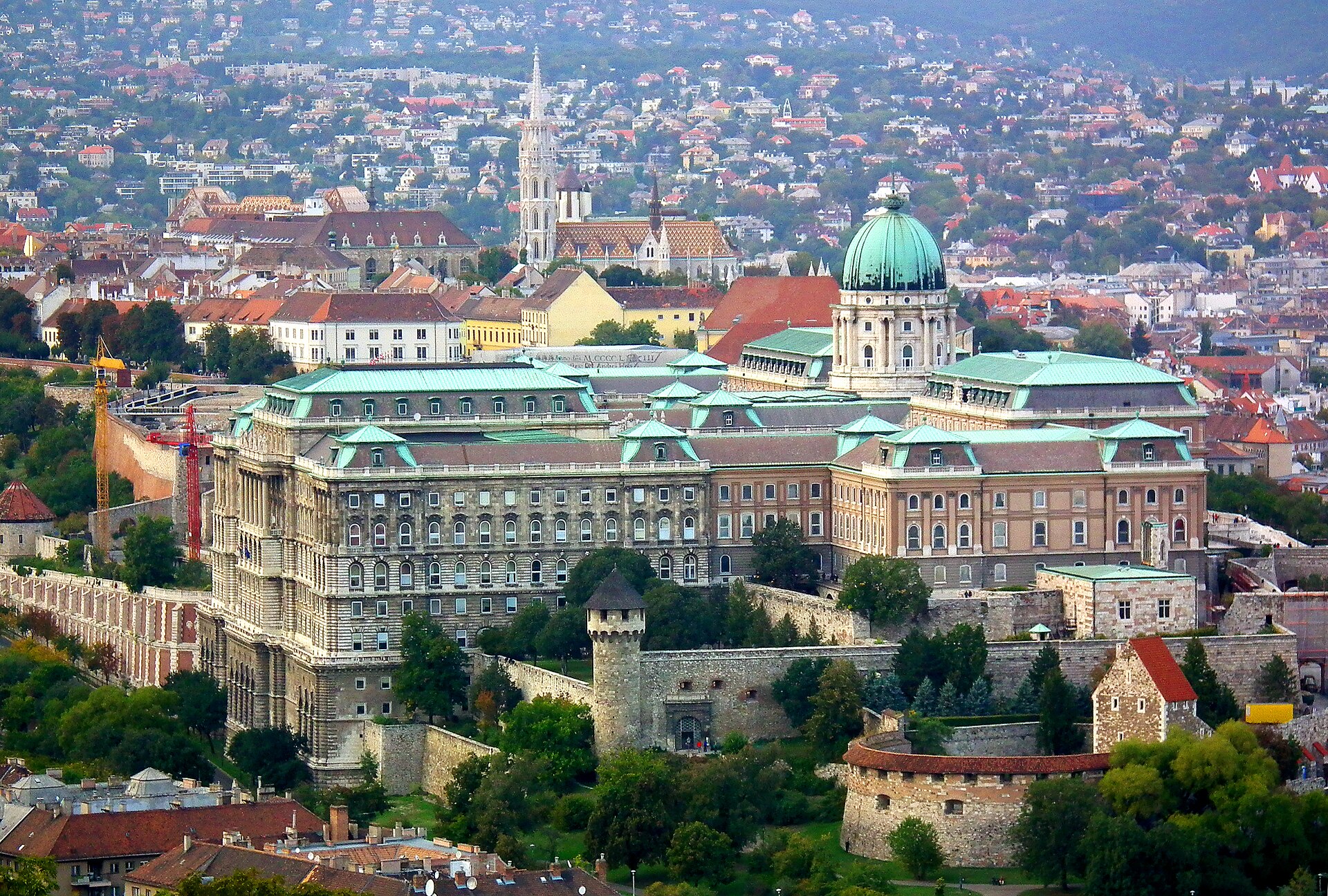
Buda Castle is a historical castle and palace complex in Budapest, Hungary, first completed in 1265. Historically, it served as the seat of the Hungarian kings and was significantly expanded over centuries, reflecting a blend of architectural styles ranging from Gothic to Baroque.
The complex sits atop Castle Hill, overlooking the Danube River. Following extensive damage during the Second World War, the palace underwent major reconstruction and restoration efforts. Today, it houses the Hungarian National Gallery and the Budapest History Museum, serving as a central cultural landmark of the Hungarian capital.
Key Facts
- Materials
- Limestone, Brick, Sandstone
- Civilization
- Hungarian
- Accessibility
- Accessible via funicular, bus, or walking paths; some areas have limited mobility access
- Date(s)
- 1265 - 1960s
- Condition
- Restored and active as a museum complex
- Original Function
- Royal residence and defensive fortress
- Key Figures
- King Béla IV, King Matthias Corvinus, Maria Theresa
Medieval Origins
13th - 15th centuryKing Béla IV established the initial fortification on the hill following the Mongol invasion. Under King Matthias Corvinus in the 15th century, the palace was transformed into a center of Renaissance culture and humanism.
Ottoman Occupation
1541 - 1686During the Ottoman rule of Buda, the palace suffered significant neglect and damage. Much of the medieval structure was destroyed or repurposed during the various sieges that characterized this period.
Habsburg Expansion
18th - 19th centuryAfter the expulsion of the Ottomans, the Habsburgs rebuilt the palace in a grand Baroque style. Further expansions in the late 19th century added Neo-Baroque elements, establishing the silhouette visible today.
War and Reconstruction
20th centuryThe castle was heavily damaged during the Siege of Budapest in 1945. Post-war reconstruction focused on preserving the historical exterior while modernizing the interior spaces for use as national museums.
Cultural Significance
Buda Castle is a symbol of Hungarian statehood and resilience. Its history mirrors the turbulent political shifts of Central Europe, from the height of the Renaissance to the devastation of the World Wars. It remains the most prominent feature of the Budapest cityscape and a focal point for national heritage.
Interpretive Notes
Scholarly debates and areas of uncertainty
Debates persist regarding the extent of the reconstruction efforts in the mid-20th century. Some architectural historians argue that the focus on Baroque aesthetics during restoration obscured significant medieval layers that were present prior to the 1945 destruction.
Visiting Information
Entry Rules
The castle grounds are open to the public 24/7. Museum galleries within the palace have specific operating hours, typically Tuesday through Sunday, and require paid admission.
Best Times to Visit
Early morning or late afternoon to avoid peak tourist crowds and enjoy the panoramic views of the Danube at sunset.
Photography
Personal photography is permitted in the courtyards and public grounds. Flash and tripods are generally prohibited inside the museum galleries.
Preservation Notes
The site is under constant maintenance due to its age and the scale of the masonry. Visitors are advised to stay on marked paths and refrain from climbing on historical walls.
Nearby POIs
11 shownSources & Further Reading
- [1]The History of Budapest: From the Middle Ages to the Present — Katalin Fenyves. Corvina Books (2005)
- [2]Buda Castle: A Guide to the Royal Palace — Gergely Nagy. Budapest History Museum Press (2018)
Key Facts
- Materials
- Limestone, Brick, Sandstone
- Civilization
- Hungarian
- Accessibility
- Accessible via funicular, bus, or walking paths; some areas have limited mobility access
- Date(s)
- 1265 - 1960s
- Condition
- Restored and active as a museum complex
- Original Function
- Royal residence and defensive fortress
- Key Figures
- King Béla IV, King Matthias Corvinus, Maria Theresa