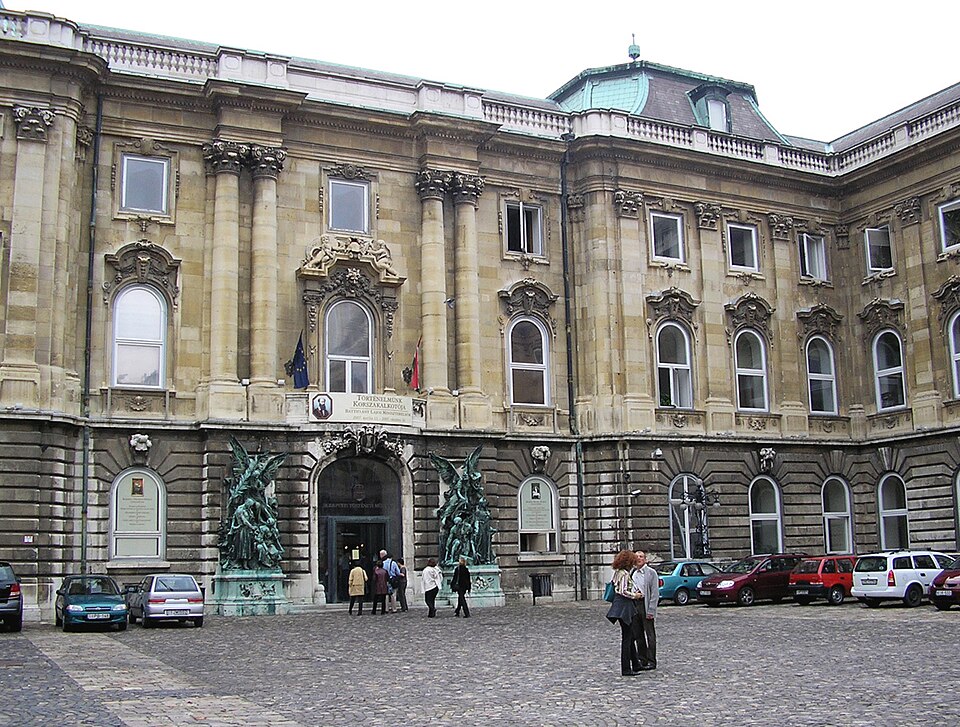
The Budapest History Museum is located within the southern wing of the Buda Castle complex, serving as the primary institution for the preservation and exhibition of the city's urban history. The museum's collections span from the prehistoric era to the modern day, documenting the development of Buda, Pest, and Óbuda before and after their unification in 1873.
Visitors can explore the restored medieval royal palace chambers, which were excavated and integrated into the museum structure during the mid-20th century. The site provides a comprehensive overview of Hungarian history, featuring archaeological finds, historical artifacts, and significant architectural remnants recovered from the castle grounds.
Key Facts
- Materials
- Stone, Brick, Reinforced concrete
- Civilization
- Hungarian
- Accessibility
- Wheelchair accessible via elevator
- Date(s)
- 1967 (Museum establishment in current location)
- Condition
- Well-preserved, active museum
- Original Function
- Royal Palace
- Key Figures
- King Béla IV, King Matthias Corvinus
Medieval Origins
13th-15th centuryThe site originated as a royal residence established by King Béla IV following the Mongol invasion. It reached its architectural zenith under King Matthias Corvinus, who transformed the palace into a center of Renaissance culture and humanism.
Destruction and Excavation
17th-20th centuryFollowing the Ottoman occupation and subsequent sieges, the palace suffered extensive damage. Systematic archaeological excavations in the 20th century revealed the medieval foundations, which were subsequently incorporated into the museum's exhibition space.
Establishment of the Museum
1967The Budapest History Museum was officially inaugurated in the reconstructed southern wing of the Buda Castle, consolidating various municipal collections into a single institution dedicated to the capital's heritage.
Cultural Significance
The museum acts as a custodian of Budapest's collective memory, bridging the gap between the medieval royal past and the modern metropolitan identity. By housing the museum within the walls of the Buda Castle, the institution reinforces the site's status as the symbolic heart of Hungarian statehood.
Interpretive Notes
Scholarly debates and areas of uncertainty
Debates persist regarding the extent of the 20th-century reconstruction of the castle's interior, specifically concerning the balance between authentic medieval preservation and modern architectural interpretation.
Visiting Information
Entry Rules
Open Tuesday to Sunday, 10:00 to 18:00. Closed on Mondays. Tickets can be purchased at the entrance or via the official website.
Best Times to Visit
Weekday mornings are recommended to avoid weekend crowds. The museum is particularly busy during national holidays.
Photography
Personal photography is permitted without flash or tripods. Commercial photography requires prior authorization.
Preservation Notes
Maintain distance from artifacts and do not touch wall surfaces in the medieval chambers. Follow marked paths to protect sensitive archaeological layers.
Nearby POIs
11 shownSources & Further Reading
- [1]The History of the Budapest History Museum — Budapest History Museum Staff. BTM Publications (2018)View
- [2]Buda Castle: A History — Gergely Buzás. Archaeolingua (2011)
Key Facts
- Materials
- Stone, Brick, Reinforced concrete
- Civilization
- Hungarian
- Accessibility
- Wheelchair accessible via elevator
- Date(s)
- 1967 (Museum establishment in current location)
- Condition
- Well-preserved, active museum
- Original Function
- Royal Palace
- Key Figures
- King Béla IV, King Matthias Corvinus