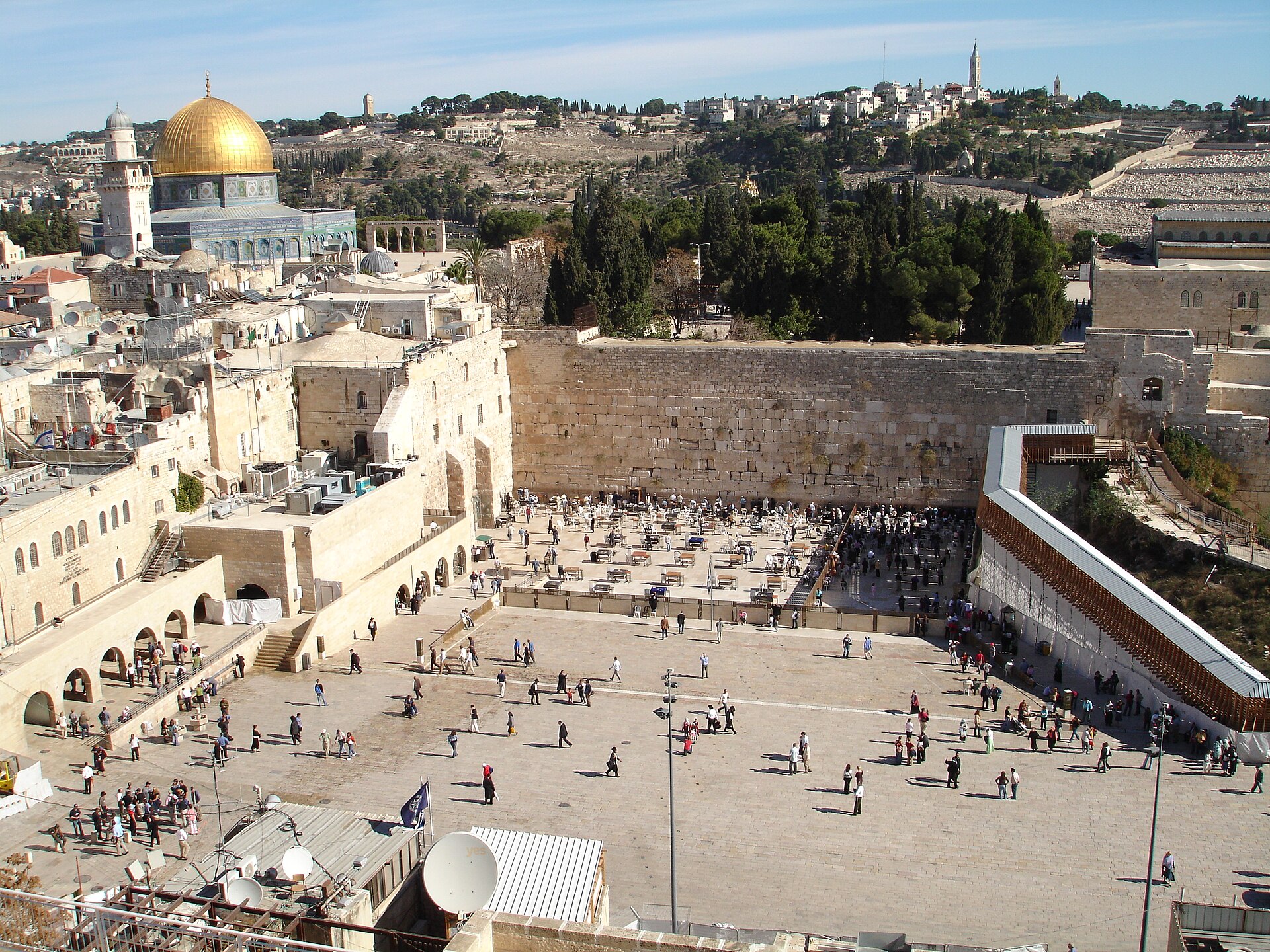
The Western Wall, also known as the Wailing Wall, is an ancient limestone retaining wall in the Old City of Jerusalem. It was originally constructed as part of the expansion of the Second Jewish Temple platform, initiated by Herod the Great around 19 BCE. The wall stands as a remnant of the supporting structure that enclosed the Temple Mount, which served as the center of Jewish religious life until the destruction of the Temple by the Romans in 70 CE.
Today, the site is the most significant place of prayer for the Jewish people, as it is the closest accessible point to the site of the Holy of Holies. The wall is divided into gender-segregated prayer sections and is visited by millions of pilgrims and tourists annually, functioning as a focal point for both religious observance and national identity.
Key Facts
- Materials
- Meleke limestone
- Civilization
- Herodian (Roman-era Judea)
- Accessibility
- Wheelchair accessible via the Dung Gate entrance
- Date(s)
- c. 19 BCE
- Condition
- Active religious site, well-preserved
- Original Function
- Retaining wall for the Temple Mount platform
- Key Figures
- Herod the Great, Solomon
Herodian Construction
1st century BCEKing Herod the Great expanded the Temple Mount platform, constructing massive retaining walls to support the enlarged esplanade. The Western Wall was one of four walls built to stabilize the artificial hill.
Roman Destruction
70 CEFollowing the Great Jewish Revolt, Roman legions destroyed the Second Temple. The Western Wall survived as a structural support for the platform, becoming a site of mourning and pilgrimage for Jews who were largely barred from the city.
Ottoman and British Mandate
1517-1948During Ottoman rule, the area near the wall became a densely populated neighborhood. Tensions regarding prayer rights and access increased during the British Mandate, leading to the 1929 riots.
Modern Era
1967-presentFollowing the Six-Day War in 1967, the area in front of the wall was cleared to create a large plaza for public prayer. The site is now under the administration of the Western Wall Heritage Foundation.
Cultural Significance
The Western Wall represents the endurance of Jewish connection to Jerusalem despite centuries of exile. It serves as a symbol of national resilience and is a primary site for life-cycle events, including Bar and Bat Mitzvahs and prayers for peace. The wall is deeply integrated into the religious life of the Jewish diaspora and the State of Israel.
Interpretive Notes
Scholarly debates and areas of uncertainty
There is ongoing academic discussion regarding the exact extent of the Herodian expansion and the architectural techniques used to stabilize the massive limestone blocks. Additionally, debates persist regarding the historical evolution of the wall's status as a primary site of prayer compared to other locations in the Old City.
Visiting Information
Entry Rules
Open 24/7, 365 days a year. Entry is free. Modest dress is required for all visitors (shoulders and knees covered). Men must wear a head covering (kippah), which is available at the entrance.
Best Times to Visit
Early morning or late evening to avoid large tour groups. The site is particularly crowded during Jewish holidays and Friday evenings at the onset of the Sabbath.
Photography
Photography is permitted in the plaza, but strictly prohibited in the prayer areas during the Sabbath (from Friday sunset to Saturday night) and Jewish holidays.
Preservation Notes
Do not place notes or objects in the wall crevices that could damage the masonry. The site is monitored by the Western Wall Heritage Foundation; follow all instructions from security personnel.
Nearby POIs
11 shownSources & Further Reading
- [1]
- [2]Jerusalem: The Biography — Simon Sebag Montefiore. Weidenfeld & Nicolson (2011)
Key Facts
- Materials
- Meleke limestone
- Civilization
- Herodian (Roman-era Judea)
- Accessibility
- Wheelchair accessible via the Dung Gate entrance
- Date(s)
- c. 19 BCE
- Condition
- Active religious site, well-preserved
- Original Function
- Retaining wall for the Temple Mount platform
- Key Figures
- Herod the Great, Solomon