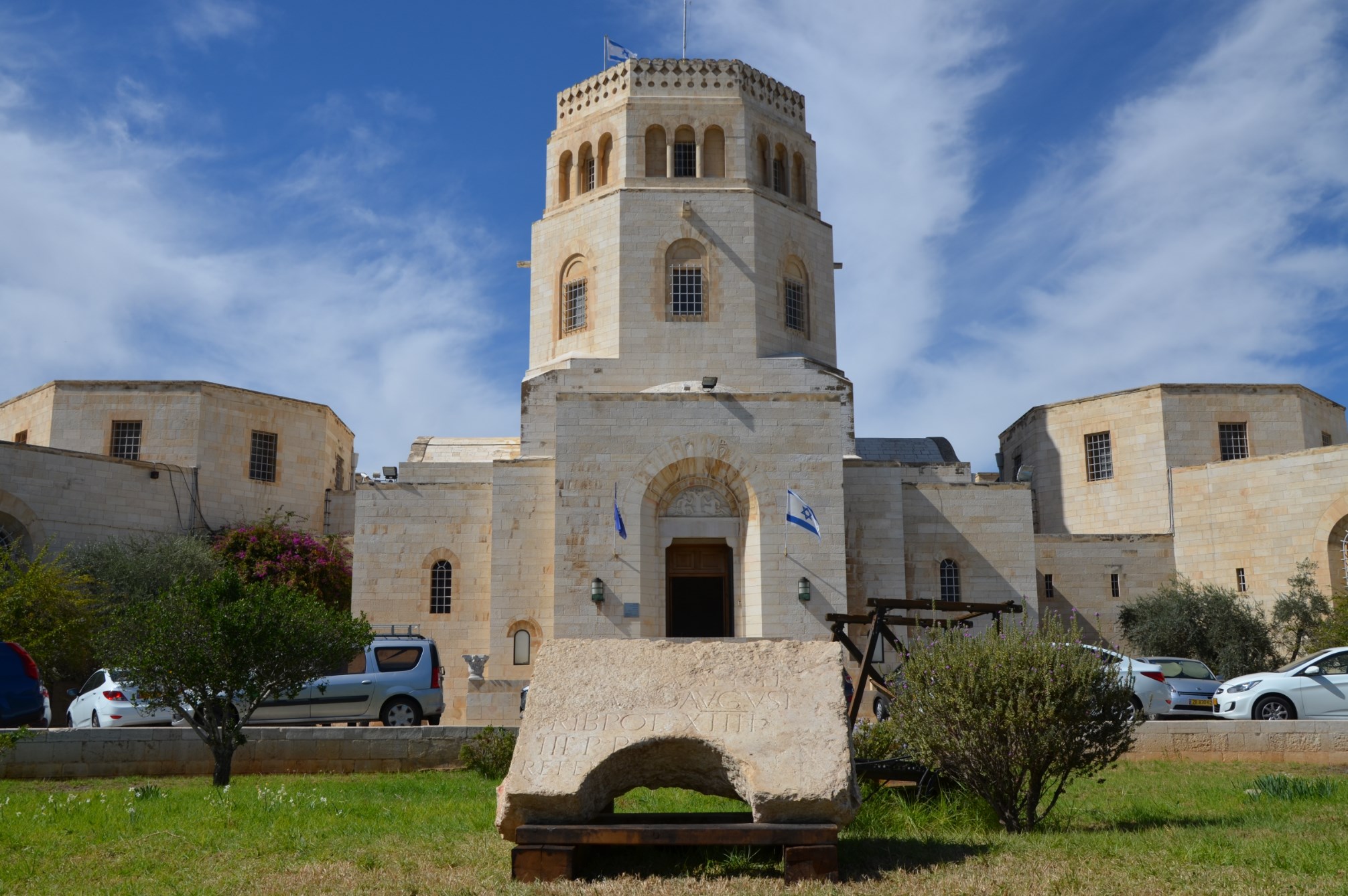
The Rockefeller Archaeological Museum, originally known as the Palestine Archaeological Museum, is located in East Jerusalem. Designed by architect Austen St. Barbe Harrison, the building is a prominent example of Mandate-era architecture, blending Western modernism with traditional Middle Eastern motifs. It was established to house the extensive collection of artifacts discovered during excavations conducted in Mandatory Palestine between 1919 and 1948.
The museum's collection spans from prehistoric times to the 18th century, organized chronologically in its central octagonal gallery. Notable holdings include the Lachish Letters, ivory carvings from Megiddo, and architectural elements from the Umayyad Palace at Khirbat al-Mafjar. Since 1966, the museum has been administered by the Israel Museum, serving as a critical repository for the region's archaeological heritage.
Key Facts
- Materials
- Local limestone, White stone
- Civilization
- British Mandate / Levantine
- Accessibility
- Partially accessible; some areas involve stairs
- Date(s)
- 1930-1938
- Condition
- Well-preserved, active museum
- Original Function
- Archaeological Museum
- Key Figures
- Austen St. Barbe Harrison, John D. Rockefeller Jr., James Henry Breasted
Founding and Construction
1920s-1938Following a $2 million donation by John D. Rockefeller Jr., the museum was commissioned to provide a permanent home for the growing number of artifacts found in the region. Architect Austen St. Barbe Harrison designed the structure to integrate seamlessly into the Jerusalem landscape, incorporating a central courtyard and an iconic octagonal tower.
Mandate Era and Early Years
1938-1948The museum officially opened in 1938. During the British Mandate, it served as the primary institution for the study and display of regional antiquities, housing finds from major excavations at sites like Megiddo, Lachish, and Jericho.
Post-1948 and Integration
1948-PresentFollowing the 1948 Arab-Israeli War, the museum fell under Jordanian administration. After the 1967 Six-Day War, the Israel Museum assumed responsibility for the site. Today, it continues to function as a research facility and exhibition space, housing the Department of Antiquities' archives and significant archaeological collections.
Cultural Significance
The Rockefeller Museum is a landmark of Jerusalem's architectural history and a vital center for the study of the Levant's diverse cultural layers. It represents the intersection of colonial-era archaeological interest and the preservation of local heritage, serving as a bridge between the various civilizations that have inhabited the region over millennia.
Interpretive Notes
Scholarly debates and areas of uncertainty
Debates often center on the provenance and ownership of artifacts collected during the British Mandate period, as well as the museum's role in the broader geopolitical context of Jerusalem's status. Scholars also discuss the preservation of the building's unique architectural style, which is considered a masterpiece of the transition between colonial and regional design.
Visiting Information
Entry Rules
Open Sunday, Monday, Wednesday, and Thursday from 10:00 to 15:00. Admission is free. Visitors are subject to security screening upon entry.
Best Times to Visit
Weekday mornings are generally quietest. The courtyard is particularly pleasant during the spring and autumn months.
Photography
Personal photography is permitted without flash or tripods. Professional photography requires prior authorization from the Israel Antiquities Authority.
Preservation Notes
The building is a protected historic site. Visitors are requested not to touch the artifacts or display cases. Some galleries may be closed periodically for maintenance or research activities.
Nearby POIs
11 shownSources & Further Reading
- [1]The Rockefeller Museum: A History — Silberman, Neil Asher. Israel Antiquities Authority (1993)
- [2]Austen St. Barbe Harrison and the Architecture of the Mandate — Kroyanker, David. Jerusalem Institute for Israel Studies (2002)
Key Facts
- Materials
- Local limestone, White stone
- Civilization
- British Mandate / Levantine
- Accessibility
- Partially accessible; some areas involve stairs
- Date(s)
- 1930-1938
- Condition
- Well-preserved, active museum
- Original Function
- Archaeological Museum
- Key Figures
- Austen St. Barbe Harrison, John D. Rockefeller Jr., James Henry Breasted