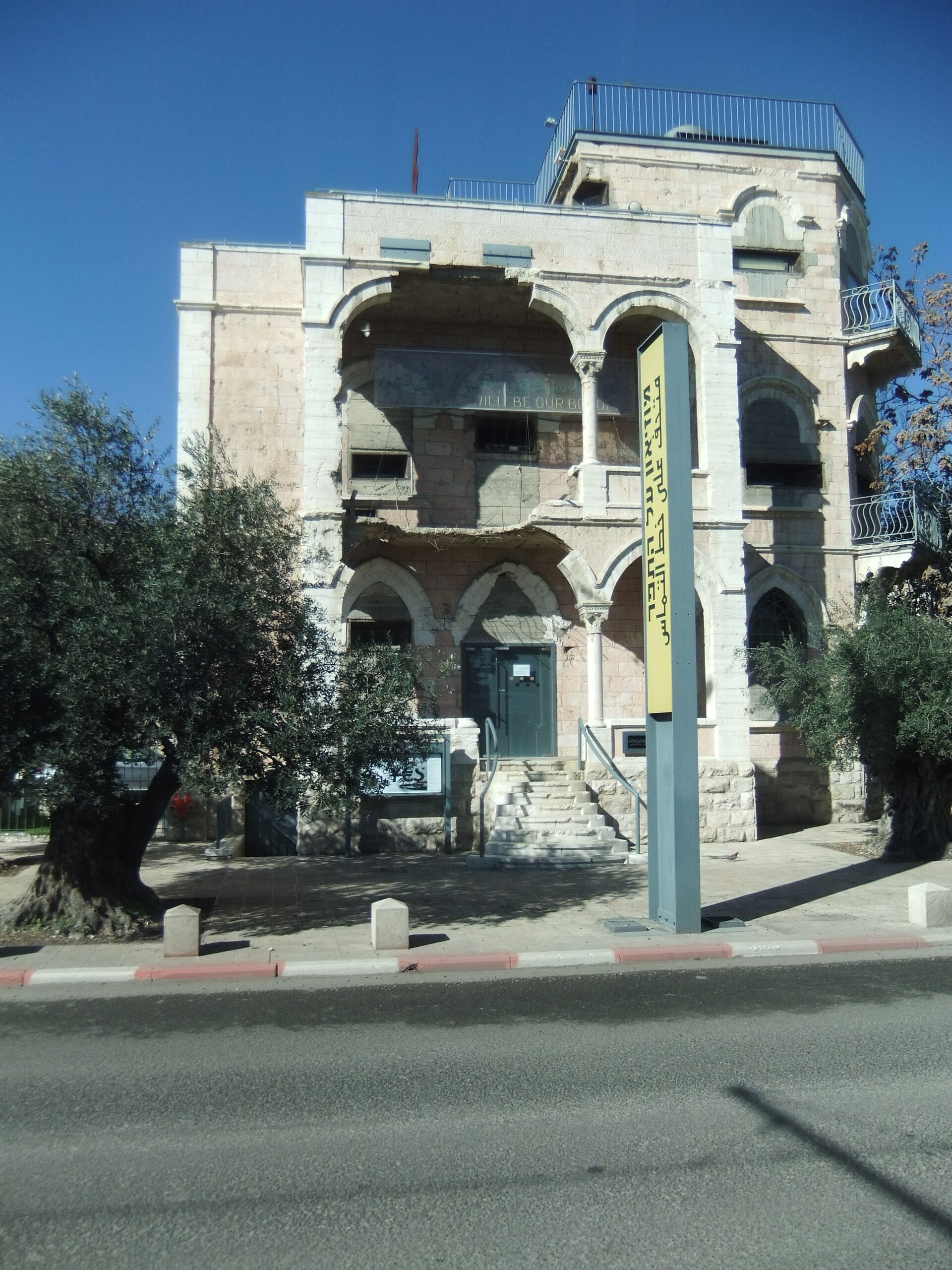
The Museum on the Seam is a socio-political contemporary art museum located in Jerusalem, situated on the former border between West and East Jerusalem. Housed in a historic building that served as an IDF outpost overlooking the 'seam' line prior to 1967, the institution focuses on controversial social issues, human rights, and the complexities of coexistence through the lens of contemporary art.
The museum functions as a platform for public discourse, utilizing exhibitions to challenge visitors to engage with themes of conflict, identity, and social justice. By positioning itself in a location historically defined by division, the museum aims to transform a site of past military confrontation into a space for dialogue and cultural reflection.
Key Facts
- Materials
- Stone, Concrete
- Civilization
- Modern Israel
- Accessibility
- Partially accessible; historic building constraints apply
- Date(s)
- 1932
- Condition
- Active museum
- Original Function
- Private residence and military outpost
- Key Figures
- Rafi Etgar
Origins and Architecture
1932The building was originally constructed as a private residence for a wealthy Arab family. Its location on the seam line between the Jewish and Arab sectors of Jerusalem made it a strategic point during the 1948 Arab-Israeli War.
Military Outpost
1948-1967Following the 1948 war, the building was seized and converted into an IDF military outpost. It remained on the front line of the divided city, overlooking the no-man's-land that separated East and West Jerusalem until the Six-Day War in 1967.
Establishment as a Museum
1999The building was repurposed as a museum dedicated to socio-political art. Under the direction of Rafi Etgar, the institution began curating exhibitions intended to provoke thought on the nature of conflict and the human condition in a divided society.
Cultural Significance
The museum is significant for its unique location and its commitment to using art as a catalyst for social change. It serves as a rare space in Jerusalem where sensitive political and social topics are addressed directly, challenging the binary narratives often associated with the region.
Interpretive Notes
Scholarly debates and areas of uncertainty
There is ongoing discussion regarding the museum's role in political activism versus traditional curation. Some critics debate whether the museum's focus on specific socio-political narratives aligns with or challenges the broader political climate of Jerusalem.
Visiting Information
Entry Rules
Open to the public with an admission fee. Visitors are advised to check the official website for current exhibition hours and potential closures due to special events.
Best Times to Visit
Weekday mornings are generally quieter, allowing for a more focused experience of the exhibitions.
Photography
Personal photography is generally permitted for non-commercial use, though specific exhibitions may have restrictions. Flash and tripods are prohibited.
Preservation Notes
As the building is a historic structure, visitors are requested to respect the integrity of the architecture and follow all posted safety guidelines.
Nearby POIs
11 shownSources & Further Reading
- [1]
- [2]Art and Conflict in Jerusalem — Various Contributors. Journal of Contemporary Art and Culture (2018)
Key Facts
- Materials
- Stone, Concrete
- Civilization
- Modern Israel
- Accessibility
- Partially accessible; historic building constraints apply
- Date(s)
- 1932
- Condition
- Active museum
- Original Function
- Private residence and military outpost
- Key Figures
- Rafi Etgar