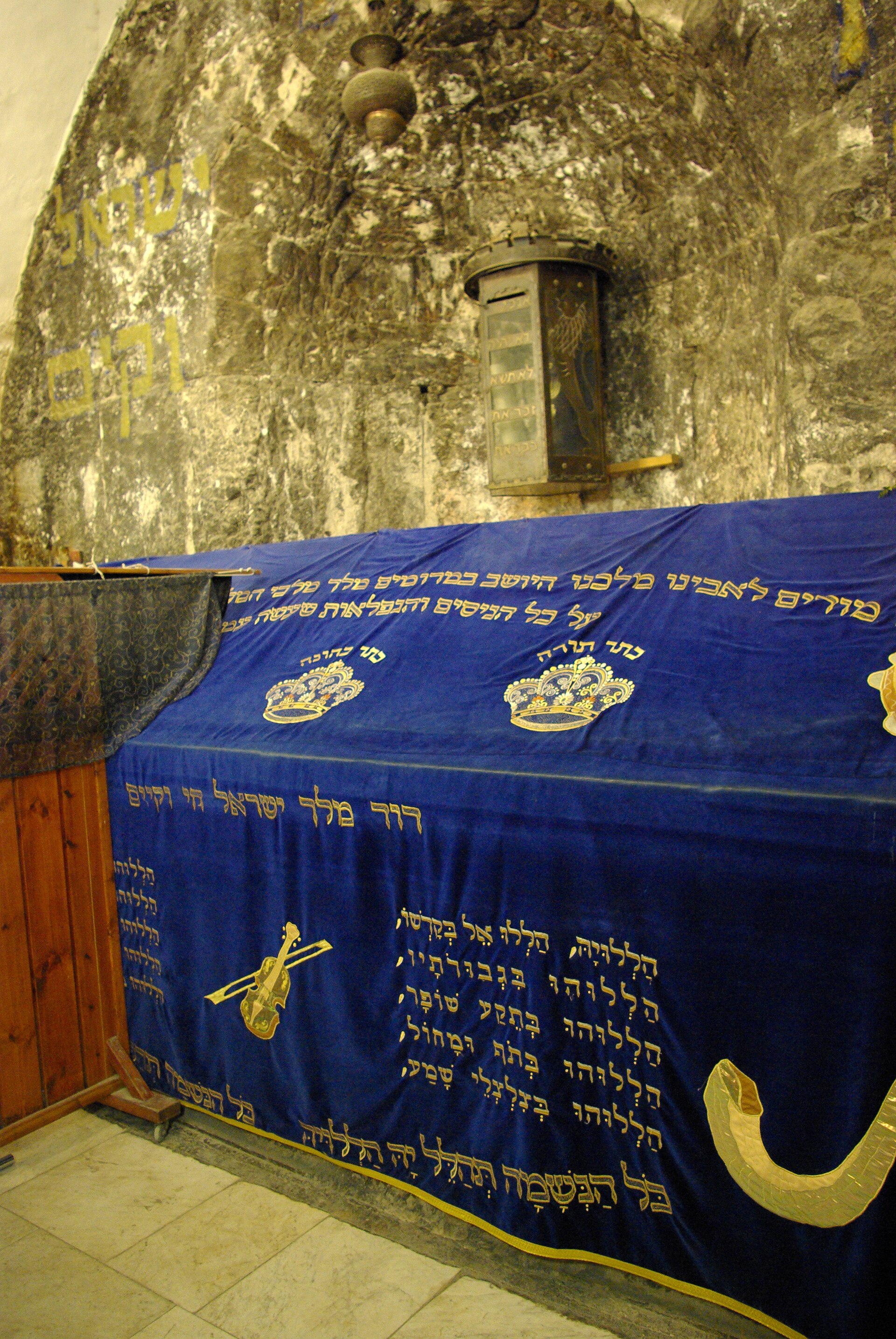
David's Tomb is a site located on Mount Zion in Jerusalem, traditionally identified as the burial place of King David of Israel. The site is situated on the ground floor of a building that also houses the Cenacle, or Upper Room, where the Last Supper is traditionally commemorated. While the site has been a major destination for Jewish pilgrimage since the 12th century, archaeological evidence does not support the identification of this location as the historical burial place of the biblical king.
The structure itself reflects centuries of architectural layering, featuring elements from the Crusader period, Mamluk-era renovations, and later Ottoman additions. The tomb is housed within a stone cenotaph covered by a blue velvet cloth, serving as a focal point for prayer and religious study. Despite the lack of historical verification, the site remains a significant landmark in the religious landscape of Jerusalem, functioning as an active synagogue and a place of veneration.
Key Facts
- Materials
- Limestone, Stone masonry
- Civilization
- Crusader/Mamluk
- Accessibility
- Accessible via stairs; limited space in the tomb chamber
- Date(s)
- 12th century CE (earliest identified structure)
- Condition
- Active religious site
- Original Function
- Religious shrine and place of pilgrimage
- Key Figures
- King David, Benjamin of Tudela
Medieval Origins
12th centuryThe tradition identifying this location as the tomb of King David emerged during the Crusader period. The 12th-century traveler Benjamin of Tudela recorded the site as a place of pilgrimage, cementing its status in Jewish tradition despite the absence of earlier historical references.
Mamluk and Ottoman Transformations
14th-16th centuryDuring the Mamluk period, the site underwent significant structural changes. The building was converted into a mosque, and the tomb was enclosed within a dedicated chamber. Under Ottoman rule, the site continued to be a contested space between religious communities, eventually stabilizing as a Jewish holy site.
Modern Status
20th century - presentFollowing the 1948 Arab-Israeli War, the site became one of the few accessible holy places for Jewish pilgrims in the vicinity of the Old City. It is currently managed as a synagogue and remains a site of intense religious activity and ongoing scholarly interest regarding its historical origins.
Cultural Significance
David's Tomb serves as a vital symbol of Jewish connection to Jerusalem, particularly during periods when access to the Western Wall was restricted. It functions as a bridge between biblical tradition and medieval religious practice, representing the enduring power of local hagiography in shaping the city's sacred geography.
For many, the site is not merely an archaeological question but a living space of devotion. The coexistence of the tomb with the Cenacle in the same building complex highlights the complex, multi-layered religious history of Mount Zion, where Jewish, Christian, and Muslim traditions have historically intersected.
Interpretive Notes
Scholarly debates and areas of uncertainty
The primary scholarly debate concerns the historical authenticity of the site. Archaeologists and historians generally agree that the biblical King David was likely buried in the City of David, as described in the Books of Kings, rather than on Mount Zion. The tradition identifying the current site is considered a medieval development rather than a continuous historical memory.
Visiting Information
Entry Rules
Open daily. Modest dress is required for all visitors. Men and women are separated in the prayer areas. The site is an active synagogue; visitors are expected to maintain a respectful demeanor.
Best Times to Visit
Early morning or late afternoon to avoid peak tourist crowds. Avoid Shabbat (Friday evening to Saturday evening) if you are not participating in religious services.
Photography
Photography is permitted in most areas, but avoid taking photos of people praying or during religious services.
Preservation Notes
The site is an ancient structure; please refrain from touching the stone walls or the cenotaph covering. Follow all posted signs regarding restricted areas.
Nearby POIs
11 shownSources & Further Reading
- [1]
- [2]Jerusalem: The Biography — Simon Sebag Montefiore. Weidenfeld & Nicolson (2011)
Key Facts
- Materials
- Limestone, Stone masonry
- Civilization
- Crusader/Mamluk
- Accessibility
- Accessible via stairs; limited space in the tomb chamber
- Date(s)
- 12th century CE (earliest identified structure)
- Condition
- Active religious site
- Original Function
- Religious shrine and place of pilgrimage
- Key Figures
- King David, Benjamin of Tudela