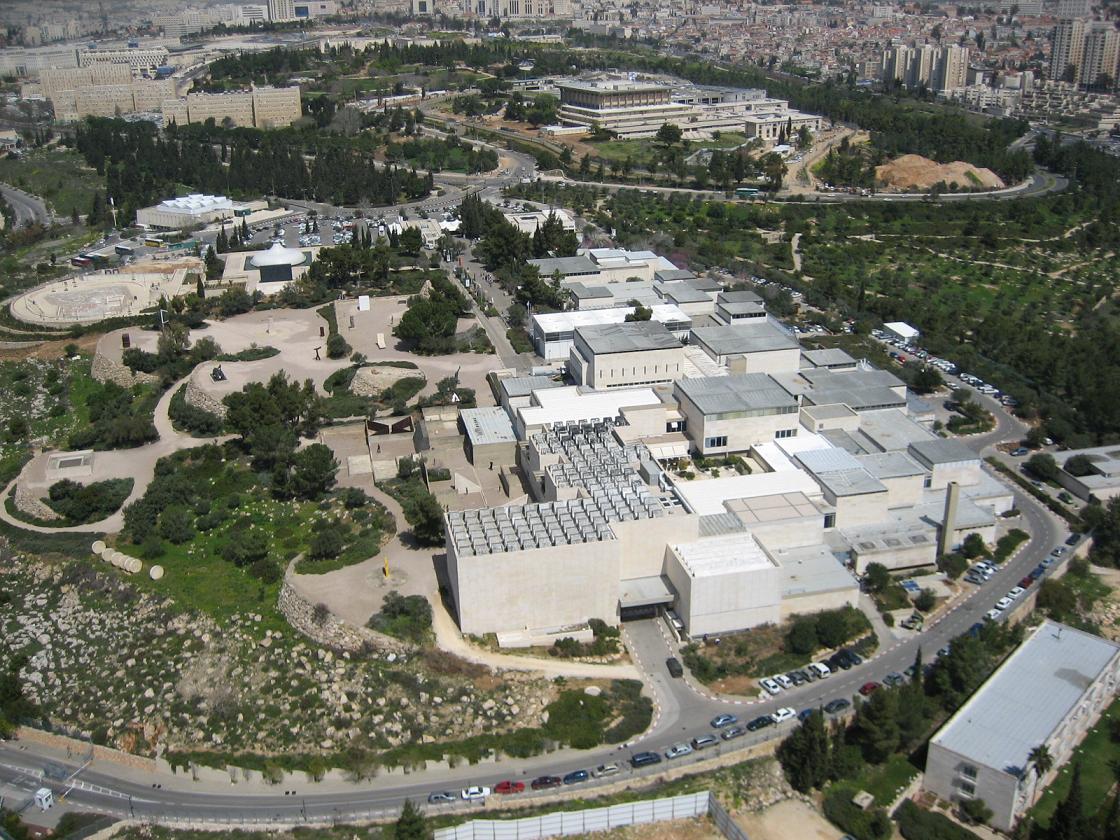
The Israel Museum, located on the hill of Givat Ram in Jerusalem, is the largest cultural institution in Israel and one of the world's leading encyclopedic museums. Founded in 1965, it houses a vast collection ranging from prehistoric archaeology and Judaica to fine arts and contemporary installations. The campus is designed to integrate with the landscape, featuring iconic structures such as the Shrine of the Book.
The museum's collections are divided into three main wings: the Bezalel Art Wing, the Samuel Bronfman Biblical and Archaeological Museum, and the Jack, Joseph and Morton Mandel Wing for Jewish Art and Life. It serves as a primary repository for the Dead Sea Scrolls and provides extensive context for the history and material culture of the Holy Land.
Key Facts
- Materials
- Concrete, Stone, Glass
- Civilization
- Modern Israel
- Accessibility
- Fully wheelchair accessible
- Date(s)
- 1965
- Condition
- Active, well-maintained
- Original Function
- National museum and cultural repository
- Key Figures
- Teddy Kollek, Alfred Mansfeld, Dora Gad
Founding and Vision
1965The museum was established under the initiative of Jerusalem Mayor Teddy Kollek, who envisioned a national institution that would preserve the cultural heritage of the Jewish people and the history of the region. The original campus was designed by architects Alfred Mansfeld and Dora Gad.
The Shrine of the Book
1965Designed by Armand Bartos and Frederick Kiesler, the Shrine of the Book was built to house the Dead Sea Scrolls discovered at Qumran. Its distinctive white dome and black basalt wall symbolize the 'Sons of Light' and 'Sons of Darkness' described in the scrolls.
Expansion and Renovation
2010The museum underwent a major architectural renewal led by James Carpenter and Efrat-Kowalsky Architects. This project reorganized the campus layout, improved visitor flow, and updated the exhibition galleries to modern international standards.
Cultural Significance
The Israel Museum is central to the national identity of Israel, acting as the primary guardian of the country's archaeological and artistic heritage. It plays a critical role in educational outreach and international cultural diplomacy, bridging ancient history with contemporary artistic expression.
Interpretive Notes
Scholarly debates and areas of uncertainty
The provenance and display of certain archaeological artifacts from the West Bank have occasionally been the subject of international academic and political discussion regarding cultural heritage and international law.
Visiting Information
Entry Rules
Open daily. Tickets can be purchased online or at the entrance. Modest dress is recommended. Security screening is mandatory for all visitors upon entry.
Best Times to Visit
Weekday mornings are generally quieter. The museum is often crowded during school holidays and major festivals.
Photography
Personal photography is permitted in most galleries without flash or tripods. Specific temporary exhibitions may prohibit photography.
Preservation Notes
Maintain a respectful distance from artifacts. Flash photography is prohibited to protect light-sensitive materials, particularly the Dead Sea Scrolls.
Nearby POIs
11 shownKey Facts
- Materials
- Concrete, Stone, Glass
- Civilization
- Modern Israel
- Accessibility
- Fully wheelchair accessible
- Date(s)
- 1965
- Condition
- Active, well-maintained
- Original Function
- National museum and cultural repository
- Key Figures
- Teddy Kollek, Alfred Mansfeld, Dora Gad