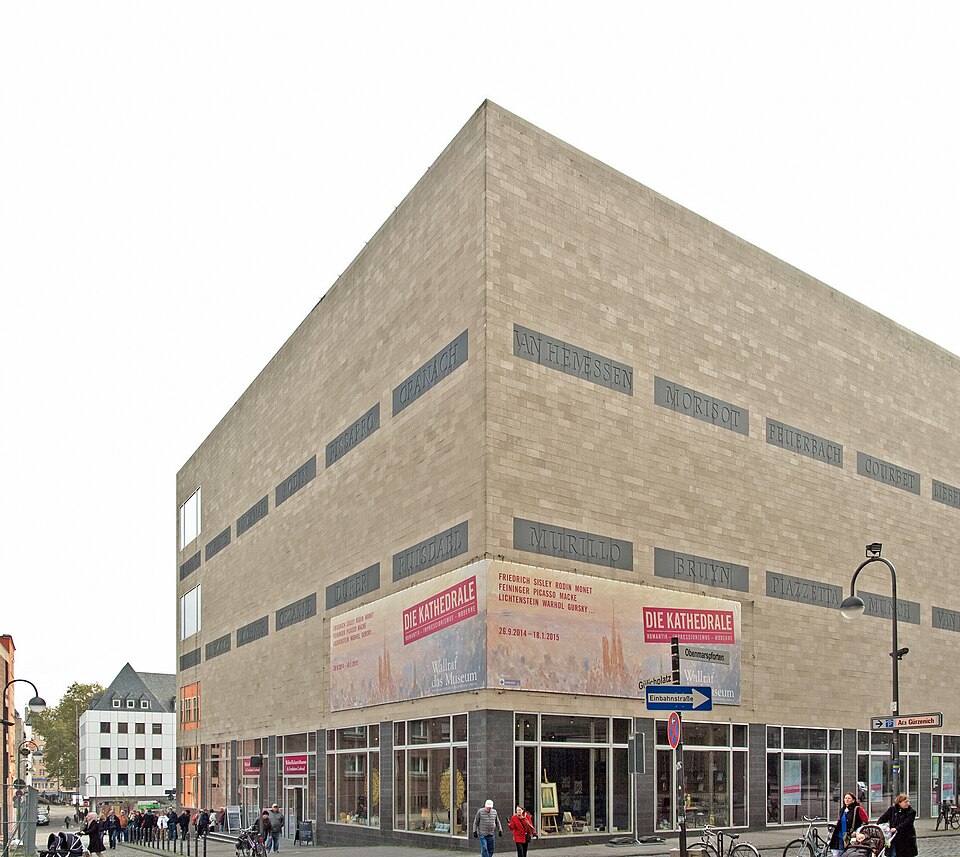
The Wallraf–Richartz Museum is one of Cologne's oldest and most significant cultural institutions, housing a world-renowned collection of fine art spanning from the medieval period to the early 20th century. The museum is particularly celebrated for its extensive holdings of Cologne School painting, which provides a comprehensive overview of artistic production in the Rhineland during the Middle Ages.
In addition to its medieval treasures, the museum features a substantial collection of Baroque and Impressionist works, including pieces by masters such as Rubens, Rembrandt, Monet, and Van Gogh. The current building, designed by architect Oswald Mathias Ungers, was opened in 2001 and provides a modern, minimalist setting for the display of these diverse historical collections.
Key Facts
- Materials
- Stone, Glass, Steel
- Civilization
- German
- Accessibility
- Fully wheelchair accessible
- Date(s)
- 2001
- Condition
- Active, well-maintained
- Original Function
- Art museum
- Key Figures
- Ferdinand Franz Wallraf, Johann Heinrich Richartz, Oswald Mathias Ungers
Foundations and Legacy
1824The museum originated from the bequest of Ferdinand Franz Wallraf, a scholar and collector who left his vast collection of art and artifacts to the city of Cologne. His initial donation formed the core of the municipal art collection.
Establishment of the Building
1861Johann Heinrich Richartz funded the construction of the first dedicated museum building, which opened in 1861. This established the institution as a permanent fixture in the city's cultural landscape.
Modern Expansion
2001The museum moved into its current contemporary building designed by Oswald Mathias Ungers. This move allowed for a more expansive display of the collection and modernized the visitor experience.
Cultural Significance
The Wallraf–Richartz Museum serves as a vital repository of Rhenish cultural history. Its collection of medieval art is considered one of the most important in the world, documenting the transition of artistic styles in the region. It plays a central role in the cultural identity of Cologne, bridging the gap between the city's deep medieval roots and its modern artistic contributions.
Interpretive Notes
Scholarly debates and areas of uncertainty
Debates often center on the attribution of specific anonymous works within the Cologne School of the 14th and 15th centuries. Scholars continue to analyze the provenance of works acquired during the 20th century, particularly regarding potential forced sales during the Nazi era.
Visiting Information
Entry Rules
Open Tuesday to Sunday. Tickets can be purchased online or at the museum desk. Concessions are available for students and seniors.
Best Times to Visit
Weekday mornings are generally quieter. The museum is closed on Mondays.
Photography
Non-commercial photography without flash is permitted in the permanent collection. Tripods and selfie sticks are prohibited.
Preservation Notes
Maintain a safe distance from all artworks. Do not touch the surfaces of paintings or frames. Large bags must be stored in lockers.
Nearby POIs
10 shownSources & Further Reading
- [1]Wallraf-Richartz-Museum: Die Sammlung — Roland Krischel. Wallraf-Richartz-Museum & Fondation Corboud (2008)View
- [2]Cologne: A History of the City — Peter Fuchs. Greven Verlag (1991)
Key Facts
- Materials
- Stone, Glass, Steel
- Civilization
- German
- Accessibility
- Fully wheelchair accessible
- Date(s)
- 2001
- Condition
- Active, well-maintained
- Original Function
- Art museum
- Key Figures
- Ferdinand Franz Wallraf, Johann Heinrich Richartz, Oswald Mathias Ungers