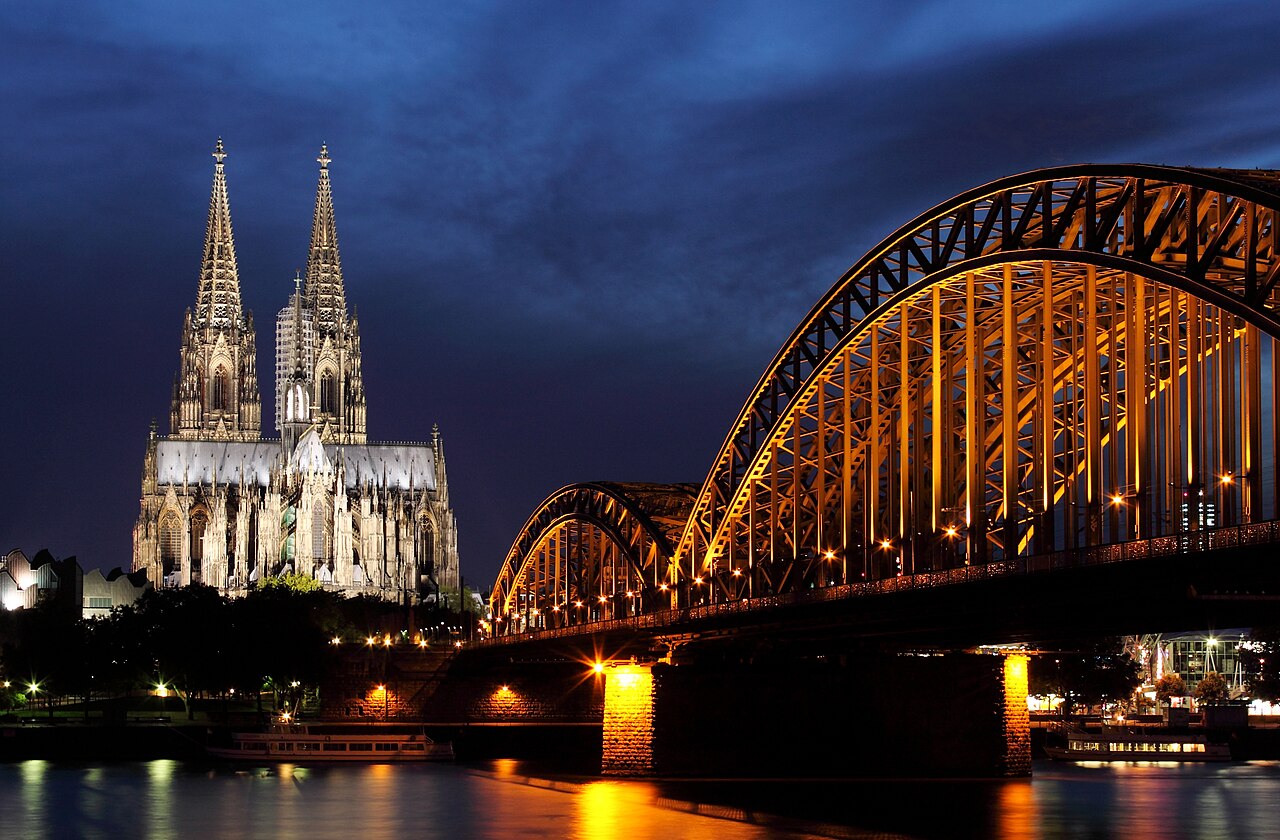
The Cologne Cathedral (Kölner Dom) is a renowned monument of German Gothic architecture and a seat of the Archbishop of Cologne. Construction began in 1248 to house the relics of the Three Magi, which had been brought to the city by Holy Roman Emperor Frederick Barbarossa in 1164. The structure is characterized by its massive twin spires, which reach a height of 157 meters, and its expansive cruciform floor plan.
Although the choir was consecrated in 1322, construction stalled in the 16th century and remained incomplete for centuries. Work resumed in the 19th century based on original medieval plans, and the cathedral was finally completed in 1880. Today, it serves as a major pilgrimage site and a symbol of the city's resilience, having survived significant damage during the Second World War.
Key Facts
- Materials
- Sandstone, Trachyte, Reinforced concrete (modern repairs)
- Civilization
- Holy Roman Empire / German
- Accessibility
- Wheelchair accessible via designated entrance
- Date(s)
- 1248–1473; 1842–1880
- Condition
- Active cathedral, well-preserved
- Original Function
- Cathedral and reliquary for the Three Kings
- Key Figures
- Archbishop Konrad von Hochstaden, Gerhard von Rile, Ernst Friedrich Zwirner
Foundations and Early Gothic
1248–1322The current cathedral replaced an earlier Carolingian structure. Archbishop Konrad von Hochstaden laid the foundation stone in 1248, intending to create a space grand enough to accommodate the growing number of pilgrims visiting the Shrine of the Three Kings.
Stagnation and Medieval Completion
14th–16th centuryWork progressed steadily until the mid-16th century, when funding dried up and interest in the Gothic style waned. The cathedral remained a massive construction site with a temporary roof over the choir for nearly three hundred years.
19th Century Completion
1842–1880Following the discovery of the original medieval facade plans, King Frederick William IV of Prussia ordered the completion of the cathedral. Using modern engineering techniques while adhering to the original Gothic design, the structure was finished in 1880.
World War II and Restoration
1939–presentThe cathedral was struck by 14 aerial bombs during World War II but remained standing. Extensive restoration work has been ongoing since 1945 to repair structural damage and combat the effects of environmental erosion on the stone facade.
Cultural Significance
The Cologne Cathedral is a central pillar of German national identity and a primary symbol of Cologne. Its historical importance is tied to the cult of the Three Magi, which made Cologne one of the most significant pilgrimage destinations in medieval Europe.
Beyond its religious role, the cathedral represents the 19th-century European fascination with the Gothic revival, serving as a testament to the technical and artistic continuity between the Middle Ages and the modern era.
Interpretive Notes
Scholarly debates and areas of uncertainty
There is ongoing academic discussion regarding the extent to which the 19th-century completion accurately reflects the original 13th-century intentions. Some scholars argue that the modern completion introduced structural and aesthetic elements that deviate from the medieval master builders' vision.
Visiting Information
Entry Rules
Open daily. Entry to the cathedral is free, though donations are encouraged. Access to the treasury and the tower climb requires a paid ticket. Modest dress is requested, and visitors are asked to remain quiet during religious services.
Best Times to Visit
Early morning on weekdays to avoid large tourist groups. The cathedral is particularly significant during the Feast of the Epiphany in January, which draws large numbers of pilgrims.
Photography
Personal photography is permitted without flash or tripods. Professional photography requires prior authorization from the cathedral administration.
Preservation Notes
The cathedral is subject to constant maintenance due to the acidity of urban air affecting the sandstone. Visitors should follow marked paths and avoid touching the historical stonework.
Nearby POIs
10 shownSources & Further Reading
- [1]The Cologne Cathedral: A History — Arnold Wolff. Kölner Domblatt (2005)
- [2]Gothic Architecture in Germany — Paul Frankl. Yale University Press (2000)
Key Facts
- Materials
- Sandstone, Trachyte, Reinforced concrete (modern repairs)
- Civilization
- Holy Roman Empire / German
- Accessibility
- Wheelchair accessible via designated entrance
- Date(s)
- 1248–1473; 1842–1880
- Condition
- Active cathedral, well-preserved
- Original Function
- Cathedral and reliquary for the Three Kings
- Key Figures
- Archbishop Konrad von Hochstaden, Gerhard von Rile, Ernst Friedrich Zwirner